


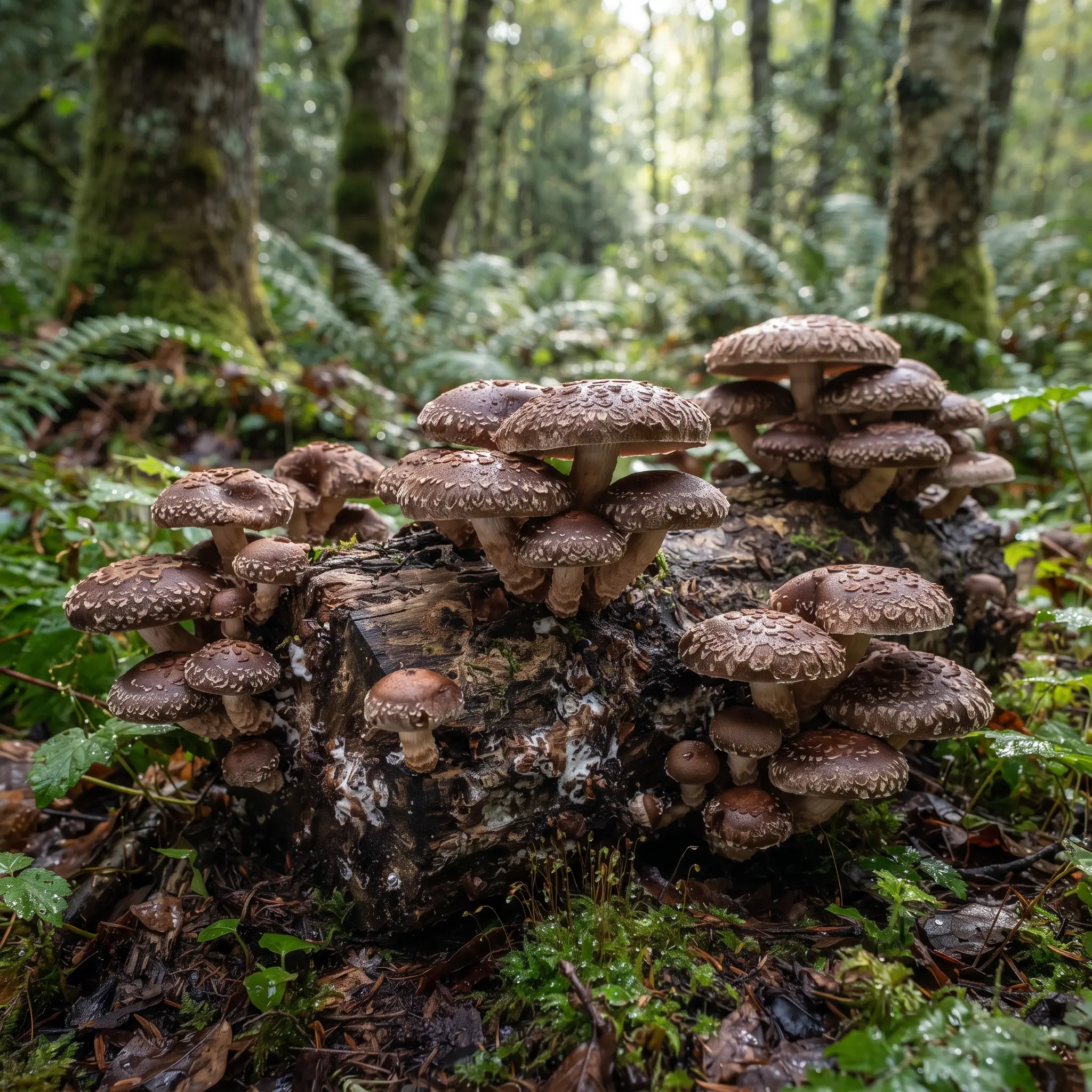
Traditionally, shiitake has been used primarily for supporting immune health and overall vitality, especially when dealing with general run-down feelings or wanting broader wellness support. It is commonly prepared as a culinary food, tea, tincture, or powdered extract.
Common Name: Shiitake Latin Name: Lentinula edodes (Latin name itself in italics) Alternate Names: Black Forest Mushroom, Oak Mushroom
- Parts used: fruiting body (mushroom)
- Primary properties: immunomodulator, nutritive, adaptogen (traditional)
- Common preparations: culinary use, tea, tincture, powdered extract
- Best known for: supporting immune health and general vitality
What It Helps With
Health conditions this herb is commonly used to support.
Related Buying Guides
Featured Recipes
Explore and try simple ways to prepare and use this herb at home.
Active Compounds
The tiny plant chemistry doing all the heavy lifting.
Key Herbal Properties
What this herb is known for, herbally speaking.



Herbal Synergies
Other herbs that pair especially well with this one — together, their combined properties work better than either herb does alone.
Health Conditions Shiitake Helps With
- Immune support — Shiitake has a long traditional reputation, particularly in East Asian herbal practice, for supporting healthy immune function.
- General fatigue & low vitality — Traditionally used as a nourishing tonic food to help support overall energy and resilience.
- Cardiovascular wellness — Traditionally associated with supporting healthy cholesterol levels and general cardiovascular comfort as part of a broader wellness approach.
- Skin health — Traditionally included in tonic formulas intended to support skin vitality, often tied to its broader nutritive reputation.
- Digestive support — Used traditionally as a nourishing food to support general digestive wellness, largely due to its fiber and nutrient content.
Compounds
- Beta-glucans (lentinan) — Polysaccharide compounds shiitake is particularly known for, generally understood to contribute to its traditional immune-supportive reputation.
- Eritadenine — A compound unique to shiitake, thought to contribute to its traditional cardiovascular-supportive reputation.
- Ergosterol — A compound that converts to vitamin D with sun or UV exposure, contributing to shiitake’s nutritive profile.
- Amino acids — Shiitake contains a range of amino acids that support its traditional reputation as a nourishing, protein-supportive food.
- Polysaccharides (broader class) — Support shiitake’s overall traditional immune and general tonic reputation beyond lentinan specifically.
Properties
- Immunomodulator — Shiitake’s most defining traditional property, thought to help support balanced immune system function.
- Nutritive — Valued traditionally as a nourishing whole food, rich in various vitamins, minerals, and amino acids.
- Adaptogen (traditional, food-based) — Loosely associated with general resilience-supportive qualities in traditional East Asian dietary practice.
- Cardiotonic (traditional) — Traditionally associated with supporting healthy cardiovascular function.
- Antioxidant — Its compound profile is thought to contribute to general cellular protective effects.
Recipes Using Shiitake
- Shiitake immune broth — A simmered broth made from dried shiitake mushrooms, often combined with astragalus root, traditionally used to support immune wellness.
- Shiitake tea — A simple infusion made from dried shiitake slices, sipped for general vitality support.
- Shiitake extract capsule blends — Standardized shiitake extract combined with other immune-supportive mushrooms like reishi or maitake in capsule form.
Products Featuring Shiitake
- Dried whole mushroom — The traditional whole-food form, used in cooking, broths, and homemade teas.
- Standardized extract capsules or powder — Offers a concentrated, consistent dose of key compounds like beta-glucans for those wanting a supplement form.
- Tincture — Provides a concentrated liquid extract for flexible dosing outside of culinary use.
Synergies
- Shiitake + astragalus root — A classic pairing in traditional immune-supportive broths and formulas.
- Shiitake + reishi mushroom — Combined in traditional and modern formulas for broader immune and vitality support.
- Shiitake + maitake mushroom — Paired in supplement blends for combined immune and general wellness support.
- Shiitake + ginger — Added to culinary and broth preparations to warm the formula and support digestion.
Safety & Precautions
Shiitake mushrooms are generally well-tolerated as a food, though a small number of people can experience a distinctive skin reaction called shiitake dermatitis, an itchy, streaky rash that can appear after eating raw or undercooked shiitake, so mushrooms are best thoroughly cooked before eating. Some individuals may also experience mild digestive upset or an allergic reaction, particularly with concentrated extract forms.
Because of its traditional immune-modulating properties, anyone with an autoimmune condition or who is taking immunosuppressant medications should consult a healthcare provider before using concentrated shiitake extracts, as its effects on immune activity could be relevant in these situations. Shiitake may also interact with blood-thinning medications due to its traditional cardiovascular effects, so anyone on these should check with a healthcare provider first. There is limited specific safety data on concentrated shiitake extracts during pregnancy and breastfeeding, so it’s best to stick to normal culinary amounts and consult a healthcare provider before using concentrated supplement forms during these times.
Shiitake as a cooked culinary food is generally very well-tolerated by most healthy adults. For pets, cooked plain shiitake in small amounts is generally not considered a major concern for dogs, but raw shiitake and any seasoned preparations (with garlic, onion, or excess salt) should be avoided, and cats should generally not be given mushrooms at all without veterinary guidance.
Q&A
Can I eat shiitake mushrooms raw?
Raw or undercooked shiitake mushrooms are more likely to trigger shiitake dermatitis, an itchy, streaky skin rash that can develop in sensitive individuals. Thoroughly cooking shiitake mushrooms significantly reduces this risk and is the traditional and recommended way to prepare them.
If you’ve never had shiitake before, starting with a small, well-cooked portion is a reasonable way to see how your body responds.
Can shiitake be used daily?
Shiitake mushrooms are commonly eaten as a regular part of the diet in many traditional East Asian cuisines, and culinary amounts are generally considered fine for daily use by most healthy adults. Concentrated extract supplements are typically used more cyclically, often for a period of weeks rather than indefinitely.
If using a standardized shiitake extract specifically for immune support, following the product’s suggested use guidelines is a reasonable approach rather than assuming more is better.
What’s the difference between shiitake as food versus shiitake extract supplements?
Eating whole shiitake mushrooms provides a broad range of nutrients along with modest amounts of its beneficial compounds, while standardized extracts concentrate specific compounds like beta-glucans to a much higher, more consistent level. Extracts are generally chosen when someone wants a more concentrated, targeted dose than food alone would provide.
Both are traditionally valid approaches, and some people use shiitake in both forms — as a regular food and as an occasional concentrated supplement.
Is dried shiitake as good as fresh?
Dried shiitake mushrooms are actually very commonly used in traditional preparations and are prized for their concentrated, deep umami flavor, often considered even more flavorful than fresh in certain dishes like broths. Drying doesn’t significantly diminish their traditional nutritive reputation.
Dried shiitake typically needs to be rehydrated in water before cooking, and that soaking liquid is often kept and used as a flavorful broth base.
Is shiitake safe around pets?
Cooked, plain shiitake mushroom in small amounts is generally not considered a major toxicity concern for dogs, but raw mushrooms and any dishes seasoned with garlic, onion, or excess salt should be avoided, since those ingredients themselves can be harmful. Cats are generally more sensitive to dietary changes and mushrooms aren’t a typical part of their diet.
If you want to share a small plain, cooked piece of shiitake with a dog, doing so occasionally and in moderation is reasonable, but checking with a veterinarian first is always a safe approach, especially for cats.
References
- Plants of the World Online: Lentinula edodes
- PubMed: Scientific Literature on Lentinula edodes
- National Library of Medicine: Chemical Constituents from Lentinula edodes
- Wikipedia: Lentinula edodes
- ScienceDirect Topics: Lentinula edodes Research
- Memorial Sloan Kettering Cancer Center: About Herbs — Shiitake Mushroom
- PubMed: Lentinan and Beta-Glucan Immune Research
- PubMed: Shiitake Dermatitis Research
This information is for educational purposes only and is not intended as medical advice. Consult a qualified healthcare professional before using any herb, especially if pregnant, breastfeeding, taking medications, or managing a health condition.