


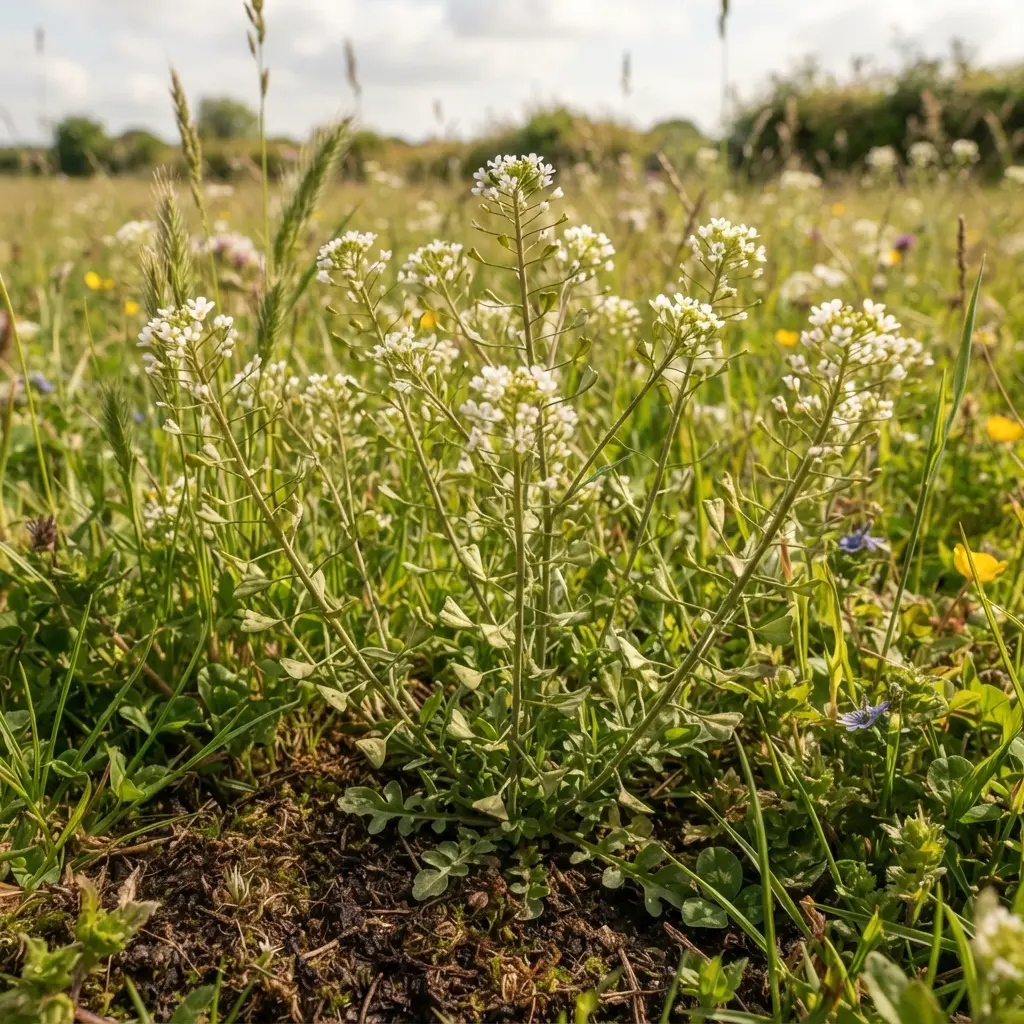
Traditionally, shepherd’s purse has been used primarily for supporting healthy blood flow and easing heavy bleeding, especially when dealing with heavy menstrual flow or minor wound bleeding. It is commonly prepared as a tea, tincture, or fresh-pressed extract.
Common Name: Shepherd’s Purse Latin Name: Capsella bursa-pastoris (Latin name itself in italics) Alternate Names: Shepherd’s Bag, Mother’s Heart
- Parts used: aerial parts (leaves, stems, flowers)
- Primary properties: astringent, hemostatic, styptic
- Common preparations: tea, tincture, fresh-pressed extract
- Best known for: helping ease heavy bleeding, particularly heavy menstrual flow
What It Helps With
Health conditions this herb is commonly used to support.
Related Buying Guides
Featured Recipes
Explore and try simple ways to prepare and use this herb at home.
Active Compounds
The tiny plant chemistry doing all the heavy lifting.
Key Herbal Properties
What this herb is known for, herbally speaking.




Herbal Synergies
Other herbs that pair especially well with this one — together, their combined properties work better than either herb does alone.
Health Conditions Shepherd’s Purse Helps With
- Heavy menstrual bleeding — Shepherd’s purse has one of the strongest traditional reputations of any herb for helping ease excessively heavy menstrual flow.
- Postpartum bleeding — Traditionally used shortly after childbirth to help support the uterus in returning to its normal state and manage heavier bleeding, typically under practitioner guidance.
- Minor wound bleeding — Used topically and traditionally as a styptic to help slow minor external bleeding.
- Nosebleeds — Traditionally used, often as a tea or diluted tincture, to help ease occasional nosebleeds.
- Urinary tract discomfort — Historically included in traditional formulas intended to support urinary tract comfort, partly due to its mild diuretic and astringent qualities.
Compounds
- Flavonoids — Contribute to shepherd’s purse’s overall antioxidant profile and are thought to support its traditional anti-inflammatory reputation.
- Amines (including tyramine) — Compounds thought to contribute to shepherd’s purse’s traditional reputation for supporting healthy circulation and blood vessel tone.
- Tannins — Give shepherd’s purse its astringent, tightening quality, central to its traditional use for bleeding.
- Organic acids — Contribute to shepherd’s purse’s broader traditional tonic and astringent reputation.
- Plant sterols — Present in smaller amounts, thought to contribute modestly to its general traditional use profile.
Properties
- Astringent — Shepherd’s purse’s tannin content gives it a tightening, toning quality central to its traditional bleeding-related uses.
- Hemostatic — Its most defining traditional property, used specifically to help slow or ease excessive bleeding.
- Styptic — Used topically in traditional practice to help stop minor external bleeding.
- Diuretic (mild) — Traditionally associated with gently supporting healthy fluid balance and urinary tract function.
- Anti-inflammatory — Supports shepherd’s purse’s broader traditional reputation for tissue comfort.
Recipes Using Shepherd’s Purse
- Shepherd’s purse tea — A simple infusion of the dried aerial parts, traditionally taken during heavy menstrual flow.
- Shepherd’s purse tincture — A concentrated fresh-plant extract, often preferred for its potency and ease of precise dosing during acute need.
- Traditional postpartum support blends — Shepherd’s purse combined with other uterine-supportive herbs in formulas traditionally used shortly after childbirth, typically under practitioner guidance.
Products Featuring Shepherd’s Purse
- Fresh-plant tincture — Often considered the most potent and traditional form, since shepherd’s purse is thought to lose some potency when dried.
- Dried herb/tea — A more accessible, widely available form, though somewhat less concentrated than fresh tincture.
- Standardized capsules — Offers a consistent, pre-measured dose for those wanting convenience over tea or tincture.
Synergies
- Shepherd’s purse + yarrow — A classic pairing of two traditional hemostatic herbs, often combined for heavy bleeding support.
- Shepherd’s purse + raspberry leaf — Traditionally combined in formulas supporting uterine tone, particularly around menstruation or postpartum.
- Shepherd’s purse + ginger — Added to warm the formula and improve palatability of shepherd’s purse preparations.
Safety & Precautions
Shepherd’s purse is a potent herb specifically because of its traditional effect on bleeding and uterine activity, so it calls for more caution than a typical culinary herb. It should be avoided during pregnancy, except under direct guidance from a qualified practitioner for labor or immediate postpartum use, as its traditional effect on uterine contraction is significant.
Anyone with a history of blood clots, cardiovascular disease, or who is taking blood-thinning or heart medications should use shepherd’s purse only with medical guidance, since its traditional hemostatic and circulatory effects could interact with these conditions or medications. It should also be used cautiously alongside other medications that affect blood pressure, given shepherd’s purse’s traditional cardiovascular activity. If heavy bleeding is persistent, unexplained, or severe, this warrants prompt medical evaluation rather than reliance on herbal support alone, as it can be a sign of an underlying condition needing proper diagnosis.
Shepherd’s purse in typical short-term traditional use is generally well-tolerated by most healthy adults, but is not intended for indiscriminate daily long-term use given its potency. For pets, shepherd’s purse is not a commonly used or well-studied herb, and reliable safety information is limited, so it’s best avoided for dogs or cats without direct veterinary guidance.
Q&A
Is shepherd’s purse safe to use for heavy periods without seeing a doctor first?
While shepherd’s purse has a long traditional history of use for heavy menstrual flow, persistent or unusually heavy bleeding should always be evaluated by a healthcare provider first, since it can sometimes signal an underlying condition that needs proper diagnosis and treatment. Herbal support is best used alongside, not instead of, appropriate medical care.
Once other causes have been ruled out or addressed, some people do use shepherd’s purse traditionally to help manage occasional heavy flow, ideally with guidance from a knowledgeable practitioner.
Can shepherd’s purse be used daily?
Shepherd’s purse is traditionally used short-term, around the time of heavy bleeding, rather than as an everyday ongoing herb. It’s not typically part of a daily wellness routine the way a gentler herb like chamomile might be.
Given its potency, sticking to short, targeted use during actual need is the more traditional and cautious approach rather than continuous daily use.
Why is fresh shepherd’s purse tincture often preferred over the dried herb?
Shepherd’s purse is thought by many herbalists to lose some of its potency, particularly related to its amine content, as it dries, which is part of why fresh-plant tinctures are often considered the gold standard form. Dried tea is still used traditionally, but may be somewhat less concentrated.
If you’re using shepherd’s purse for a specific, acute need, a fresh-plant tincture from a reputable source is generally considered the more reliable option.
Is shepherd’s purse the same plant people consider a weed in gardens?
Yes — shepherd’s purse is a common, widespread plant often found growing as what many consider a garden or lawn weed, and it’s this same plant that has the long traditional herbal history. Its small, heart-shaped seed pods are a distinctive identifying feature.
If foraging shepherd’s purse yourself, correct identification matters, so working from a reliable plant identification guide or with an experienced forager is important.
Is shepherd’s purse safe around pets?
Shepherd’s purse isn’t a well-studied herb for dogs or cats, so there isn’t reliable safety information confirming it’s appropriate for them. Without solid data, it’s best treated with caution rather than assumed safe.
If a pet has access to shepherd’s purse growing in a yard or garden, it’s generally not considered a major toxicity concern in small amounts, but concentrated tinctures or supplements should be kept out of reach, and any concerning symptoms should prompt a call to a veterinarian.
References
- Plants of the World Online: Capsella bursa-pastoris
- PubMed: Scientific Literature on Capsella bursa-pastoris
- National Library of Medicine: Chemical Constituents from Capsella bursa-pastoris
- Wikipedia: Capsella bursa-pastoris
- ScienceDirect Topics: Capsella bursa-pastoris Research
- Memorial Sloan Kettering Cancer Center: About Herbs — Shepherd’s Purse
- PubMed: Shepherd’s Purse Hemostatic Research
This information is for educational purposes only and is not intended as medical advice. Consult a qualified healthcare professional before using any herb, especially if pregnant, breastfeeding, taking medications, or managing a health condition.