


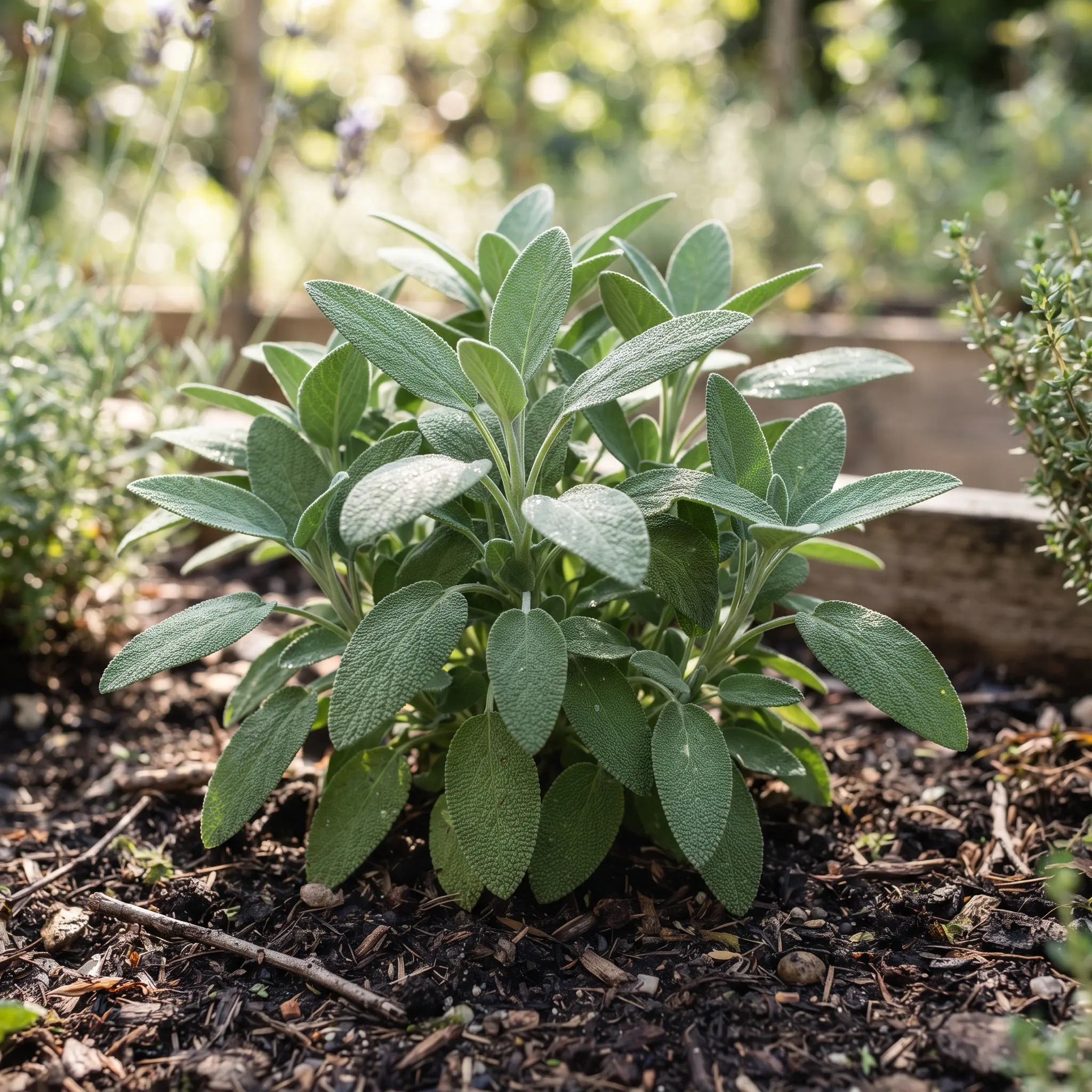
Traditionally, sage has been used primarily for soothing sore throats and supporting healthy digestion, especially when dealing with a scratchy throat, excess mucus, or a sluggish stomach after a heavy meal. It is commonly prepared as a tea, gargle, tincture, or infused oil.
Common Name: Sage
Latin Name: Salvia officinalis (Latin name itself in italics)
Alternate Names: Garden Sage, Common Sage
- Parts used: leaves
- Primary properties: astringent, antimicrobial, carminative
- Common preparations: tea, tincture, gargle, infused oil
- Best known for: soothing sore throats and calming an upset stomach
What It Helps With
Health conditions this herb is commonly used to support.
Related Buying Guides
Featured Recipes
Explore and try simple ways to prepare and use this herb at home.
Active Compounds
The tiny plant chemistry doing all the heavy lifting.
Key Herbal Properties
What this herb is known for, herbally speaking.





Herbal Synergies
Other herbs that pair especially well with this one — together, their combined properties work better than either herb does alone.
Health Conditions Sage Helps With
- Sore throat & mouth irritation — Sage has long been gargled as a tea to help soothe an irritated throat and support oral comfort during a cold.
- Digestive discomfort — Traditionally taken after meals, sage has been used to help ease bloating, gas, and a heavy feeling in the stomach.
- Excessive sweating — Sage is one of the most classic herbal remedies for reducing night sweats and general excessive perspiration.
- Menopausal hot flashes — Alongside its use for sweating, sage has traditionally been reached for to help take the edge off hot flashes.
- Mental clarity & memory support — Herbalists have long associated sage with supporting focus and a clear head, especially with age.
- Minor skin irritation — Cooled sage tea or infused oil has been used topically as a traditional wash for minor skin irritation.
Compounds
- Volatile oils (thujone, camphor, cineole) — Give sage its sharp, herbaceous aroma and are thought to contribute to its antimicrobial and carminative effects.
- Rosmarinic acid — A polyphenol commonly found in the mint family, generally understood to support sage’s antioxidant and anti-inflammatory reputation.
- Flavonoids — Contribute to sage’s overall antioxidant activity and are thought to support its traditional anti-inflammatory use.
- Tannins — Responsible for sage’s astringent, “tightening” quality, which is part of why it’s so often used as a gargle.
- Diterpenes (carnosic acid, carnosol) — Compounds studied for antioxidant activity, often cited in sage’s reputation as a preservative and general tonic herb.
Properties
- Astringent — Sage’s tannin content gives it a drying, tightening effect, useful for gargles and skin washes.
- Antimicrobial — Its volatile oil content is the traditional basis for using sage in mouth and throat care.
- Carminative — Sage has long been used to ease gas and settle a fussy digestive system after eating.
- Anhidrotic — Sage is unusual among culinary herbs for its strong traditional reputation for reducing sweating.
- Nervine (mild) — Used traditionally as a gentle support for mental clarity and calm focus.
- Anti-inflammatory — Its polyphenol content supports sage’s traditional use for general inflammation and irritation.
Recipes Using Sage
- Sage gargle or mouth rinse — A simple strong infusion of sage leaf, cooled and used as a throat gargle or mouthwash.
- After-dinner digestive tea — Sage paired with other carminative herbs makes a warming tea sipped after meals.
- Sage-infused honey — Dried sage steeped into honey, often stirred into tea for a soothing throat remedy.
Products Featuring Sage
- Dried loose leaf — The most versatile and traditional form, ideal for teas, gargles, and infused oils.
- Tincture — A concentrated liquid extract useful for those who want a quick dose without brewing tea.
- Standardized capsules — Chosen by people using sage specifically for hot flash or sweating support who want a consistent dose.
Synergies
- Sage + thyme — A classic pairing for sore throat and respiratory support, combining two antimicrobial herbs.
- Sage + chamomile — Softens sage’s sharper flavor while adding a calming, digestive-friendly quality.
- Sage + peppermint — A cooling, refreshing combination often used together for digestive teas.
- Sage + black cohosh — A traditional pairing in menopause-support blends, combining sage’s anhidrotic action with cohosh’s broader hormonal-support reputation.
Safety & Precautions
Sage contains thujone, a compound that can be neurotoxic in high or prolonged doses, so it should be used in food or tea amounts rather than as a long-term high-dose supplement. Sage essential oil should never be taken internally without professional guidance, as thujone content is far more concentrated there.
Pregnant individuals are generally advised to avoid therapeutic (non-culinary) doses of sage, as it has traditionally been associated with stimulating uterine activity. Breastfeeding individuals should also use caution, since sage has a long traditional reputation for reducing milk supply — a reason it’s sometimes used deliberately during weaning, but not otherwise. Anyone with a seizure disorder should avoid concentrated sage preparations given the thujone content. Sage may also interact with sedative medications and diabetes medications, since it has a traditional reputation for affecting blood sugar levels, so those on such medications should check with a healthcare provider first.
Culinary use of sage is generally well-tolerated by most healthy adults. For pets, sage in small culinary amounts is not typically a major concern, but sage essential oil is toxic to cats and should never be used around them, and large ingestions of the plant can cause mild digestive upset in dogs.
Q&A
Does sage taste bitter?
Sage has a strong, slightly peppery and earthy flavor rather than a purely bitter one. Many people describe it as savory and warming, similar to rosemary or thyme, which is part of why it blends so easily into culinary and herbal tea recipes.
Steeping it too long or using too much dried leaf can bring out a more bitter, medicinal edge, so it’s often balanced with milder herbs like chamomile or mint.
Can sage be used daily?
Culinary amounts of sage, such as a cup of tea or a pinch in cooking, are generally considered fine for regular use by most healthy adults. Daily use of concentrated tinctures or extracts over long periods is where more caution comes in, due to the thujone content.
If you’re using sage specifically for something like hot flashes or excessive sweating, it’s best to use it in cycles rather than indefinitely, and check in with a healthcare provider if you plan to use it for more than a few weeks at a time.
Is fresh or dried sage better for tea?
Both fresh and dried sage can be used for tea, and the choice mostly comes down to what’s on hand. Dried sage is more concentrated by volume, so less is needed per cup, while fresh leaves give a brighter, greener flavor.
For gargles and throat remedies, many herbalists prefer dried leaf simply because it’s more consistent and easier to store and dose.
How is sage tincture different from sage tea?
A tincture is a concentrated alcohol-based extract, so it delivers a stronger, more concentrated dose in just a few drops compared to a cup of tea. It’s often chosen for convenience, travel, or when a stronger digestive or anhidrotic effect is desired.
Tea, on the other hand, offers a gentler dose along with the ritual and hydration of drinking a warm beverage, making it a better fit for everyday sipping or soothing a sore throat.
Is sage safe around pets?
Culinary sage used in small amounts in cooking is not typically dangerous to dogs or cats, though large quantities of the plant can cause mild stomach upset. The bigger concern is sage essential oil, which is toxic to cats specifically and should never be diffused, applied, or left accessible around them.
If a pet has ingested a significant amount of sage or seems unwell after exposure, it’s best to contact a veterinarian promptly.
References
- Plants of the World Online: Salvia officinalis
- PubMed: Scientific Literature on Salvia officinalis
- National Library of Medicine: Chemical Constituents from Salvia officinalis
- Wikipedia: Salvia officinalis
- ScienceDirect Topics: Salvia officinalis Research
- NC State Extension Plant Toolbox: Salvia officinalis
- Memorial Sloan Kettering Cancer Center: About Herbs — Sage
- PubMed: Thujone and Salvia officinalis Safety
This information is for educational purposes only and is not intended as medical advice. Consult a qualified healthcare professional before using any herb, especially if pregnant, breastfeeding, taking medications, or managing a health condition.