


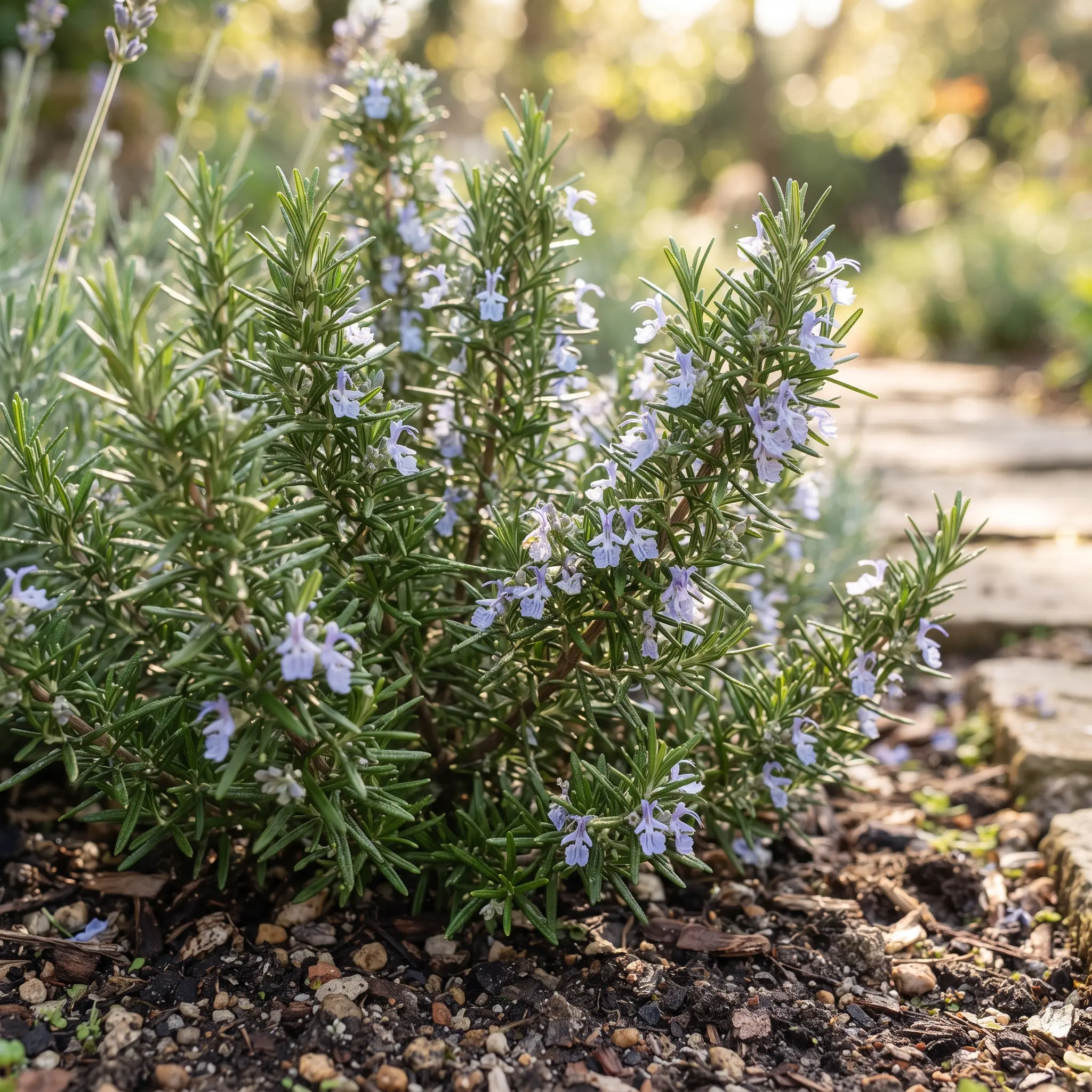
Traditionally, rosemary has been used primarily for supporting memory and mental clarity, especially when dealing with sluggish focus or digestive discomfort after meals. It is commonly prepared as a tea, tincture, infused oil, or added directly into food.
Common Name: Rosemary Latin Name: Salvia rosmarinus (Latin name itself in italics) Alternate Names: Rosmarinus officinalis, Anthos
- Parts used: leaves
- Primary properties: circulatory stimulant, carminative, antioxidant
- Common preparations: tea, tincture, infused oil, culinary use
- Best known for: supporting memory and mental focus
What It Helps With
Health conditions this herb is commonly used to support.
Related Buying Guides
Featured Recipes
Explore and try simple ways to prepare and use this herb at home.
Active Compounds
The tiny plant chemistry doing all the heavy lifting.
Key Herbal Properties
What this herb is known for, herbally speaking.





Herbal Synergies
Other herbs that pair especially well with this one — together, their combined properties work better than either herb does alone.
Health Conditions Rosemary Helps With
- Memory & focus support — Rosemary carries one of the strongest traditional reputations of any herb for supporting mental clarity and recall, sometimes called the “herb of remembrance.”
- Digestive discomfort — Traditionally used after rich or fatty meals to help ease bloating and support overall digestion.
- Headaches & tension — Rosemary has been used traditionally, often as a tea or applied topically as an infused oil, to help ease tension-related headaches.
- Poor circulation — Traditionally considered a circulatory stimulant, used historically to support blood flow, especially to the extremities and scalp.
- Hair & scalp health — Rosemary-infused oil has a long traditional history of use on the scalp to support hair health and growth.
- Low energy & mental fatigue — Traditionally used as a gentle stimulant to help combat sluggishness and support alertness.
Compounds
- Rosmarinic acid — A polyphenol rosemary is particularly rich in, generally understood to contribute significantly to its antioxidant and anti-inflammatory reputation.
- Carnosic acid & carnosol — Diterpene compounds studied for antioxidant activity, and part of why rosemary has traditionally been used as a natural preservative.
- Volatile oils (cineole, camphor, pinene) — Give rosemary its sharp, pine-like aroma and are thought to contribute to its stimulating and circulatory effects.
- Flavonoids — Support rosemary’s overall antioxidant profile and are thought to contribute to its traditional anti-inflammatory use.
- Ursolic acid — A triterpenoid compound found in rosemary’s waxy leaf coating, generally understood to support its antioxidant and skin-supportive reputation.
Properties
- Circulatory stimulant — Rosemary’s most classic traditional property, used to encourage blood flow, especially to the head and scalp.
- Carminative — Used traditionally to settle the stomach and ease digestive discomfort after eating.
- Nervine (mild) — Traditionally associated with supporting mental clarity and easing mild mental fatigue.
- Antioxidant — Its rich polyphenol and diterpene content underpins much of rosemary’s broader traditional reputation.
- Antimicrobial — Rosemary’s volatile oil content has traditionally supported its use in food preservation and minor topical applications.
Recipes Using Rosemary
- Rosemary focus tea — A simple infusion of rosemary leaf, often paired with peppermint or gotu kola, sipped for mental clarity.
- Rosemary hair rinse or scalp oil — Rosemary infused into oil or brewed as a strong tea, used topically on the scalp to support hair health.
- Rosemary digestive bitters — Rosemary combined with other carminative herbs in a small after-meal preparation to support digestion.
Products Featuring Rosemary
- Dried leaf — Versatile and widely available, suited for tea, cooking, and homemade infused oils.
- Essential oil — Popular for topical scalp and aromatherapy use, though it requires dilution before skin application.
- Tincture — Offers a concentrated, easy-to-dose liquid form for those wanting rosemary’s effects without brewing tea.
Synergies
- Rosemary + peppermint — A classic pairing for mental clarity and focus, combining two invigorating herbs.
- Rosemary + gotu kola — Traditionally combined for cognitive and memory support.
- Rosemary + lemon balm — Balances rosemary’s sharper, stimulating quality with lemon balm’s calming nature.
- Rosemary + nettle — A popular pairing in hair-supportive infusions and rinses.
Safety & Precautions
Rosemary used in culinary amounts is generally well-tolerated by most healthy adults. In concentrated forms, such as essential oil or high-dose extracts, rosemary can be more stimulating and may not be appropriate for everyone, particularly those with seizure disorders, since it has been associated with increasing seizure risk at high doses.
Pregnant individuals are generally advised to avoid therapeutic (non-culinary) doses of rosemary, as it has traditionally been associated with stimulating uterine activity; small culinary amounts are typically considered acceptable. Rosemary may also interact with blood-thinning medications, blood pressure medications, and diabetes medications due to its traditional effects on circulation and blood sugar, so anyone on these should consult a healthcare provider before using concentrated rosemary products. Rosemary essential oil should always be diluted before topical use, as it can irritate the skin undiluted, and it should never be taken internally without professional guidance.
Culinary use of rosemary is generally very well-tolerated. For pets, small culinary amounts of rosemary are not typically a major concern, but rosemary essential oil should be used with caution around cats in particular, as essential oils in general can be problematic for them, and any topical or aromatic use around pets should be approached carefully.
Q&A
Does rosemary really help with memory?
Rosemary has one of the longest and most consistent traditional reputations of any herb for supporting memory and mental clarity, dating back centuries as the “herb of remembrance.” Many people today still use rosemary tea or aromatic preparations specifically for this traditional purpose.
That said, this is a traditional use rather than a guaranteed outcome, and rosemary should be seen as a supportive habit rather than a replacement for addressing underlying causes of memory concerns.
Can rosemary be used daily?
Culinary amounts of rosemary, such as in cooking or an occasional cup of tea, are generally considered fine for daily use by most healthy adults. Concentrated forms like essential oil or high-dose extracts are better used more cautiously and not necessarily every day, especially over long periods.
If using rosemary specifically for memory or scalp support, many people build it into a regular but moderate routine, such as a few times a week rather than multiple times daily.
Is rosemary essential oil safe to put directly on skin or scalp?
Rosemary essential oil is quite concentrated and should not be applied directly to the skin or scalp without first diluting it in a carrier oil, as undiluted use can cause irritation. A common approach is mixing a few drops into a tablespoon or two of a carrier oil like jojoba or coconut oil.
Doing a small patch test before broader use is a reasonable precaution, since some people are more sensitive to essential oils than others.
Is fresh or dried rosemary better for tea and remedies?
Both fresh and dried rosemary work well, with dried rosemary being more concentrated by volume, so less is needed per cup of tea. Fresh rosemary offers a brighter, more aromatic flavor and is often preferred for infused oils.
For consistency in dosing, especially for tinctures or standardized preparations, dried leaf tends to be the more practical and commonly used form.
Is rosemary safe around pets?
Culinary rosemary used in small amounts in cooking is not typically a concern for dogs or cats. Rosemary essential oil is where more caution is needed, particularly around cats, since essential oils as a category can be problematic for them even in small amounts.
If you want to use rosemary topically or aromatically in a household with pets, it’s worth checking with a veterinarian first, especially if cats are present.
References
- Plants of the World Online: Salvia rosmarinus
- PubMed: Scientific Literature on Salvia rosmarinus
- National Library of Medicine: Chemical Constituents from Salvia rosmarinus
- Wikipedia: Salvia rosmarinus
- ScienceDirect Topics: Salvia rosmarinus Research
- NC State Extension Plant Toolbox: Salvia rosmarinus
- Memorial Sloan Kettering Cancer Center: About Herbs — Rosemary
- PubMed: Rosmarinic Acid and Carnosic Acid Research
This information is for educational purposes only and is not intended as medical advice. Consult a qualified healthcare professional before using any herb, especially if pregnant, breastfeeding, taking medications, or managing a health condition.