


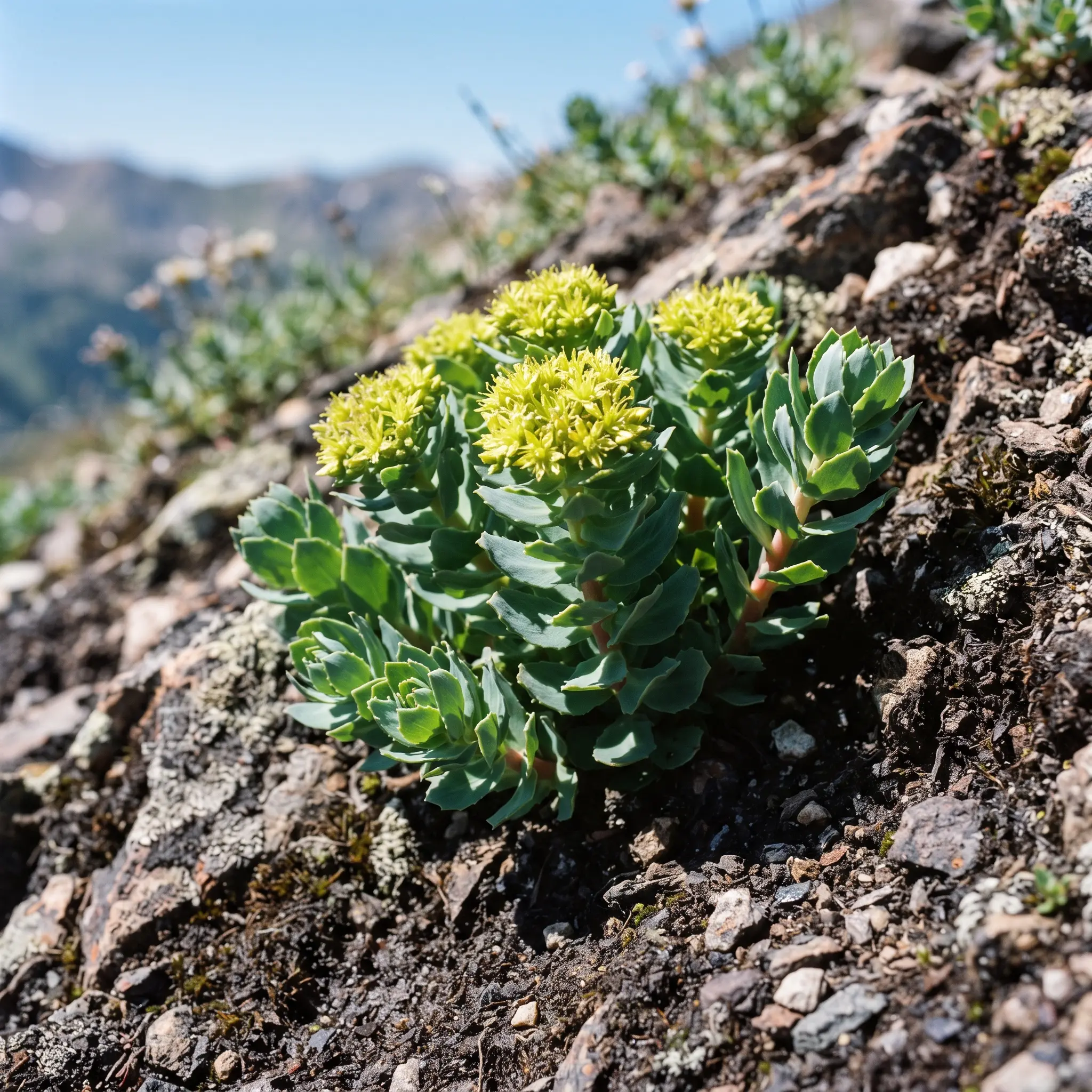
Traditionally, rhodiola has been used primarily for supporting resilience to stress and combating fatigue, especially when dealing with mental or physical exhaustion. It is commonly prepared as a tincture, capsule, tea, or standardized extract.
Common Name: Rhodiola Latin Name: Rhodiola rosea (Latin name itself in italics) Alternate Names: Golden Root, Arctic Root
- Parts used: root, rhizome
- Primary properties: adaptogen, nervine, mild stimulant
- Common preparations: tincture, capsule, standardized extract, tea
- Best known for: supporting energy and resilience under stress
What It Helps With
Health conditions this herb is commonly used to support.
Related Buying Guides
Featured Recipes
Explore and try simple ways to prepare and use this herb at home.
Active Compounds
The tiny plant chemistry doing all the heavy lifting.
Key Herbal Properties
What this herb is known for, herbally speaking.





Herbal Synergies
Other herbs that pair especially well with this one — together, their combined properties work better than either herb does alone.
Health Conditions Rhodiola Helps With
- Stress & burnout — Rhodiola is one of the most widely used adaptogens, traditionally taken to help the body cope with prolonged physical or mental stress.
- Fatigue & low energy — Traditionally used to help combat exhaustion, particularly the kind tied to overwork or ongoing stress rather than lack of sleep.
- Mental fog & poor concentration — Used traditionally to support focus and mental clarity during periods of high demand or fatigue.
- Low mood tied to exhaustion — Traditionally reached for when low mood seems connected to burnout or depleted energy reserves.
- Athletic recovery & endurance — Traditionally used by those under high physical demand to support stamina and recovery.
Compounds
- Rosavins — A group of compounds unique to Rhodiola rosea, often used as a marker for extract quality and thought to contribute to its adaptogenic effects.
- Salidroside — One of rhodiola’s most studied compounds, generally understood to contribute to its stress-supportive and antioxidant reputation.
- Flavonoids — Support rhodiola’s overall antioxidant profile and general anti-inflammatory reputation.
- Organic acids — Contribute to rhodiola’s broader traditional reputation as a tonic and general system-supportive herb.
- Tannins — Present in smaller amounts, contributing a mild astringent quality to rhodiola root preparations.
Properties
- Adaptogen — Rhodiola’s defining property, traditionally used to help the body adapt to and recover from stress.
- Nervine (mild) — Supports mental clarity and a settled nervous system, particularly under stress.
- Mild stimulant — Rhodiola has a gently energizing quality, distinguishing it from more calming adaptogens.
- Antioxidant — Its compound profile is thought to contribute to general cellular protective effects.
- Nootropic (traditional) — Long associated with supporting mental performance and focus, especially under demanding conditions.
Recipes Using Rhodiola
- Rhodiola energy tincture — A concentrated liquid extract, often combined with other adaptogens like eleuthero, taken in the morning for sustained energy.
- Rhodiola focus tea — A simple infusion of rhodiola root, sometimes blended with green tea, for mental clarity during demanding periods.
- Adaptogenic stress-support capsule blends — Rhodiola combined with herbs like ashwagandha or holy basil in capsule form for broader stress resilience support.
Products Featuring Rhodiola
- Standardized extract capsules — The most common and reliable form, allowing for a consistent dose of key marker compounds like rosavins and salidroside.
- Tincture — Offers flexible, adjustable dosing and faster absorption than capsules.
- Dried root/tea — A more traditional, whole-herb form, though less concentrated than standardized extracts.
Synergies
- Rhodiola + eleuthero (Siberian ginseng) — A classic adaptogen pairing traditionally combined for sustained energy and stress resilience.
- Rhodiola + ashwagandha — Balances rhodiola’s more stimulating quality with ashwagandha’s grounding, calming nature.
- Rhodiola + holy basil — Paired for broader stress-support formulas, combining rhodiola’s energizing effect with holy basil’s calming adaptogenic support.
- Rhodiola + ginkgo — Traditionally combined for focus and mental clarity support.
Safety & Precautions
Rhodiola is generally considered well-tolerated when used at typical doses, though because of its mildly stimulating quality, it can cause jitteriness, irritability, or trouble sleeping in some people, particularly if taken later in the day. Starting with a lower dose and taking it earlier in the day can help minimize this.
Rhodiola should be used cautiously by those with bipolar disorder, as its stimulating and mood-lifting qualities have raised concern about the possibility of triggering manic episodes in susceptible individuals. It may also interact with medications for depression, anxiety, or blood pressure, so anyone on these should consult a healthcare provider before use. Safety data during pregnancy and breastfeeding is limited, so it’s generally advised to avoid use during these times unless guided by a healthcare provider. It is not typically recommended for young children.
Rhodiola is generally well-tolerated by most healthy adults when used appropriately. For pets, rhodiola is not a commonly used or well-studied herb, and there isn’t reliable safety information available, so it’s best to avoid giving it to dogs or cats without direct veterinary guidance.
Q&A
How is rhodiola different from other adaptogens like ashwagandha?
Rhodiola tends to have a more energizing, stimulating quality, making it a popular choice for daytime use and combating fatigue, whereas ashwagandha is generally considered more calming and grounding, often used in the evening or for anxiety-related stress. Both are adaptogens, but they tend to suit different situations.
Some people use them together, taking rhodiola in the morning for energy and ashwagandha in the evening for relaxation, though this kind of combination is worth discussing with a healthcare provider first.
Can rhodiola be used daily?
Rhodiola is commonly used daily, particularly during periods of high stress, though many herbalists recommend cycling it — for example, using it for several weeks and then taking a break — rather than using it continuously indefinitely. This is a common approach with adaptogens in general.
If you notice signs like jitteriness or trouble sleeping, taking a break or lowering the dose is usually the first step before considering discontinuing entirely.
What time of day is best to take rhodiola?
Because of its mildly stimulating quality, rhodiola is generally best taken in the morning or early afternoon rather than in the evening. Taking it too late in the day can interfere with sleep for some people.
Many people find that taking it on an empty stomach in the morning provides the most noticeable energizing effect, though this can be adjusted based on individual tolerance.
How long does it take to notice rhodiola’s effects?
Some people notice a subtle energizing effect within the first few days of use, but rhodiola’s broader adaptogenic, stress-resilience benefits are traditionally understood to build over consistent use of several weeks. It’s generally not considered a fast-acting, one-dose remedy.
Because of this, giving it a few weeks of consistent use before evaluating whether it’s a good fit is a reasonable approach.
Is rhodiola safe around pets?
Rhodiola isn’t a well-studied or commonly used herb for pets, so there isn’t reliable safety information to confirm it’s appropriate for dogs or cats. Without solid data, it’s best treated with caution.
If you’re interested in adaptogenic support for a pet, it’s best to speak with a veterinarian familiar with herbal options rather than sharing a human rhodiola supplement.
References
- Plants of the World Online: Rhodiola rosea
- PubMed: Scientific Literature on Rhodiola rosea
- National Library of Medicine: Chemical Constituents from Rhodiola rosea
- Wikipedia: Rhodiola rosea
- ScienceDirect Topics: Rhodiola rosea Research
- Memorial Sloan Kettering Cancer Center: About Herbs — Rhodiola
- PubMed: Rhodiola rosea Adaptogen and Fatigue Research
- PubMed: Salidroside and Rosavin Compound Research
This information is for educational purposes only and is not intended as medical advice. Consult a qualified healthcare professional before using any herb, especially if pregnant, breastfeeding, taking medications, or managing a health condition.