


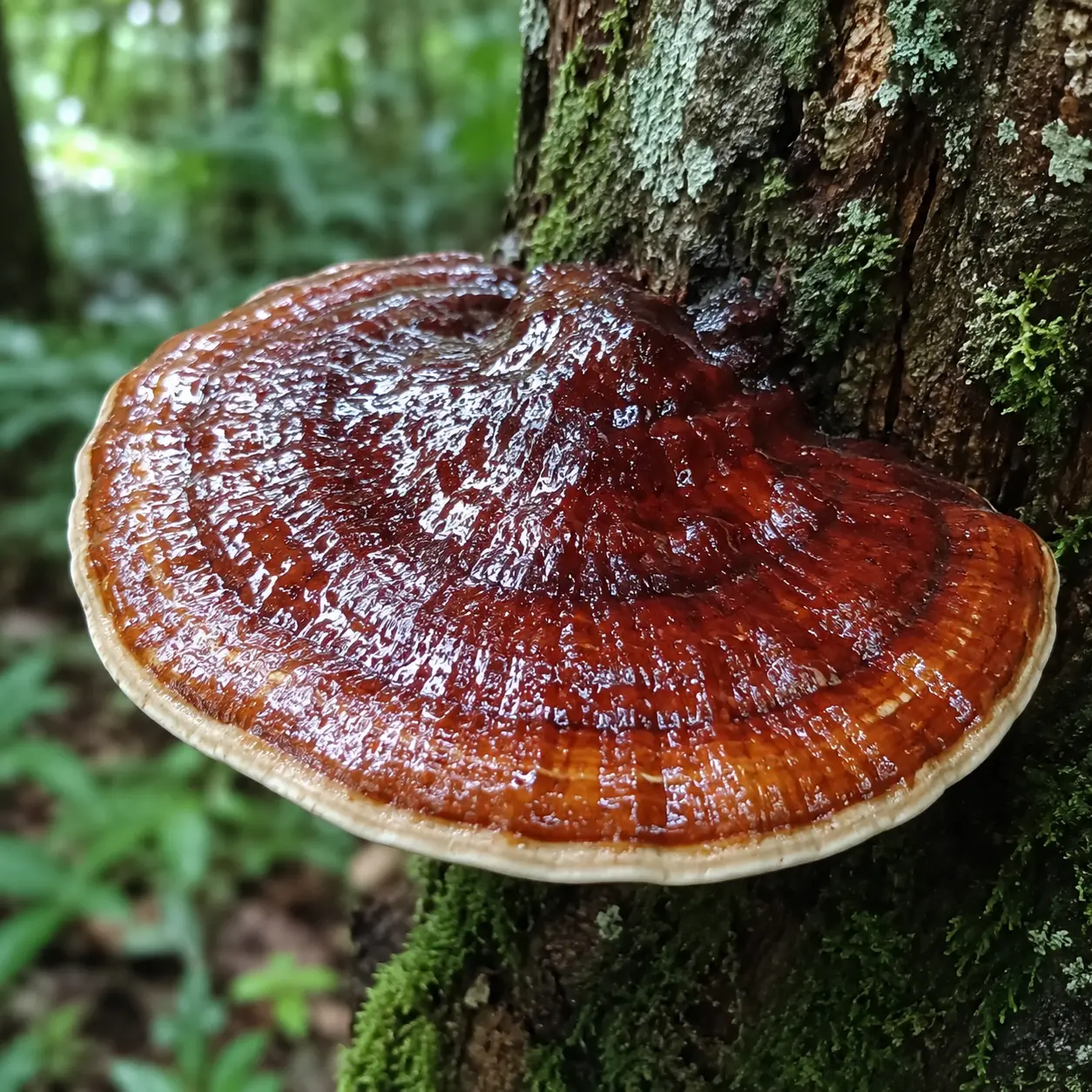
Traditionally, Reishi has been used primarily for supporting immune resilience and calming the nervous system, especially when dealing with daily stress or fatigue. It is commonly prepared as a long-simmered decoction, a dual-extracted liquid tincture, or stirred into warm functional beverages and elixirs.
Common Name: Reishi
Latin Name: Ganoderma lucidum
Alternate Names: Lingzhi, Mushroom of Immortality
- Parts used: Fruiting body (mushroom)
- Primary properties: Adaptogen, immunomodulator, nervine
- Common preparations: Decoction, dual-extract tincture, powder
- Best known for: Supporting stress resilience and immune health
What It Helps With
Health conditions this herb is commonly used to support.
Related Buying Guides
Featured Recipes
Explore and try simple ways to prepare and use this herb at home.
Active Compounds
The tiny plant chemistry doing all the heavy lifting.
Key Herbal Properties
What this herb is known for, herbally speaking.




Herbal Synergies
Other herbs that pair especially well with this one — together, their combined properties work better than either herb does alone.
Health Conditions Reishi Helps With
Reishi is traditionally used to support long-term immune resilience, helping the body maintain balanced defense responses during seasonal changes or periods of high fatigue. It has a rich history of use as a calming nervine to help the body adapt to everyday stress, ease occasional restlessness, and promote restful sleep. Additionally, it has been traditionally employed to support cardiovascular wellness and maintain normal vitality in aging populations. It is also valued for supporting respiratory comfort and easing mild upper airway congestion.
Compounds
Reishi contains polysaccharides, particularly beta-glucans, which are widely understood to modulate and support immune system function. It is rich in triterpenoids, such as ganoderic acids, which contribute to its bitter profile and support liver health and a balanced inflammatory response. Nucleosides and nucleotides are also present, playing a role in supporting cardiovascular circulation and nervous system relaxation. Additionally, it contains sterols and various antioxidant enzymes that help protect cellular health from oxidative stress.
Properties
Reishi functions primarily as an adaptogen, helping the body successfully buffer and adapt to physical, mental, and environmental stress over time. It acts as a profound immunomodulator, meaning it helps balance and regulate immune activity rather than simply stimulating it. As a nervine, it gently calms the central nervous system to promote relaxation and deeper sleep. Finally, it serves as a restorative tonic, nourishing deep reserves of energy and vitality.
Recipes Using Reishi
Because Reishi fruiting bodies are woody and tough, they are most commonly prepared as a long-simmered decoction, where sliced or powdered mushroom is gently simmered for several hours to extract water-soluble compounds. Due to its deeply earthy and bitter flavor, it is frequently incorporated into rich medicinal broths, soups, and stews alongside savory herbs and roots. It is also commonly whisked into warm cacao elixirs or golden milk blends using a dual-extract powder to mask the bitterness with comforting fats and spices.
Products Featuring Reishi
Reishi is widely available as a concentrated dual-extract liquid tincture, which captures both the water-soluble polysaccharides and alcohol-soluble triterpenes for maximum effectiveness. It is also sold as a micronized fruiting body powder, which can be easily blended into morning coffee, smoothies, or baking recipes. Additionally, standardized capsules and extract capsules offer a quick, taste-free option for those who dislike the bitter profile of the mushroom.
Synergies
Reishi is frequently paired with Ashwagandha (Withania somnifera) or Holy Basil (Ocimum tenuiflorum) to create a powerful adaptogenic formula for comprehensive stress and nervous system support. It is commonly combined with immune-supportive medicinal mushrooms like Turkey Tail (Trametes versicolor) and Shiitake (Lentinula edodes) for broad-spectrum immune health. For sleep and evening relaxation, it blends wonderfully with nerve-calming herbs like Skullcap (Scutellaria lateriflora) or Passionflower (Passiflora incarnata).
Safety & Precautions
Reishi is generally well-tolerated by most individuals when used as a food or supplement, but caution should be exercised by those with bleeding disorders or individuals taking anticoagulant and antiplatelet medications, as it may influence blood clotting. Because of its immunomodulating and potential blood-pressure-lowering effects, individuals taking immunosuppressant drugs or blood pressure medications should consult a healthcare provider before use. It should also be used with caution or avoided prior to scheduled surgeries due to its mild blood-thinning potential. Safety data regarding routine or high-dose use during pregnancy and breastfeeding is limited, so professional guidance is recommended, and pet safety data is sparse, requiring veterinary consultation before giving it to animals.
Q&A
Does Reishi taste bitter?
Reishi has a distinctly bitter, earthy, and woody flavor profile primarily driven by its rich concentration of triterpenoids. Because of this bold and medicinal taste, it is rarely enjoyed as a simple, unadorned tea.
Most people prefer taking it as a concentrated liquid tincture, using a dual-extract powder in spiced cacao, or simmering slices in savory broths where the bitterness blends harmoniously with other flavors.
Can Reishi be used daily for long periods?
Reishi is classified as a tonic and adaptogen, meaning it is traditionally intended for long-term, consistent daily use to help build resilience against chronic stress and support immune function over time. Taking it as a daily ritual allows its cumulative properties to support the body’s baseline vitality.
However, cycling off the supplement for a week every few months is sometimes practiced by herbalists to keep the body responsive to its active constituents.
How does Reishi differ from other medicinal mushrooms like Lion’s Mane?
While both are functional mushrooms, Reishi is primarily focused on calming the nervous system, supporting deep stress resilience, and modulating immune function. In contrast, Lion’s Mane is more commonly sought after for cognitive focus, memory support, and nervous system tissue health.
Choosing between them depends on whether your primary goal is relaxation and immune balance or mental clarity and cognitive support.
Is it better to use Reishi powder, tea, or a tincture?
The best form depends on how you plan to consume it and which compounds you want to extract, as Reishi contains both water-soluble polysaccharides and alcohol-soluble triterpenes. A dual-extract tincture or dual-extract powder ensures you receive the full spectrum of both compound types conveniently.
Decoctions made from whole slices are wonderful for traditional broths and teas, while powders offer maximum versatility for adding into daily smoothies, coffees, and baked goods.
References
- Plants of the World Online: Ganoderma lucidum
- PubMed: Scientific Literature on Ganoderma lucidum
- National Library of Medicine: Chemical Constituents from Ganoderma lucidum
- Wikipedia: Ganoderma lucidum
- ScienceDirect Topics: Ganoderma lucidum Research
- Memorial Sloan Kettering Cancer Center: About Herbs — Reishi Mushroom
This information is for educational purposes only and is not intended as medical advice. Consult a qualified healthcare professional before using any herb, especially if pregnant, breastfeeding, taking medications, or managing a health condition.