


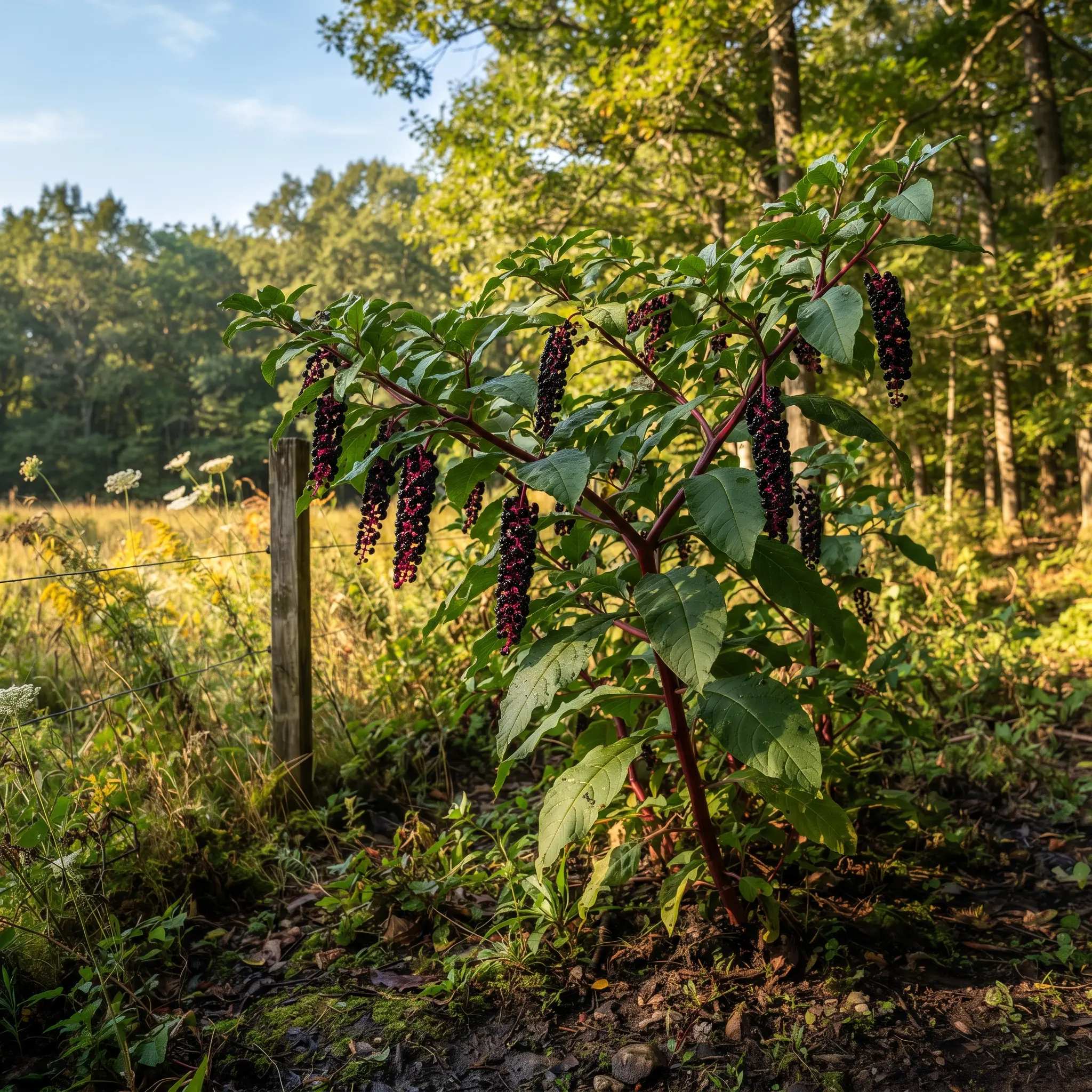
Traditionally, poke root has been used primarily as a lymphatic stimulant, especially when swollen glands or lymphatic congestion were the concern, though it is a genuinely potent, toxic herb that modern practice reserves for experienced practitioner use only. It is historically prepared as a tincture in very small, carefully measured doses, or as a topical salve — both approaches requiring real expertise rather than home use.
Common Name: Poke Root Latin Name: Phytolacca americana Alternate Names: Pokeweed, pokeberry root
- Parts used: root (all parts of the plant are toxic to varying degrees)
- Primary properties: lymphatic stimulant, alterative, historically emetic/cathartic
- Common preparations: professionally prepared tincture (practitioner use only), topical salve
- Best known for: traditional lymphatic support; also recognized as one of the more toxic botanicals still referenced in herbal folklore
What It Helps With
Health conditions this herb is commonly used to support.
Related Buying Guides
Featured Recipes
Explore and try simple ways to prepare and use this herb at home.
Active Compounds
The tiny plant chemistry doing all the heavy lifting.
Key Herbal Properties
What this herb is known for, herbally speaking.




Herbal Synergies
Other herbs that pair especially well with this one — together, their combined properties work better than either herb does alone.
Health Conditions Poke Root Helps With
- Swollen lymph nodes and lymphatic congestion — Poke root has one of the strongest traditional reputations of any herb for stimulating lymphatic drainage, historically used for swollen glands, tonsillitis, and mumps.
- Mastitis and swollen breast tissue — Traditionally applied topically as a poultice or salve to help ease inflammation and congestion in breast tissue, always under experienced guidance.
- Chronic rheumatism and joint pain — Historically used both internally, in tiny doses, and topically for chronic joint pain and stiffness.
- Skin conditions — Traditionally applied topically to boils, cysts, and other stubborn skin eruptions.
Given poke root’s significant toxicity, this post focuses heavily on safety, since internal use is not appropriate for home or self-directed care under any circumstances.
Compounds
- Phytolaccatoxin and phytolaccigenin — Triterpene saponins responsible for much of poke root’s traditional biological activity and also its well-documented toxicity, particularly when the dose is not tightly controlled.
- Lectins (including pokeweed mitogen and pokeweed antiviral protein) — Compounds studied for their effects on immune cells, but also capable of causing significant illness if the plant material is not properly and expertly prepared.
- Alkaloids — Contribute to poke root’s traditional purgative and analgesic reputation, and to its toxicity profile.
- Flavonoids — Contribute general antioxidant activity, though they are a minor part of poke root’s overall profile compared to its more potent, toxic constituents.
Properties
- Lymphatic stimulant — Poke root’s defining traditional property, understood to encourage lymphatic drainage and support the clearing of stagnant lymph.
- Alterative — Traditionally regarded as a “blood purifying” tonic in Western herbal tradition, though this is a folk classification rather than a pharmacologically defined action.
- Historically emetic and cathartic — At higher, uncontrolled doses, poke root reliably causes vomiting and diarrhea; this is not a therapeutic effect but a hallmark sign of toxicity and overdose.
- Anti-inflammatory (topical) — Traditionally applied to the skin for its anti-inflammatory, drawing reputation on boils and swollen tissue.
Recipes Using Poke Root
Because poke root’s therapeutic window is extremely narrow and its toxicity well documented, this post intentionally does not provide internal preparation instructions such as tincture recipes or dosing guidance. In traditional and modern professional herbal practice, internal poke root preparations are compounded and dosed exclusively by trained, experienced herbal practitioners — this is not a plant to prepare or dose at home.
- Professionally prepared tincture — When used internally at all, poke root tincture is prepared and dosed only by a qualified, experienced herbalist, typically in drop-level amounts as part of a larger formula.
- Topical salve or oil — A gentler traditional application, made by infusing poke root in oil and combining with beeswax, though even topical use should be approached with caution and professional guidance for anything beyond very limited, superficial use.
Products Featuring Poke Root
- Professional-grade tincture — Available primarily through practitioners trained in its safe use; not intended for self-dosing.
- Topical salve — The gentler and more accessible traditional form, though still worth discussing with a knowledgeable herbalist before use, particularly on broken skin or larger areas.
Synergies
Because poke root is not appropriate for home use, this post does not provide combination or formula suggestions. In professional herbal practice, poke root may be included by an experienced practitioner alongside other lymphatic or alterative herbs like red clover or cleavers, but such formulas are compounded and dosed by the practitioner, not assembled at home.
Safety & Precautions
Poke root is one of the more seriously toxic plants still referenced in herbal tradition, and this section is the most important part of this post — please read it in full.
All parts of the poke plant are toxic, including the root, leaves, stems, and berries, with the root generally considered the most concentrated. Poke root should never be self-dosed or prepared at home; in many herbal traditions and regulatory frameworks it is treated as a restricted herb intended for use only by trained, experienced practitioners who can judge an appropriate, tightly controlled dose. Ingesting poke root, or eating the raw berries or improperly prepared leaves, can cause vomiting, diarrhea, abdominal cramping, and in more serious cases, more significant systemic symptoms including changes in heart rate, breathing difficulty, and other signs of poisoning; children are at particular risk of serious harm even from small amounts. Poke root should never be given to children under any circumstances. It should be avoided entirely during pregnancy and breastfeeding, and by anyone who is immunocompromised, given its potent effects on immune cell activity. It should also be avoided by anyone without direct, professional guidance, regardless of health status, given how narrow the line is between a traditional therapeutic amount and a toxic one. If poke root poisoning is suspected — from any part of the plant, prepared or raw — this is a medical emergency, and Poison Control or emergency medical services should be contacted immediately. Poke root and pokeweed berries are also toxic to pets and livestock, and should be kept well out of reach of animals; if a pet is suspected of ingesting any part of the plant, contact a veterinarian right away.
Q&A
Does poke root taste bitter?
Poke root has a sharp, acrid, unpleasant taste, which is one of several natural deterrents built into a plant this potent — but taste isn’t the relevant safety consideration here.
Given poke root’s real toxicity, this isn’t an herb to taste-test or prepare casually at home in any form, regardless of flavor.
Can poke root be used daily?
No — poke root is not appropriate for regular or daily home use under any circumstances, and even in professional practice it’s used in carefully controlled, typically brief and closely monitored courses rather than as an everyday herb.
If lymphatic support is your goal, gentler and much safer herbs like red clover, cleavers, or calendula are far more appropriate for regular self-care use, and a qualified herbalist can help you choose an approach suited to your needs.
Is it safe to forage or grow poke root at home for medicinal use?
This isn’t recommended — while pokeweed is a common wild plant across much of North America, correctly identifying, harvesting, and safely preparing the root requires real expertise, and the margin between a traditional dose and a toxic one is genuinely narrow.
If you’re interested in poke root specifically, working with a trained, experienced herbalist who has hands-on knowledge of this plant is a much safer path than attempting to forage, prepare, or dose it yourself.
What should I do if someone accidentally eats part of a poke plant?
Contact Poison Control or seek emergency medical care immediately, since ingestion of any part of the poke plant, especially by a child, can cause serious poisoning that needs prompt medical evaluation.
Don’t wait to see if symptoms develop before seeking help, and try to note which part of the plant was eaten and roughly how much, since this information can help guide medical treatment.
Is poke root safe to use around pets?
No — poke root and other parts of the pokeweed plant are toxic to pets and livestock, and animals should never have access to the plant, its berries, or any home-prepared poke root product.
If you suspect a pet has eaten any part of a poke plant, contact a veterinarian or animal poison control immediately rather than waiting to see if symptoms appear.
References
- Plants of the World Online: Phytolacca americana
- PubMed: Scientific Literature on Phytolacca americana
- National Library of Medicine: Phytolacca americana Toxicity Research
- Wikipedia: Phytolacca americana
- Memorial Sloan Kettering Cancer Center: About Herbs — Pokeweed
- ScienceDirect Topics: Phytolacca americana Research
- National Center for Complementary and Integrative Health: Pokeweed Safety
This information is for educational purposes only and is not intended as medical advice. Consult a qualified healthcare professional before using any herb, especially if pregnant, breastfeeding, taking medications, or managing a health condition.