


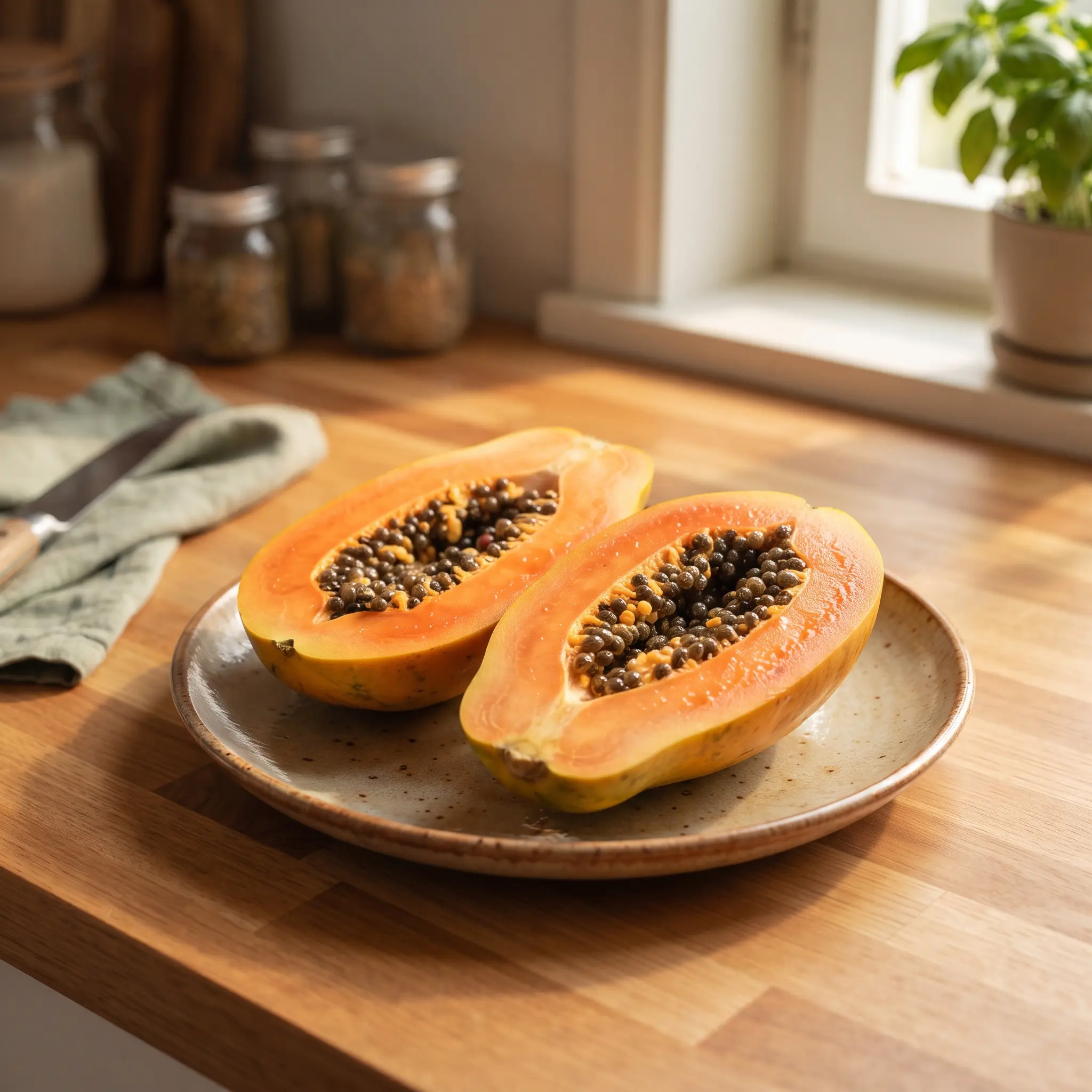
Traditionally, papaya seed has been used primarily as a digestive and anti-parasitic remedy, especially when intestinal worms or sluggish digestion are the concern. It is commonly prepared as dried, ground seed taken with honey, a decoction, or capsules.
Common Name: Papaya Seed Latin Name: Carica papaya Alternate Names: Pawpaw seed
- Parts used: seeds
- Primary properties: anthelmintic, digestive, antimicrobial
- Common preparations: dried ground seed, decoction, capsules
- Best known for: traditional use against intestinal parasites.
What It Helps With
Health conditions this herb is commonly used to support.
Related Buying Guides
Featured Recipes
Explore and try simple ways to prepare and use this herb at home.
Active Compounds
The tiny plant chemistry doing all the heavy lifting.
Key Herbal Properties
What this herb is known for, herbally speaking.




Herbal Synergies
Other herbs that pair especially well with this one — together, their combined properties work better than either herb does alone.
Health Conditions Papaya Seed Helps With
- Intestinal parasites — Papaya seed has one of the strongest traditional reputations of any food-plant remedy for expelling intestinal worms, often taken as dried, ground seed mixed with honey.
- Sluggish digestion — Traditionally used to support digestive function and ease mild digestive discomfort.
- Minor digestive infections — Traditional use includes supporting the gut’s response to minor bacterial or parasitic imbalances.
- Liver support — Some traditional use includes papaya seed as part of broader liver-supportive preparations.
- Skin infections (topical) — Papaya seed extract has traditionally been explored for topical use against minor bacterial and fungal skin concerns.
Compounds
- Benzyl isothiocyanate (BITC) — A sulfur-containing compound in papaya seed associated with its traditional antiparasitic and antimicrobial reputation.
- Alkaloids (including carpaine) — Contribute to papaya seed’s traditional digestive and antiparasitic actions.
- Fixed oils — Papaya seeds are notably rich in oil, contributing to their traditional use and texture in preparations.
- Flavonoids — Contribute general antioxidant support to the seed’s overall profile.
- Papain (trace amounts) — The well-known digestive enzyme found more concentrated in papaya fruit and latex, present in smaller amounts in the seed.
Properties
- Anthelmintic — Papaya seed’s defining traditional property, referring to its long-standing use for expelling intestinal parasites.
- Digestive — Traditionally used to support overall digestive function alongside its antiparasitic reputation.
- Antimicrobial — Traditional use includes supporting the body’s response to minor bacterial and fungal concerns.
- Bitter — Papaya seed’s peppery, bitter character reflects its traditional digestive-stimulating quality.
Recipes Using Papaya Seed
- Dried seed and honey elixir — Air-dried, ground papaya seeds mixed with honey, a classic traditional preparation used for intestinal parasite support.
- Papaya seed decoction — Crushed seeds simmered in water, traditionally taken for digestive and antiparasitic support.
- Culinary use — In some traditional cuisines, papaya seeds are dried and ground as a peppery seasoning, offering a food-level way to include them in the diet.
Products Featuring Papaya Seed
- Dried whole or ground seed — The most traditional and widely used form, often combined with honey for palatability.
- Capsules — A convenient, more consistent-dose option that avoids the seed’s sharp, peppery bitterness.
- Liquid extract — Offers a more concentrated preparation, though less common than dried seed or capsules.
Synergies
- Honey — Classically combined with papaya seed in traditional antiparasitic preparations, both to improve palatability and as a traditional pairing in itself.
- Garlic — Paired in traditional antiparasitic and digestive formulas, both known for complementary traditional actions against intestinal parasites.
- Ginger — Combined for digestive support, balancing papaya seed’s intensity with ginger’s own traditional carminative action.
- Pumpkin seed — Paired in traditional anthelmintic blends, both seeds carrying long folk reputations for supporting the body’s response to intestinal parasites.
Safety & Precautions
Papaya seed carries some of the more significant and well-documented traditional and research-based cautions of any seed used in herbal practice, and deserves genuine care.
Papaya seed has a substantial body of traditional use and research specifically tied to reduced fertility, particularly affecting sperm count, motility, and viability in males, and this effect appears to be dose-dependent, though generally reversible after stopping use; anyone trying to conceive should avoid regular or concentrated use of papaya seed. Papaya seed and other parts of the papaya plant have a long traditional history of use to influence menstrual flow, and unripe papaya more broadly carries a traditional reputation as a uterine stimulant, so papaya seed should be avoided during pregnancy. Safety data during breastfeeding is also lacking, so it’s best to avoid regular or concentrated use while nursing unless guided by a healthcare provider. Papaya seed may cause digestive side effects such as nausea or loose stools in some people, particularly at higher traditional antiparasitic doses. Because papaya seed and papaya latex may interact with blood-thinning medications, anyone on anticoagulant or antiplatelet therapy should consult a healthcare provider before use. It’s not recommended for young children without professional guidance, given the intensity of its traditional antiparasitic use. There is no well-established safety data on papaya seed use in pets, so it’s best kept for human use only.
Q&A
Does papaya seed taste bitter?
Yes, papaya seeds have a notably sharp, peppery, bitter taste, similar in character to black pepper or mustard seed, which is part of why they’re traditionally combined with honey to make them easier to take.
Fresh seeds tend to be more intensely peppery than dried ones, though both retain a distinct bitterness that most people find strong on its own.
Can papaya seed be used daily?
Papaya seed is traditionally used for short, targeted courses, such as several days to a couple of weeks when addressing intestinal parasites, rather than as an ongoing daily supplement.
Given its documented effects on fertility and its intensity, indefinite daily use isn’t generally recommended, and it’s best reserved for specific, short-term traditional purposes rather than a daily habit.
Is papaya seed safe for someone trying to conceive?
This deserves real caution — papaya seed has a substantial traditional and research history tied to reduced male fertility, particularly affecting sperm count and motility, and unripe papaya more broadly carries traditional use as a uterine stimulant relevant to female fertility and pregnancy.
Anyone trying to conceive, or who is pregnant, should avoid regular or concentrated use of papaya seed, and it’s worth discussing any interest in this herb with a healthcare provider given how well-documented these traditional and research-based effects are.
What’s the difference between papaya seed and papaya fruit or leaf?
Papaya seed is specifically associated with traditional antiparasitic and fertility-related use, while the fruit is primarily a food source rich in digestive enzymes, and the leaf has its own separate traditional history, including use for supporting platelet counts.
Because each part of the papaya plant has a distinct traditional use and safety profile, it’s worth being clear about which part a product actually contains rather than assuming they’re interchangeable.
Can papaya seed be combined with other traditional antiparasitic herbs?
Yes, papaya seed is traditionally combined with herbs like garlic or pumpkin seed in antiparasitic formulas, since their traditional uses are seen as complementary.
If you’re combining several antiparasitic herbs, it’s still worth checking with a healthcare provider, particularly given papaya seed’s more significant traditional cautions around fertility and pregnancy compared to many other digestive herbs.
References
- Plants of the World Online: Carica papaya
- PubMed: Scientific Literature on Carica papaya Seed
- National Library of Medicine: Chemical Constituents from Carica papaya Seed
- Wikipedia: Carica papaya
- ScienceDirect Topics: Carica papaya Seed Research
- Memorial Sloan Kettering Cancer Center: About Herbs — Papaya
- PubMed: Carica papaya Seed Antifertility Research
- National Center for Complementary and Integrative Health: Papaya
This information is for educational purposes only and is not intended as medical advice. Consult a qualified healthcare professional before using any herb, especially if pregnant, breastfeeding, taking medications, or managing a health condition.