


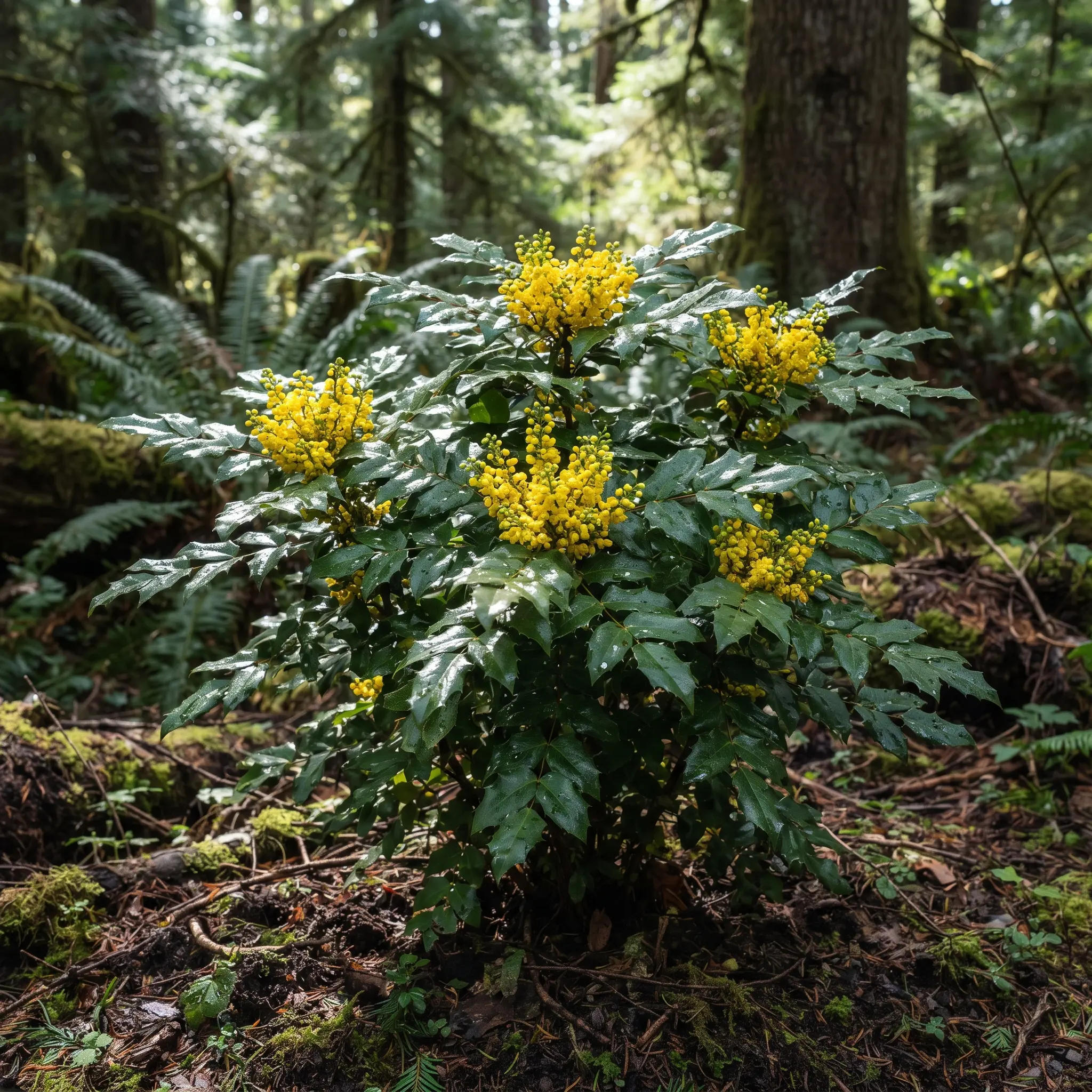
Traditionally, Oregon grape has been used primarily as a bitter tonic for liver and digestive support, especially when sluggish digestion or chronic skin conditions like psoriasis and eczema are the concern. It is commonly prepared as a tincture, capsule, decoction, or topical cream.
Common Name: Oregon Grape Latin Name: Mahonia aquifolium (synonym Berberis aquifolium) Alternate Names: Oregon grapeholly, holly-leaved barberry
- Parts used: root and root bark
- Primary properties: bitter tonic, antimicrobial, hepatic
- Common preparations: tincture, capsules, decoction, topical cream
- Best known for: supporting liver function and easing chronic skin conditions.
What It Helps With
Health conditions this herb is commonly used to support.
Related Buying Guides
Featured Recipes
Explore and try simple ways to prepare and use this herb at home.
Active Compounds
The tiny plant chemistry doing all the heavy lifting.
Key Herbal Properties
What this herb is known for, herbally speaking.






Herbal Synergies
Other herbs that pair especially well with this one — together, their combined properties work better than either herb does alone.
Health Conditions Oregon Grape Helps With
- Sluggish digestion — As a classic bitter herb, Oregon grape root has traditionally been used to stimulate digestive secretions and bile flow, especially before meals.
- Liver and gallbladder support — Long traditional use includes supporting healthy liver function and bile flow, particularly when digestion feels congested or sluggish.
- Psoriasis and eczema — Oregon grape’s berberine content has a well-documented traditional and modern reputation for easing chronic, inflammatory skin conditions, particularly when used topically.
- Minor skin infections — Traditionally used both internally and topically to support the body’s response to bacterial or fungal skin concerns.
- Low appetite and general debility — Historically used by Indigenous peoples of the Pacific Northwest to help address low appetite and general weakness.
- Minor digestive infections — Traditional use includes supporting the gut’s response to minor bacterial or microbial imbalances.
Compounds
- Berberine — The primary bioactive alkaloid in Oregon grape root, responsible for most of its traditional antimicrobial, anti-inflammatory, and liver-supportive reputation.
- Other isoquinoline alkaloids — Present alongside berberine and thought to contribute additional antimicrobial and anti-inflammatory support.
- Flavonoids — Contribute antioxidant activity to Oregon grape’s overall traditional profile.
- Saponins — Present in smaller amounts and associated with some of the root’s traditional actions.
Properties
- Bitter tonic — Oregon grape root’s pronounced bitterness is central to its traditional use for stimulating digestion and supporting bile flow.
- Hepatic — Traditionally used to support and tone healthy liver function.
- Antimicrobial — Berberine’s well-documented traditional reputation underlies Oregon grape’s use against bacterial, fungal, and other minor infections.
- Anti-inflammatory — Traditional and modern topical use for chronic skin conditions reflects this calming, tissue-soothing property.
- Alterative — Traditionally considered a blood and tissue “cleansing” tonic, particularly connected to skin health via liver support.
Recipes Using Oregon Grape
- Digestive bitters — Oregon grape root is a classic ingredient in traditional bitters blends, taken before meals to stimulate digestion.
- Liver-support tincture — Combined with other traditionally liver-supportive herbs into a tincture aimed at digestive and hepatic tonic support.
- Topical skin cream — Oregon grape extract is commonly incorporated into creams and salves for traditional use on psoriasis and eczema.
Products Featuring Oregon Grape
- Tincture — A common concentrated form, offering flexible dosing for digestive and liver-supportive use.
- Capsules — A convenient, tasteless option for those who prefer not to take the notably bitter root directly.
- Topical cream or salve — Specifically formulated for skin application, used traditionally and in modern herbal practice for psoriasis and eczema.
Synergies
- Dandelion root — A classic pairing for liver and digestive support, combining two traditional bitter, hepatic herbs.
- Milk thistle — Frequently combined in liver-support formulas, pairing complementary traditional hepatoprotective reputations.
- Yellow dock — Paired in traditional alterative or “blood cleansing” formulas, particularly for skin-related concerns.
- Burdock root — Combined in traditional skin-support blends, both associated with liver and skin health together.
Safety & Precautions
Oregon grape root, and its berberine content specifically, comes with real, well-documented cautions that go beyond general herb-taking care.
Oregon grape should be avoided during pregnancy, since berberine has been shown to displace bilirubin from albumin, which may pose a risk to a developing baby, particularly later in pregnancy; it should also be avoided while breastfeeding due to insufficient safety data and the same underlying concern. Because berberine can interact with a wide range of medications, including those metabolized by the liver, blood sugar medications, and blood thinners, anyone on prescription drugs should consult a healthcare provider before using Oregon grape internally. It’s not recommended for infants or young children, given berberine’s documented displacement of bilirubin, which carries particular risk in newborns. People with liver conditions should use Oregon grape only under professional guidance, since it directly affects liver and bile function. Long-term or high-dose internal use isn’t generally recommended; Oregon grape is traditionally used for shorter, targeted periods rather than as an indefinite daily tonic. There is no well-established safety data on Oregon grape use in pets, so it’s best kept for human use only unless directed otherwise by a veterinarian.
Q&A
Does Oregon grape taste bitter?
Yes, Oregon grape root is intensely bitter, among the more strongly bitter herbs used in traditional Western herbalism, which is directly tied to its traditional digestive-stimulating action.
Because of this strong bitterness, many people prefer to take Oregon grape as capsules or a well-diluted tincture rather than as a standalone tea.
Can Oregon grape be used daily?
Oregon grape is traditionally used for shorter, targeted periods, such as a course of several weeks to support digestion or skin health, rather than as an ongoing daily supplement.
Because of berberine’s real interactions with medications and its effects on liver and bile function, it’s best to use Oregon grape with breaks between courses and to check in with a healthcare provider if considering longer-term use.
Is Oregon grape the same as goldenseal or barberry?
No, though they’re related — Oregon grape, goldenseal, and barberry are all separate plants that happen to share berberine as a key active compound, giving them broadly similar traditional antimicrobial and bitter-tonic reputations.
Because goldenseal is a plant of conservation concern in parts of its native range, Oregon grape root is often used as a more sustainable alternative source of berberine in herbal preparations.
What’s the difference between internal and topical use of Oregon grape?
Internal use, such as tincture or capsules, is traditionally aimed at digestion and liver support, while topical creams and salves are specifically used for chronic skin conditions like psoriasis and eczema, drawing on Oregon grape’s anti-inflammatory and antimicrobial properties applied directly to the skin.
Both uses share the same underlying berberine-rich root as their source, but the safety considerations and appropriate product forms differ depending on which route you’re using.
Can Oregon grape be combined with other liver-support herbs?
Yes, Oregon grape is commonly combined with herbs like dandelion root or milk thistle in liver-support formulas, since their traditional uses are seen as complementary.
If you’re on any prescription medications, it’s especially worth checking with a healthcare provider before combining Oregon grape with other herbs, since berberine’s medication interactions are more established than many other herbal compounds.
References
- Plants of the World Online: Mahonia aquifolium
- PubMed: Scientific Literature on Mahonia aquifolium
- National Library of Medicine: Chemical Constituents from Mahonia aquifolium
- Wikipedia: Mahonia aquifolium
- ScienceDirect Topics: Mahonia aquifolium Research
- Memorial Sloan Kettering Cancer Center: About Herbs — Oregon Grape
- PubMed: Berberine Pharmacology Research
- National Center for Complementary and Integrative Health: Berberine-Containing Herbs
This information is for educational purposes only and is not intended as medical advice. Consult a qualified healthcare professional before using any herb, especially if pregnant, breastfeeding, taking medications, or managing a health condition.