

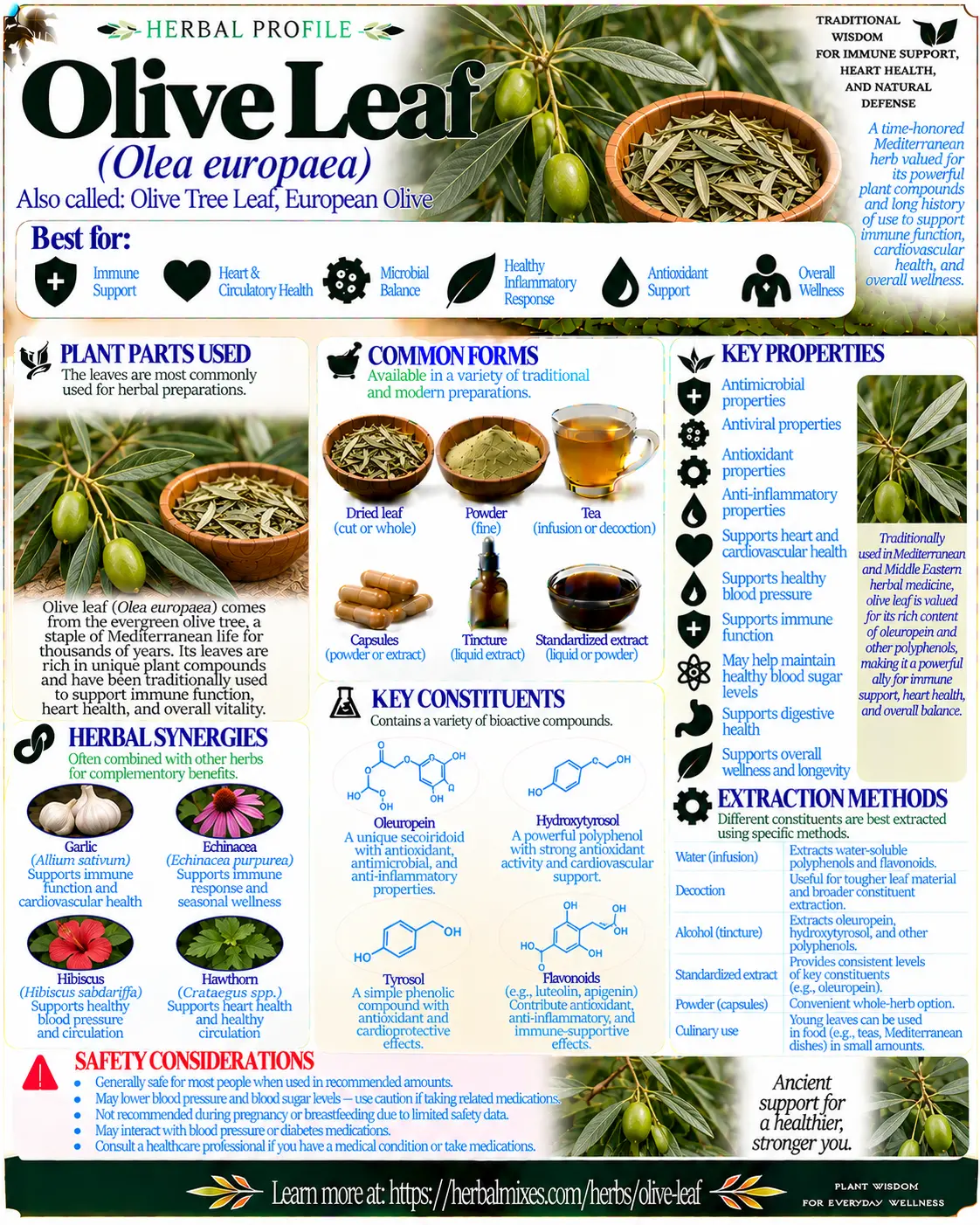
What Olive Leaf Is Good For
Healthy blood pressure — Olive leaf extract has some of the strongest human research among its traditional uses. Several randomized trials have reported modest reductions in systolic and diastolic blood pressure, although not every recent study has shown a significant advantage over placebo.
Cardiovascular support — Olive leaf polyphenols have been studied for effects on blood pressure, blood lipids, endothelial function, and oxidative stress. A meta-analysis of randomized trials found the clearest benefits in people with hypertension, particularly for blood pressure and some lipid markers.
Metabolic wellness — Olive leaf extract has also been investigated for glucose and insulin regulation. Results remain mixed: some studies suggest improved insulin sensitivity or post-meal glucose control, while a 2025 pilot trial in people with type 2 diabetes did not significantly improve HbA1c compared with placebo.
Mild fluid retention — The European Medicines Agency recognizes olive leaf’s traditional use to promote water elimination through the kidneys in mild cases of water retention, after serious medical causes have been excluded.
Antioxidant support — Oleuropein, hydroxytyrosol, verbascoside, flavonoids, and related phenolics provide strong antioxidant activity and help explain many of olive leaf’s cardiovascular and metabolic research findings.
Immune support — Olive leaf extracts are commonly marketed for immune wellness, and their polyphenols show antimicrobial and immune-modulating effects experimentally. Human evidence is not strong enough to claim that olive leaf prevents or treats viral or bacterial infections.
Available Herbal Products
Buying Guides for Available Olive Leaf Products
Olive Leaf Capsules – Concentrated single-herb extract. Contains Olea europaea leaf extract and added oleuropein in a convenient capsule format currently available directly from the manufacturer. Seller: Gaia Herbs – View Gaia Herbs Olive Leaf →
Organic Olive Leaf Extract – Hydroalcoholic liquid extract. A certified-organic Olea europaea preparation made with alcohol and water and currently available directly from Gaia. Seller: Gaia Herbs – View Gaia Organic Olive Leaf Extract →
Olive Liquid Herbal Extract – Organic tincture. Made from mature certified-organic Olea europaea leaves at a 1:5 herb-to-menstruum ratio and currently available in multiple sizes. Seller: Herb Pharm – View Herb Pharm Olive →
Olive Leaf Extract 500 mg – Standardized capsules. Provides 500 mg of olive leaf extract standardized to at least 6% oleuropein; the 120-capsule size is currently available. Seller: NOW Foods – View NOW Olive Leaf Extract →
Organic Olive Leaf Cut & Sifted – Loose dried leaf. An in-stock Olea europaea product from Tunisia suitable for traditional tea, infusion, or homemade preparations. Seller: Starwest Botanicals – View Starwest Organic Olive Leaf →
For blood-pressure or metabolic research, standardized extracts are more comparable to clinical studies than ordinary tea because the amounts of oleuropein and related polyphenols are better controlled.
Herbal Synergies
Olive leaf pairs especially well with hawthorn, hibiscus, cinnamon, garlic, and turmeric depending on whether the goal is cardiovascular, metabolic, antioxidant, or circulatory support.
Olive Leaf + Hawthorn
Best for: Cardiovascular and circulatory support
Olive leaf contributes oleuropein-rich polyphenols associated with vascular and blood-pressure effects, while hawthorn provides flavonoids and oligomeric procyanidins traditionally used for cardiac and circulatory support.
Best extraction: Standardized olive leaf extract combined with hawthorn tincture or standardized extract.
Olive Leaf + Hibiscus
Best for: Healthy blood pressure
Both herbs have human research suggesting modest blood-pressure effects through different phytochemical profiles.
Olive leaf emphasizes oleuropein and secoiridoids, while hibiscus contributes anthocyanins and organic acids.
Best extraction: Standardized olive leaf extract combined with hibiscus tea.
Olive Leaf + Cinnamon
Best for: Metabolic and glucose support
Olive leaf has been studied for insulin sensitivity and glucose regulation, while cinnamon contributes complementary polyphenols associated with glucose metabolism.
Because both may lower glucose, people taking diabetes medication should monitor carefully.
Best extraction: Olive leaf standardized extract combined with cinnamon powder or extract.
Olive Leaf + Garlic
Best for: Cardiovascular and lipid support
Olive leaf provides polyphenolic cardiovascular support, while garlic contributes sulfur compounds with better-established effects on blood pressure and lipid metabolism.
Best extraction: Standardized olive leaf extract combined with aged garlic extract or garlic preparations designed to preserve sulfur compounds.
Olive Leaf + Turmeric
Best for: Antioxidant and inflammatory balance
Olive leaf contributes oleuropein, hydroxytyrosol, and flavonoids, while turmeric provides curcuminoids acting through complementary oxidative and inflammatory pathways.
Best extraction: Standardized olive leaf extract combined with turmeric powder or a formulated curcumin extract.
Key Herbal Properties
Hypotensive — Multiple human trials suggest olive leaf extract may modestly reduce blood pressure, particularly in people with elevated blood pressure. A large randomized trial published in 2025 reported a reduction in 24-hour systolic blood pressure compared with placebo.
Cardiovascular supportive — Olive leaf polyphenols influence endothelial function, vascular tone, lipid oxidation, and blood-pressure pathways.
Antioxidant — Oleuropein, hydroxytyrosol, verbascoside, and flavonoids provide strong free-radical-scavenging and antioxidant activity.
Mild diuretic — EMA recognizes traditional use for increasing urinary water elimination in mild fluid retention.
Metabolic supportive — Olive leaf extracts have been investigated for glucose control and insulin sensitivity, but findings remain inconsistent.
Anti-inflammatory — Olive polyphenols influence NF-κB, oxidative signaling, and inflammatory mediators experimentally.
Antimicrobial — Oleuropein-related compounds show antibacterial, antiviral, and antifungal activity in laboratory studies, but this does not establish olive leaf as treatment for infections.





Active Compounds
Olive leaf contains a particularly rich mixture of secoiridoids, phenolic alcohols, flavonoids, triterpenes, and phenolic acids. Oleuropein is generally considered its signature compound.
Oleuropein
Found mainly in: Leaves and unripe olive tissues
Oleuropein is the characteristic bitter secoiridoid glycoside of olive leaves and one of the main compounds used to standardize commercial extracts.
It has been extensively investigated for cardiovascular, antioxidant, inflammatory, and metabolic effects.
Best extraction: Hydroalcoholic extraction. Oleuropein is relatively polar and can also be extracted into hot water, but standardized alcohol-water extracts usually provide more predictable concentrations.
Hydroxytyrosol
Found mainly in: Formed partly from oleuropein degradation; also present naturally
Hydroxytyrosol is one of the most studied olive polyphenols and has exceptionally strong antioxidant activity.
It contributes to cardiovascular and oxidative-stress research involving olive products.
Best extraction: Water or hydroalcoholic extraction because hydroxytyrosol is highly polar.
Oleuropein Aglycone
Found mainly in: Formed when oleuropein is enzymatically or chemically hydrolyzed
Oleuropein aglycone is a less glycosylated derivative of oleuropein with different absorption and biological properties.
Best extraction: Hydroalcoholic or specialized extracts.
Verbascoside
Found mainly in: Leaves
Verbascoside, also called acteoside, is a phenylethanoid glycoside contributing antioxidant and inflammatory-modulating activity.
Best extraction: Hot water or diluted alcohol.
Luteolin-7-O-Glucoside
Found mainly in: Leaves
This luteolin glycoside is one of olive leaf’s important flavonoids and contributes to its vascular and antioxidant profile.
Best extraction: Water or hydroalcoholic extraction.
Apigenin Derivatives
Found mainly in: Leaves
Apigenin glycosides contribute additional flavonoid antioxidant activity.
Best extraction: Hot-water infusion or diluted alcohol.
Rutin
Found mainly in: Leaves
Rutin is a quercetin glycoside associated with antioxidant and vascular-supportive effects.
Best extraction: Hot water or hydroalcoholic tincture.
Oleanolic Acid
Found mainly in: Leaf surface and other olive tissues
Oleanolic acid is a triterpenoid found in olive leaves and has been investigated experimentally for metabolic and inflammatory effects.
Best extraction: Alcohol-rich or specialized extraction because it is poorly soluble in plain water.
FAQ
What is olive leaf best used for?
Olive leaf is best supported for cardiovascular and blood-pressure wellness, with additional traditional use for mild water retention and emerging metabolic research.
Its reputation as a general “antimicrobial” herb comes largely from laboratory research and should not be confused with proven treatment of infections.
Does olive leaf really lower blood pressure?
It may.
A 2025 randomized trial involving more than 600 participants found a significant reduction in 24-hour systolic blood pressure compared with placebo. Earlier trials also reported benefit.
However, a 2026 randomized trial found that blood pressure fell in both olive extract and placebo groups without a statistically significant difference, so results are not completely consistent.
Does olive leaf lower blood sugar?
Possibly, but evidence is less convincing than for blood pressure.
A 2025 pilot randomized trial in adults with type 2 diabetes found no significant improvement in HbA1c versus placebo, although insulin-sensitivity measures showed some favorable trends.
Is olive leaf tea as effective as extract?
Not necessarily.
Tea contains water-soluble polyphenols and is appropriate for traditional use, but most cardiovascular clinical trials have used standardized extracts containing defined amounts of oleuropein or related phenolics.
What percentage of oleuropein should an olive leaf supplement contain?
There is no universally established ideal percentage.
Commercial products vary substantially. NOW, for example, standardizes its extract to at least 6% oleuropein, while research extracts may supply much higher total daily amounts. Compare the actual milligrams of oleuropein per serving, not just the percentage.
Safety & Precautions
Olive leaf appears reasonably well tolerated in clinical studies, but its pharmacological effects mean concentrated extracts can interact with medication.
The most important concern is blood pressure. Olive leaf extract may lower blood pressure, so combining it with antihypertensive medications can potentially produce excessive effects such as dizziness, weakness, or light-headedness.
Use particular caution with medications such as ACE inhibitors, ARBs, beta-blockers, calcium-channel blockers, or diuretics.
Olive leaf may also affect blood glucose. People taking insulin, metformin, sulfonylureas, GLP-1 medications, or other glucose-lowering therapies should monitor carefully when adding concentrated extracts.
EMA recognizes olive leaf’s mild diuretic activity and specifically states that it should not be used when reduced fluid intake is medically recommended, including some cases of severe heart or kidney disease.
Possible adverse effects from supplements can include stomach discomfort, headache, dizziness, or gastrointestinal upset, although serious reactions have not been prominent in clinical trials.
Safety during pregnancy and breastfeeding has not been adequately established. Gaia Herbs specifically advises against its concentrated olive leaf products during pregnancy or lactation.
Reliable safety information for therapeutic doses in children is limited.
Olive leaf supplements should not replace prescribed treatment for hypertension, diabetes, cardiovascular disease, or serious infection.
Seek medical care for blood pressure accompanied by chest pain, severe headache, neurological symptoms, fainting, or shortness of breath, rather than attempting to manage it with herbs.
Anyone taking blood-pressure or diabetes medication, using prescription diuretics, pregnant, breastfeeding, or managing significant heart or kidney disease should discuss concentrated olive leaf use with an appropriate healthcare professional.
References
- Kew Plants of the World Online — Olea europaea L.
- European Medicines Agency — Oleae Folium
- PubMed — Olive Leaf Extract in Stage-1 Hypertension
- PubMed — 2025 Randomized Trial of Olive Leaf Extract in Hypertension
- PubMed — Olive Leaf Extract and Cardiovascular Risk: Meta-Analysis
- PubMed — Phenolic-Rich Olive Leaf Extract and Blood Pressure
- PubMed — 2025 Olive Leaf Extract Trial in Type 2 Diabetes
- PubMed — Olive Leaf Tea and Post-Meal Glucose
- Gaia Herbs — Olive Leaf
- Herb Pharm — Olive Liquid Herbal Extract
- NOW Foods — Olive Leaf Extract
- Starwest Botanicals — Organic Olive Leaf
Disclaimer
Disclaimer: This article is for educational purposes only and is not intended to diagnose, treat, cure, or prevent any disease. Herbal products can cause side effects and interact with medications. Consult a qualified healthcare professional before using herbs therapeutically, especially if you are pregnant, breastfeeding, taking prescription medications, or managing a medical condition.