


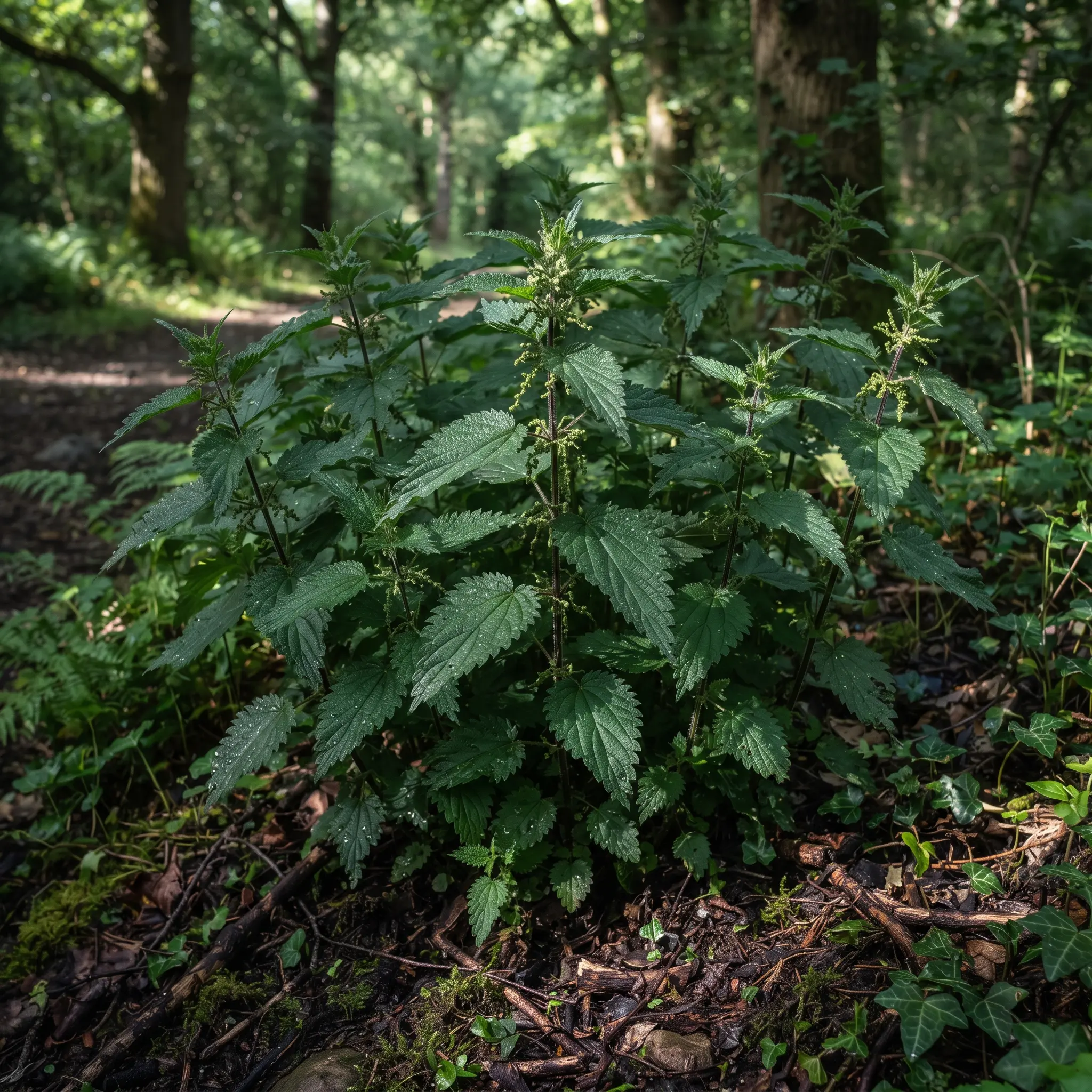
Traditionally, nettle has been used primarily as a nourishing tonic for allergies, joint discomfort, and general vitality, especially when seasonal allergy symptoms or achy joints flare up. It is commonly prepared as a tea, tincture, capsule, or freeze-dried leaf.
Common Name: Nettle Latin Name: Urtica dioica Alternate Names: Stinging nettle, common nettle
- Parts used: leaves (also root for a separate traditional use)
- Primary properties: nutritive, anti-inflammatory, antiallergenic
- Common preparations: tea, tincture, capsules, freeze-dried leaf
- Best known for: easing seasonal allergy symptoms and supporting joint comfort
What It Helps With
Health conditions this herb is commonly used to support.
Related Buying Guides
Featured Recipes
Explore and try simple ways to prepare and use this herb at home.
Active Compounds
The tiny plant chemistry doing all the heavy lifting.
Key Herbal Properties
What this herb is known for, herbally speaking.



Herbal Synergies
Other herbs that pair especially well with this one — together, their combined properties work better than either herb does alone.
Health Conditions Nettle Helps With
- Seasonal allergies and hay fever — Freeze-dried nettle leaf has a strong traditional and modern reputation for easing sneezing, itching, and other allergic rhinitis symptoms.
- Joint discomfort and arthritis — Traditionally used both internally and topically to ease achy, inflamed joints, with Roman tradition even including nettle as a topical counter-irritant for arthritic pain.
- General nutrient deficiency and fatigue — Nettle leaf is nutrient-dense and traditionally taken as a nourishing tonic to help support energy and overall vitality.
- Urinary tract discomfort — Traditionally used to support healthy urinary flow and comfort.
- Skin eruptions and irritation — Historically used in Western herbal medicine for cutaneous eruptions and skin irritation.
- Prostate comfort (root) — Nettle root has a distinct traditional and modern reputation for supporting urinary comfort related to benign prostate enlargement, separate from the leaf’s typical uses.
Compounds
- Flavonoids (including rutin and kaempferol) — Contribute antioxidant and anti-inflammatory activity central to nettle’s traditional reputation.
- Histamine, acetylcholine, and serotonin — Present in the stinging hairs and responsible for nettle’s characteristic sting on contact with fresh leaves, though these are neutralized by cooking or drying.
- Carotenoids and vitamin A — Contribute to nettle leaf’s dense nutritional profile.
- Phenolic acids — Support general antioxidant activity alongside nettle’s other compounds.
- Lectins (root) — Found specifically in the root and associated with its distinct traditional use for prostate comfort, separate from the leaf’s properties.
Properties
- Nutritive — Nettle leaf’s dense mineral and vitamin content underlies its traditional use as a nourishing, food-like tonic.
- Anti-inflammatory — Traditionally used both internally and topically to calm inflammation in joints and irritated tissue.
- Antiallergenic — Freeze-dried nettle leaf in particular carries a strong traditional and modern reputation for easing seasonal allergy symptoms.
- Diuretic — Traditionally used to support healthy fluid balance and urinary flow.
- Astringent — Contributes a mild toning quality, supporting nettle’s traditional use for skin and tissue health.
Recipes Using Nettle
- Nourishing nettle tea — Dried nettle leaf steeped as a daily tonic tea, often taken consistently to support overall vitality.
- Nettle soup — A traditional way to prepare fresh nettle leaves as food, with cooking neutralizing the sting entirely.
- Allergy-season capsules or freeze-dried leaf — A more concentrated preparation specifically aimed at easing seasonal allergy symptoms.
Products Featuring Nettle
- Dried leaf for tea — The most traditional and widely used form, valued for its nutrient density and mild flavor.
- Freeze-dried leaf capsules — Preferred specifically for allergy support, since freeze-drying is thought to preserve compounds relevant to this traditional use.
- Root tincture or capsules — A distinct product form used specifically for traditional prostate-related support, separate from leaf products.
Synergies
- Alfalfa — Frequently combined with nettle in nutritive tonic blends for complementary mineral and vitamin support.
- Red raspberry leaf — Paired in women’s health tonic blends, both traditionally valued as nourishing, mineral-rich herbs.
- Oat straw — Combined for general nervous system and nutritive tonic support alongside nettle’s own reputation.
- Saw palmetto — Nettle root is classically paired with saw palmetto in traditional prostate-support formulas.
Safety & Precautions
Nettle leaf is generally well-tolerated and has a long history of both food and medicinal use, though a few real cautions are worth keeping in mind.
Fresh nettle leaves cause a stinging, itchy skin reaction on contact, so fresh plant material should always be handled with gloves; this sting is fully neutralized by cooking, drying, or standard tea and tincture preparation, so prepared nettle products don’t carry this risk. Because nettle may have a mild blood sugar-lowering and diuretic effect, people with diabetes or those on blood sugar or diuretic medications should monitor for interactions and consult a healthcare provider. Nettle may also have a mild blood-thinning effect, so anyone on anticoagulant or antiplatelet medication should use caution. Safety data during pregnancy is mixed — nettle leaf has a traditional history of use in pregnancy support in some traditions, but it’s also been associated with uterine-stimulating effects in others, so it’s best to consult a healthcare provider before use during pregnancy; breastfeeding use is generally considered more established given nettle’s traditional galactagogue reputation, though checking with a provider is still worthwhile. People with known allergies to related plants may experience cross-reactivity. There is no well-established safety data on nettle use in pets, though small amounts of cooked or dried nettle are sometimes used in animal diets under professional guidance.
Q&A
Does nettle taste bitter?
No, nettle has a mild, earthy, somewhat spinach-like flavor rather than a bitter one, which is part of why it’s so commonly used as both a food and a tea.
Once cooked, dried, or steeped, nettle loses its sting entirely and takes on a pleasant, green, slightly grassy taste that blends well with other herbs.
Can nettle be used daily?
Yes, nettle is traditionally used as a daily nutritive tonic, often taken consistently over weeks or months as part of an everyday wellness routine.
As with most nutrient-dense tonic herbs, it’s still worth paying attention to how your body responds, especially if you’re also taking medications that nettle may interact with, like blood thinners or diuretics.
Is fresh nettle safe to touch or eat?
Fresh nettle leaves will sting and irritate the skin on contact due to fine hairs containing histamine and other irritating compounds, so gloves are essential when harvesting or handling fresh nettle.
Once cooked, dried, or otherwise processed, the sting is completely neutralized, making fresh nettle safe to eat only after proper preparation such as cooking or steeping — never raw and unprepared.
What’s the difference between nettle leaf and nettle root?
Nettle leaf and nettle root are used for different traditional purposes — the leaf is the more general nutritive, allergy, and joint-support form, while the root has a distinct traditional and modern reputation specifically tied to prostate comfort.
Because of this difference, it’s worth checking which plant part a nettle product uses, since leaf and root products aren’t interchangeable for these specific traditional purposes.
Can nettle be combined with other herbs safely?
Yes, nettle is commonly combined with other nutritive or tonic herbs like alfalfa, oat straw, or red raspberry leaf, since its mild flavor and traditional uses pair well with many other botanicals.
If you’re on medication for blood sugar, blood thinning, or fluid balance, it’s still worth checking with a healthcare provider before combining nettle with other herbs that may have similar effects, to avoid stacking too many overlapping actions at once.
References
- Plants of the World Online: Urtica dioica
- PubMed: Scientific Literature on Urtica dioica
- National Library of Medicine: Chemical Constituents from Urtica dioica
- Wikipedia: Urtica dioica
- ScienceDirect Topics: Urtica dioica Research
- Memorial Sloan Kettering Cancer Center: About Herbs — Nettle
- PubMed: Nettle Allergy and Rhinitis Research
- National Center for Complementary and Integrative Health: Nettle
This information is for educational purposes only and is not intended as medical advice. Consult a qualified healthcare professional before using any herb, especially if pregnant, breastfeeding, taking medications, or managing a health condition.