

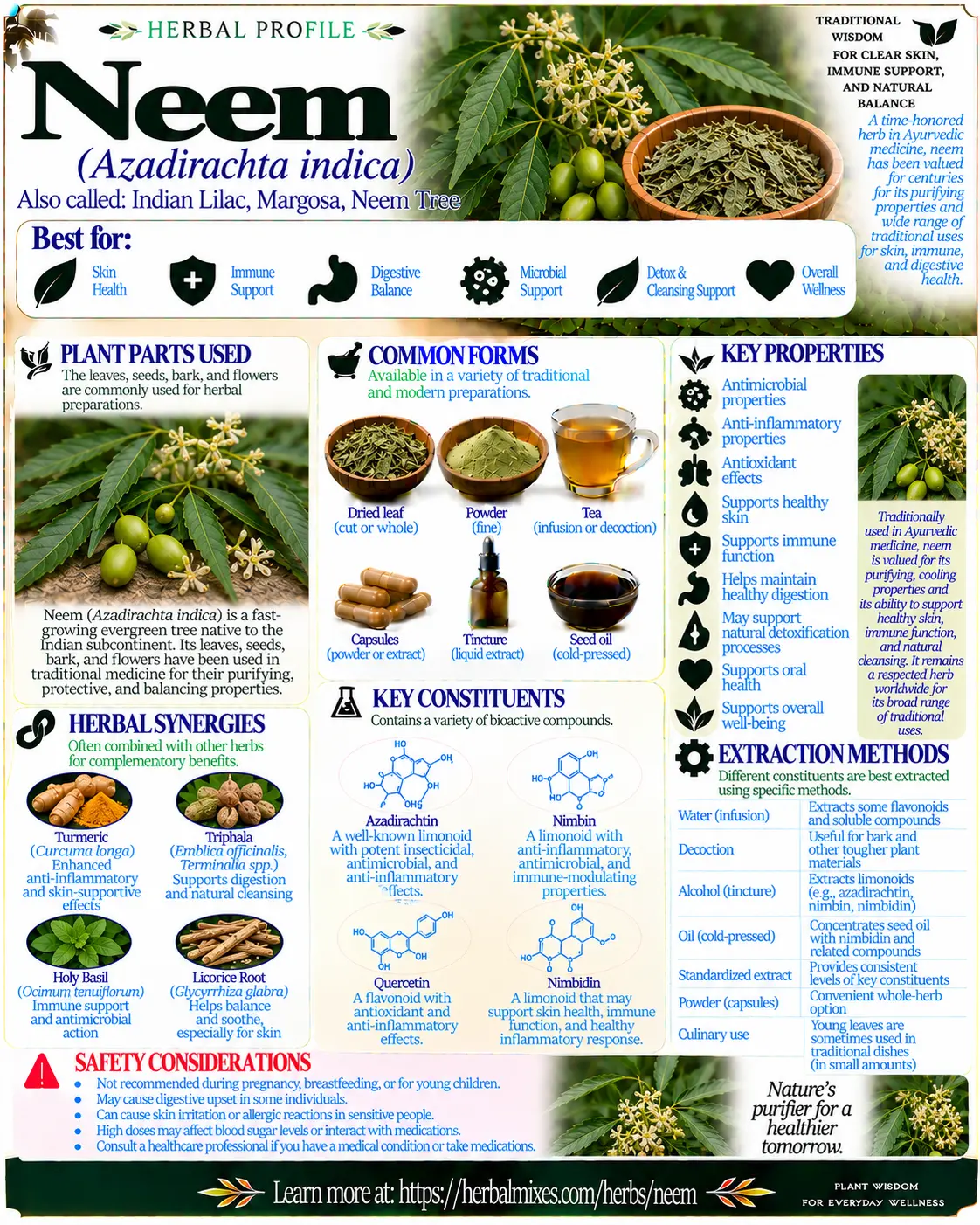
What Neem Is Good For
Skin support — Neem has a longstanding traditional association with problem skin, minor blemishes, and general skin hygiene. Modern research has identified numerous limonoids, flavonoids, and phenolics with antimicrobial and inflammatory-modulating activity, but clinical evidence for treating acne or chronic skin disease remains limited. (PubMed)
Oral hygiene — Neem is one of the better-studied traditional uses. Small randomized trials of neem-based mouthwash have reported reductions in plaque, gingival inflammation, and bleeding, with some studies finding effects comparable to chlorhexidine over short periods. (PubMed)
Healthy blood sugar — A randomized controlled trial using standardized aqueous neem leaf-and-twig extract in people with type 2 diabetes reported improvements in fasting and post-meal glucose, HbA1c, insulin resistance, and several inflammatory markers when added to metformin. This does not mean neem should replace diabetes treatment. (PubMed)
Metabolic wellness — A separate clinical study in people with metabolic syndrome found dose-dependent improvements in glucose regulation and endothelial-function measures after 12 weeks of standardized neem extract. Human evidence is still limited and product-specific. (PubMed)
Antioxidant support — Neem contains limonoids, flavonoids, phenolic acids, and other compounds that influence oxidative-stress pathways experimentally.
Traditional digestive cleansing — Neem leaf is intensely bitter and has longstanding Ayurvedic use as a cleansing and bitter tonic. Claims such as “blood purification” or “detoxification” are traditional concepts and should not be interpreted as evidence that neem removes unspecified toxins from the body.
Available Herbal Products
Buying Guides for Available Neem Products
Organic Neem – Standardized caplets. Combines organic neem stem powder, neem leaf extract, and a supercritical CO₂ neem extract in a once-daily format; currently available directly from the manufacturer. Seller: Himalaya Wellness – View Himalaya Organic Neem →
Neem Capsules – Whole-herb capsules. Combines organic neem leaf, soft twigs, and flower in a full-spectrum formula with no added herbal blend ingredients. Seller: Organic India – View Organic India Neem Capsules →
Organic Neem Leaf Powder – Whole dried leaf powder. A single-ingredient Azadirachta indica leaf powder currently listed in stock and suitable for food-based or traditional herbal preparations. Seller: Starwest Botanicals – View Starwest Organic Neem Leaf Powder →
Organic Neem Leaf Cut & Sifted – Dried loose leaf. Currently listed in stock and useful for traditional infusions or custom herbal preparations. Seller: Starwest Botanicals – View Starwest Organic Neem Leaf →
Neem products require careful attention to the plant part. Leaf preparations are most common for internal supplements, while seed oil is chemically different and should not be swallowed casually because serious poisoning has been reported after neem-oil ingestion.
Herbal Synergies
Neem pairs especially well with turmeric, amla, holy basil, ginger, and triphala depending on whether the goal is skin, metabolic, antioxidant, or digestive support.
Neem + Turmeric
Best for: Skin and inflammatory balance
Neem contributes limonoids and bitter phytochemicals, while turmeric adds curcuminoids that influence inflammatory and oxidative pathways through different mechanisms.
Best extraction: Neem leaf powder or standardized extract combined with turmeric powder or a formulated curcumin extract.
Neem + Amla
Best for: Skin, antioxidant, and nutritional support
Neem contributes bitter limonoids and flavonoids, while amla supplies tannins, polyphenols, and vitamin-C-related nutritional support.
Best extraction: Whole powders or water-based preparations.
Neem + Holy Basil
Best for: Metabolic wellness with stress support
Neem provides bitter metabolic and antioxidant chemistry, while holy basil adds aromatic adaptogenic and glucose-supportive properties.
Because both may influence blood sugar, people using diabetes medication should monitor carefully.
Best extraction: Neem leaf powder or standardized extract combined with holy basil tea, tincture, or extract.
Neem + Ginger
Best for: Bitter digestive formulas
Neem is extremely bitter and can feel harsh on the stomach, while ginger adds warming carminative and digestive support.
Best extraction: Neem in conservative amounts with ginger tea or powder.
Neem + Triphala
Best for: Traditional digestive cleansing
Neem contributes bitter cleansing qualities, while triphala provides tannin-rich digestive and bowel-supportive herbs.
Best extraction: Powders or water-based preparations. This is better suited to traditional whole-herb use than to highly concentrated extracts.
Key Herbal Properties
Antimicrobial — Neem extracts and isolated constituents demonstrate antibacterial, antifungal, and antiparasitic activity experimentally. Human clinical evidence is strongest for limited oral-hygiene applications rather than systemic infection treatment.
Anti-inflammatory — Compounds including nimbolide, gedunin, and nimbin-related limonoids influence inflammatory pathways experimentally. (PubMed)
Antioxidant — Flavonoids, phenolic acids, and limonoids contribute antioxidant activity.
Hypoglycemic — Standardized aqueous neem leaf-and-twig extracts have lowered glucose-related markers in controlled human studies, creating both potential benefit and a medication-interaction concern. (PubMed)
Bitter tonic — Neem leaf has an intensely bitter taste and traditional use as a digestive and cleansing tonic.
Oral antimicrobial — Clinical studies of neem-containing mouthwash suggest possible reductions in plaque and gingivitis when used alongside routine oral hygiene. (PubMed)
Insecticidal — Azadirachtin is a powerful insect antifeedant and growth regulator. This is agriculturally important but should not be confused with a therapeutic human effect. (Kew)





Active Compounds
Neem contains more than 100 described phytochemicals distributed very differently among its leaves, bark, flowers, seeds, and seed oil. Important groups include limonoids, tetranortriterpenoids, flavonoids, phenolic acids, sterols, and fatty acids. (PubMed)
Azadirachtin
Found mainly in: Seeds and seed-derived products
Azadirachtin is one of neem’s best-known limonoids and is primarily important as a powerful natural insect antifeedant and growth regulator.
It is much more characteristic of seed extracts and neem oil than ordinary neem leaf supplements.
Best extraction: Specialized alcohol or organic-solvent extraction from seed material. It is not a primary target of simple neem leaf tea.
Nimbolide
Found mainly in: Leaves and other tissues
Nimbolide is a limonoid extensively investigated for antioxidant, inflammatory, metabolic, and cellular effects.
Most evidence remains preclinical.
Best extraction: Hydroalcoholic or other solvent-based extraction. Nimbolide is less suited to plain water than highly polar constituents.
Nimbin
Found mainly in: Seeds, oil, and other tissues
Nimbin is a characteristic bitter limonoid associated with neem’s traditional medicinal profile.
It contributes to antimicrobial and inflammatory-modulating effects observed experimentally.
Best extraction: Alcohol or lipid-compatible extraction.
Nimbidin
Found mainly in: Seed oil and seed-derived fractions
Nimbidin is a bitter constituent associated particularly with neem seed oil and aged seed products.
It has been investigated experimentally for anti-inflammatory and antimicrobial effects.
Best extraction: Oil or solvent-based seed extraction.
Gedunin
Found mainly in: Leaves, bark, and seeds
Gedunin is another limonoid of the Meliaceae family with extensive laboratory research involving inflammatory, antimicrobial, and cellular pathways.
Best extraction: Hydroalcoholic or specialized solvent extraction.
Quercetin
Found mainly in: Leaves
Quercetin and related flavonoids contribute antioxidant and inflammatory-modulating activity.
Best extraction: Hot water or hydroalcoholic extraction.
Phenolic Acids
Found mainly in: Leaves and bark
Neem contains multiple phenolic acids that contribute antioxidant activity.
Best extraction: Water or diluted alcohol.
Fatty Acids
Found mainly in: Seed oil
Neem oil contains a substantial lipid fraction including oleic, stearic, palmitic, and linoleic acids together with potent limonoids.
Best extraction: Mechanical pressing or lipid extraction.
Neem seed oil should not be treated as equivalent to neem leaf supplements for internal use.
FAQ
What is neem best used for?
Neem is most reasonably associated with traditional skin support, oral hygiene, bitter cleansing, and emerging metabolic research.
Its broad reputation as an antimicrobial or “detox” herb should not be turned into claims that neem treats infections, diabetes, parasites, or chronic skin disease.
Does neem help with plaque and gingivitis?
Possibly.
Several small randomized trials found neem mouthwash reduced plaque and gingival indices. A systematic review concluded that neem mouthrinse may be useful, but the limited number and heterogeneity of studies prevent strong conclusions. (PubMed)
Does neem lower blood sugar?
It can.
Standardized neem leaf-and-twig extracts lowered glucose-related markers in human clinical trials. People taking insulin or glucose-lowering medication should therefore avoid adding concentrated neem casually. (PubMed)
Is neem leaf the same as neem oil?
No.
Neem leaf is the plant part most often used in internal herbal supplements. Neem oil comes primarily from the seeds and contains a very different concentration of limonoids and lipids.
Oral neem-oil poisoning has caused vomiting, seizures, metabolic acidosis, encephalopathy, and liver injury. (LiverTox)
Can neem be taken every day?
Some commercial leaf products are marketed for daily short-term use, but long-term human safety data remain limited.
Because of potential effects on fertility, blood glucose, and liver safety, indefinite concentrated use is not appropriate without professional guidance.
Safety & Precautions
Neem requires substantially more caution than ordinary culinary herbs.
Do not swallow neem seed oil as a home remedy. Serious poisoning has been documented in both children and adults. Reported effects include vomiting, seizures, severe metabolic acidosis, toxic encephalopathy, liver dysfunction, coma, and potentially death. (LiverTox)
A published adult case of neem-oil poisoning involved vomiting, seizures, metabolic acidosis, and toxic encephalopathy. (PubMed)
Children should not be given neem oil internally. Severe neurological toxicity has been reported after ingestion, including refractory seizures and metabolic acidosis. (PubMed)
Avoid medicinal neem during pregnancy. Animal and preclinical studies document anti-implantation, antiovulatory, antifertility, and pregnancy-terminating effects from several neem preparations. (PubMed)
People trying to conceive should also avoid concentrated neem. Starwest Botanicals specifically warns that its neem leaf powder is not for internal use by men or women attempting conception. (Starwest Botanicals)
Safety during breastfeeding has not been adequately established, so concentrated medicinal use should be avoided unless specifically advised by a qualified clinician.
Neem may lower blood glucose. Combining concentrated extracts with insulin, metformin, sulfonylureas, or other diabetes treatments could increase the risk of hypoglycemia.
Because neem extracts have demonstrated effects on platelet aggregation in clinical research, caution is also reasonable with anticoagulant or antiplatelet medication until better interaction data are available. (PubMed)
Different neem parts cannot be assumed equally safe. Leaf, bark, twigs, flowers, seeds, and seed oil have different phytochemical profiles and toxicology.
Neem should not be used to self-treat serious skin infections, dental abscesses, diabetes, malaria, intestinal parasites, cancer, or liver disease.
Seek urgent medical care after neem-oil ingestion if there is persistent vomiting, unusual drowsiness, confusion, seizures, weakness, or breathing difficulty.
Anyone who is pregnant, breastfeeding, trying to conceive, taking diabetes or blood-thinning medication, or managing liver or other chronic disease should discuss therapeutic neem use with an appropriate healthcare professional.
References
- Kew Plants of the World Online — Azadirachta indica A.Juss.
- PubMed — Ethnopharmacological Landscape of Azadirachta indica: 2026 Review
- PubMed — Comprehensive Review of Neem Phytochemistry and Pharmacology
- PubMed — Neem Leaf/Twig Extract in Type 2 Diabetes: Randomized Controlled Trial
- PubMed — Neem Extract in Metabolic Syndrome
- PubMed — Neem Mouthwash and Plaque-Induced Gingivitis
- PubMed — Neem Mouthrinse for Plaque and Gingivitis: Systematic Review
- PubMed — Neem as a Contraceptive: Evidence-Based Review
- NCBI LiverTox — Neem/Margosa Oil
- Himalaya Wellness — Organic Neem
- Organic India — Neem Capsules
- Starwest Botanicals — Organic Neem Leaf Powder
Disclaimer
Disclaimer: This article is for educational purposes only and is not intended to diagnose, treat, cure, or prevent any disease. Herbal products can cause side effects and interact with medications. Consult a qualified healthcare professional before using herbs therapeutically, especially if you are pregnant, breastfeeding, taking prescription medications, or managing a medical condition.