


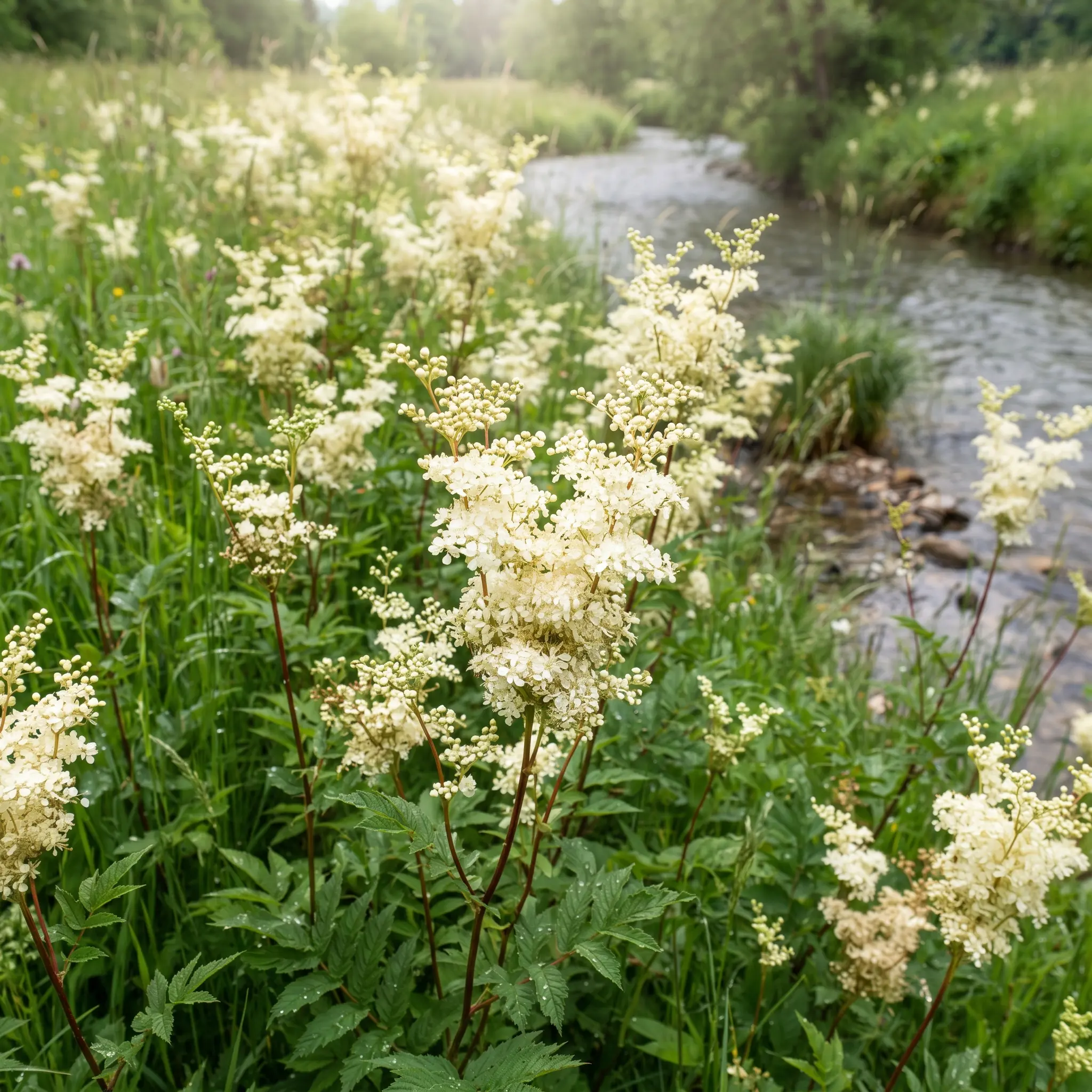
Traditionally, meadowsweet has been used primarily as a digestive and pain-easing remedy, especially when acid indigestion, heartburn, or mild aches and joint discomfort are the issue. It is commonly prepared as a tea, infusion, tincture, or capsule.
Common Name: Meadowsweet Latin Name: Filipendula ulmaria Alternate Names: Queen of the meadow, bridewort
- Parts used: flowering tops (flowers and leaves)
- Primary properties: anti-inflammatory, antacid, analgesic
- Common preparations: tea, infusion, tincture, capsules
- Best known for: calming acid indigestion and easing mild aches and pains
What It Helps With
Health conditions this herb is commonly used to support.
Related Buying Guides
Featured Recipes
Explore and try simple ways to prepare and use this herb at home.
Active Compounds
The tiny plant chemistry doing all the heavy lifting.
Key Herbal Properties
What this herb is known for, herbally speaking.




Herbal Synergies
Other herbs that pair especially well with this one — together, their combined properties work better than either herb does alone.
Health Conditions Meadowsweet Helps With
- Acid indigestion and heartburn — Meadowsweet has traditionally been used to calm an overly acidic stomach and ease the burning discomfort of reflux.
- Mild joint and muscle aches — Its salicylate content gives meadowsweet a long history of traditional use for easing everyday aches, stiffness, and rheumatic discomfort.
- Headaches — Traditionally taken as a gentle, plant-based option for easing occasional headache pain.
- Fluid retention and mild urinary discomfort — Meadowsweet’s traditional diuretic reputation has made it a common choice for supporting the body’s natural fluid balance and urinary comfort.
- Colds and minor fevers — Historically used to help ease the discomfort of colds and support the body through minor fevers.
- Diarrhea and general digestive upset — Its astringent, tannin-rich profile has traditionally been used to help calm an unsettled digestive tract.
Compounds
- Salicylates (including salicylic acid) — The signature constituents in meadowsweet, generally understood to contribute to its traditional pain-easing and anti-inflammatory reputation.
- Tannins — Contribute an astringent, tissue-toning quality that supports meadowsweet’s traditional use for digestive upset.
- Flavonoids — Provide general antioxidant support and contribute to the plant’s overall anti-inflammatory reputation.
- Essential oils — Give meadowsweet its characteristic aroma and are thought to add mild antimicrobial qualities.
- Phenolic acids — Contribute to the herb’s antioxidant profile alongside its other active constituents.
Properties
- Anti-inflammatory — Meadowsweet’s salicylate content underlies its traditional use for easing inflammation-related discomfort like joint aches and headaches.
- Antacid — Traditionally used to help buffer excess stomach acid and calm the burning sensation of indigestion.
- Analgesic — Its salicylates give meadowsweet a long-standing reputation as a gentle, plant-based option for mild pain relief.
- Astringent — The tannin content lends a toning, drying quality that traditionally supports its use for loose digestion.
- Diuretic — Traditionally used to support the body’s fluid balance and gently encourage urinary output.
Recipes Using Meadowsweet
- Digestive tea — Meadowsweet is commonly steeped alone or blended with other soothing herbs into a tea taken after meals to ease indigestion.
- Joint and ache-easing blends — Combined with other anti-inflammatory herbs in teas or tinctures aimed at everyday aches and stiffness.
- Cold-season infusions — Traditionally included in warming infusions during colds, alongside herbs like elderflower or yarrow.
Products Featuring Meadowsweet
- Dried flowering tops for tea — The most traditional form, used to make a simple hot infusion.
- Tinctures — Offer a concentrated, easy-to-dose liquid option, often used for quicker relief of digestive or ache-related discomfort.
- Capsules — A convenient, tasteless option for those who prefer not to prepare a tea.
Synergies
- Chamomile — Frequently paired with meadowsweet in digestive teas, combining two traditionally calming, anti-inflammatory herbs.
- Elderflower — A classic pairing in cold-season blends, combining meadowsweet’s traditional fever-easing reputation with elderflower’s own.
- Licorice root — Combined in digestive formulas, with licorice’s soothing sweetness balancing meadowsweet’s astringency.
- Yarrow — Traditionally blended for cold and fever support, pairing complementary traditional actions.
Safety & Precautions
Meadowsweet is generally well-tolerated in typical tea or tincture amounts, but its salicylate content means several groups need to take real care with this herb.
Anyone with a known allergy or sensitivity to aspirin or other salicylates should avoid meadowsweet entirely, as it can trigger the same type of reaction. It’s not recommended for children or teenagers, since salicylate-containing herbs carry a risk of Reye’s syndrome in this age group, similar to the caution around aspirin. Because meadowsweet contains natural blood-thinning compounds, it may increase bleeding risk when combined with anticoagulant or antiplatelet medications, and people on these medications should consult a healthcare provider before use. People with asthma should also use caution, as salicylate-sensitive asthma can be triggered by this herb. Meadowsweet is generally advised against during pregnancy and breastfeeding, since some traditional and preliminary evidence suggests it may affect uterine activity. There is no well-established safety data for meadowsweet use in pets, so it’s best to keep it for human use only unless directed otherwise by a veterinarian.
Q&A
Does meadowsweet taste bitter?
Meadowsweet has a mild, pleasantly sweet, almond-like flavor with a slightly astringent edge, rather than a strong bitterness. Many people find it more palatable than other medicinal herbs, which is part of why it’s historically been used to flavor drinks and mead.
The aroma is often described as delicate and floral, which comes through in tea form alongside its gentle taste.
Can meadowsweet be used daily?
Meadowsweet has traditionally been used daily for short stretches, particularly around meals when addressing digestive discomfort, and is generally considered gentle for this kind of regular short-term use.
For ongoing daily use, it’s still worth taking breaks periodically and staying mindful of its salicylate content, especially if you’re also taking other salicylate-containing products like aspirin.
Is meadowsweet the same as aspirin?
No, though the two are historically connected — salicin extracted from meadowsweet was used in early aspirin development, and the name “aspirin” itself is derived from meadowsweet’s older botanical name.
Whole meadowsweet contains a much lower, less concentrated dose of salicylates than a standard aspirin tablet and comes bundled with other plant compounds, so it works more gently and shouldn’t be treated as an aspirin substitute for anyone who’s been told to avoid salicylates.
Should meadowsweet be avoided by anyone in particular?
Yes — people allergic to aspirin or salicylates, children and teenagers, those on blood-thinning medication, people with asthma, and pregnant or breastfeeding individuals should all avoid or use meadowsweet only under professional guidance.
If you’re unsure whether any of these apply to you, it’s worth checking with a healthcare provider before adding meadowsweet to your routine, particularly if you’re already taking other medications.
Can meadowsweet be combined with other herbs?
Yes, meadowsweet is commonly combined with herbs like chamomile, elderflower, or licorice root in digestive and cold-season blends, since its mild flavor and traditional actions complement many other herbs well.
As with any combination, it’s worth checking that you’re not stacking multiple salicylate-containing herbs or overlapping cautions, especially if you fall into one of the groups advised to use meadowsweet carefully.
References
- Plants of the World Online: Filipendula ulmaria
- PubMed: Scientific Literature on Filipendula ulmaria
- National Library of Medicine: Chemical Constituents from Filipendula ulmaria
- Wikipedia: Filipendula ulmaria
- ScienceDirect Topics: Filipendula ulmaria Research
- Memorial Sloan Kettering Cancer Center: About Herbs — Meadowsweet
- PubMed: Meadowsweet Salicylate Research
- National Center for Complementary and Integrative Health: Meadowsweet
This information is for educational purposes only and is not intended as medical advice. Consult a qualified healthcare professional before using any herb, especially if pregnant, breastfeeding, taking medications, or managing a health condition.