


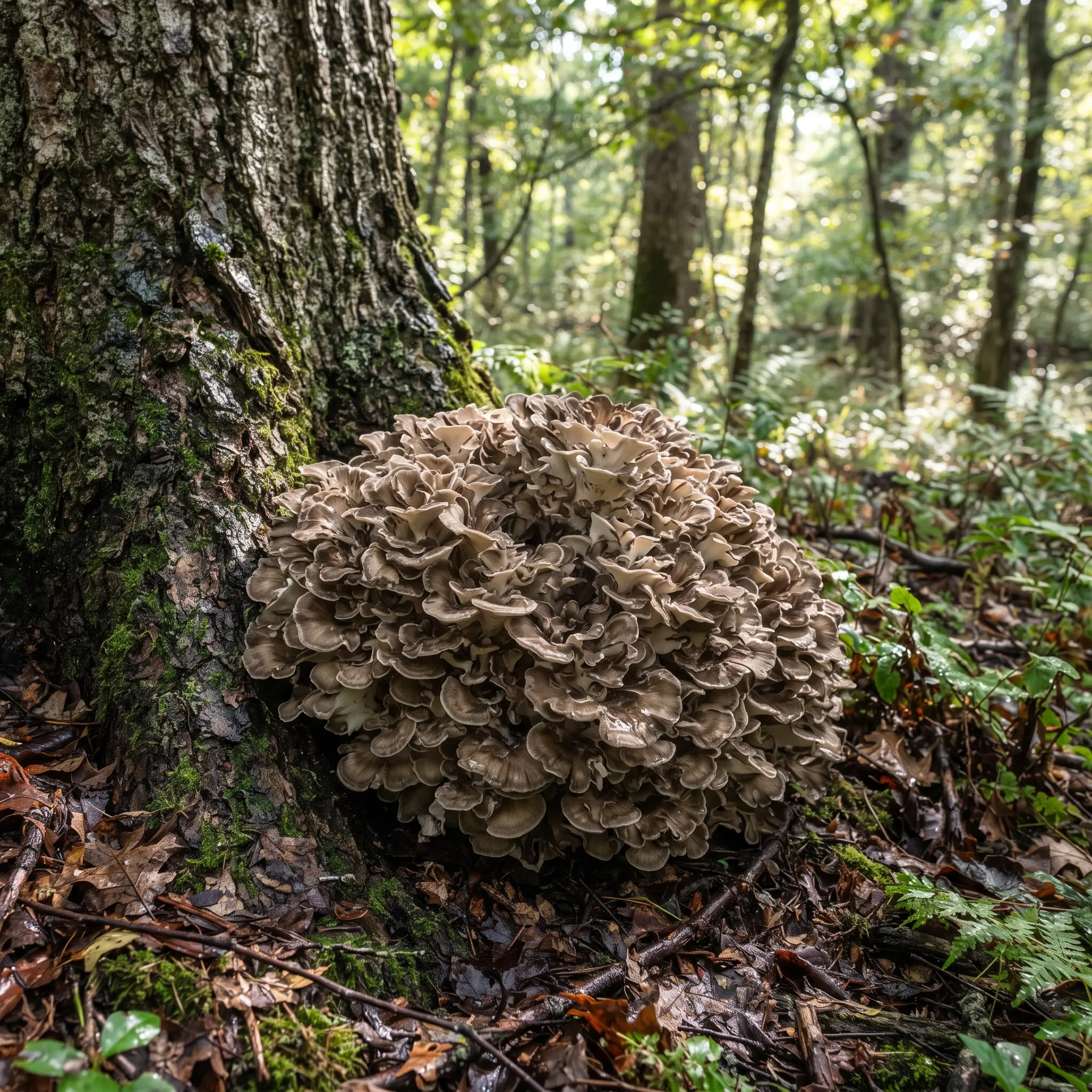
Traditionally, maitake has been used primarily as an immune-supportive tonic, especially when the body needs extra resilience during cold and flu season or times of general run-down health. It is commonly prepared as a dried powder, encapsulated extract, tincture, or simply cooked and eaten as a culinary mushroom.
Common Name: Maitake Latin Name: Grifola frondosa Alternate Names: Hen of the woods, dancing mushroom
- Parts used: fruiting body (whole mushroom)
- Primary properties: immunomodulating, adaptogen, nutritive
- Common preparations: powder, capsules, tincture, decoction, culinary (cooked)
- Best known for: supporting immune function
What It Helps With
Health conditions this herb is commonly used to support.
Related Buying Guides
Featured Recipes
Explore and try simple ways to prepare and use this herb at home.
Active Compounds
The tiny plant chemistry doing all the heavy lifting.
Key Herbal Properties
What this herb is known for, herbally speaking.



Herbal Synergies
Other herbs that pair especially well with this one — together, their combined properties work better than either herb does alone.
Health Conditions Maitake Helps With
- Weakened immune resilience — Maitake has traditionally been used to help the body’s defenses stay strong, particularly during seasonal illness or periods of stress.
- Blood sugar imbalance — It has a long history of traditional use in supporting healthy blood sugar levels as part of an overall diet.
- Cholesterol and cardiovascular support — Traditionally taken to help support healthy cholesterol and blood pressure levels.
- General fatigue and low vitality — As a tonic mushroom, maitake has been used to help support stamina and everyday energy.
- Liver and metabolic support — Traditional use includes support for healthy liver function and overall metabolic balance.
Compounds
- Beta-glucans — Complex polysaccharides considered the primary active constituents in maitake, generally understood to interact with immune cell activity.
- Grifolan (a specific beta-glucan fraction) — A maitake-specific polysaccharide studied for its role in immune modulation.
- Polyphenols — Contribute antioxidant activity that may support overall cellular health.
- Ergosterol — A fungal sterol and precursor to vitamin D2, contributing to maitake’s nutritive profile.
- Trace minerals and B vitamins — Support maitake’s reputation as a nourishing, food-based tonic rather than a purely medicinal extract.
Properties
- Immunomodulating — Maitake’s beta-glucan content is central to its traditional reputation for supporting a balanced, responsive immune system.
- Adaptogen — Used traditionally as a tonic that helps the body adapt to physical stress over time, rather than for quick, targeted relief.
- Nutritive — Valued as a dense, food-like source of nourishment, commonly eaten as well as taken medicinally.
- Hypoglycemic-supportive — Traditionally associated with helping maintain balanced blood sugar as part of regular use.
Recipes Using Maitake
- Sautéed or roasted dishes — Fresh maitake clusters are commonly torn into pieces and pan-seared or roasted with oil and salt as a savory side or main.
- Broths and soups — Dried maitake is often simmered into broths, lending both flavor and its traditional tonic properties to soups and stews.
- Tonic teas and decoctions — Sliced dried maitake can be simmered as a mild, earthy decoction, sometimes blended with other tonic mushrooms.
Products Featuring Maitake
- Powder — Convenient for stirring into broths, coffee, or recipes; a common everyday form for regular tonic use.
- Capsules — A tasteless, measured option for people who prefer not to deal with the mushroom’s earthy flavor.
- Tinctures/dual extracts — Often combine hot-water and alcohol extraction to capture both the water-soluble beta-glucans and other constituents.
Synergies
- Reishi — Frequently combined with maitake in immune-support blends, pairing two traditional tonic mushrooms with complementary reputations.
- Astragalus — A classic pairing in immune-tonic formulas, valued alongside maitake for long-term, building support.
- Shiitake — Often blended with maitake in culinary and tonic mushroom mixes for both flavor and traditional immune support.
- Turkey tail — Commonly combined with maitake in mushroom blends aimed at broad immune resilience.
Safety & Precautions
Maitake is generally well-tolerated, especially when eaten as food, and serious adverse effects are uncommon at typical culinary or supplemental amounts.
Because maitake has traditionally been associated with blood sugar-lowering effects, people taking diabetes medication should use caution and monitor blood sugar closely, as the combination may lower it further than expected. It may also interact with blood-thinning medications such as warfarin, so anyone on anticoagulant therapy should consult a healthcare provider before use. There isn’t well-established safety data for maitake supplements during pregnancy or breastfeeding, so it’s best to stick to food-level culinary amounts or avoid concentrated extracts during this time unless guided by a provider. People with mushroom or mold allergies should also use caution, as with any fungal product. There is no well-established traditional or safety data on maitake supplement use in pets, so concentrated extracts are best kept for human use only; small culinary amounts of cooked mushroom are generally considered low-risk.
Q&A
Does maitake taste bitter?
Maitake has a savory, earthy, almost woodsy flavor rather than a bitter one — many people compare it to a rich, umami mushroom taste similar to shiitake but a bit more robust.
In tonic preparations like decoctions or powders, the flavor comes through as more mellow and broth-like, which is part of why it blends so well into soups and savory drinks.
Can maitake be used daily?
Yes, maitake has traditionally been used as a regular, daily tonic food and supplement, taken consistently over time rather than as a short-term fix.
As with most tonic mushrooms, it’s a good idea to start with a smaller amount, especially with concentrated extracts, and pay attention to how your body responds before settling into a daily routine.
What’s the difference between fresh and dried maitake?
Fresh maitake is prized in cooking for its texture and flavor, while dried maitake is more commonly used for teas, decoctions, and powdered preparations since drying concentrates the mushroom and extends its shelf life.
Both forms retain the mushroom’s traditional properties, so the choice mostly comes down to whether you’re using it as food or as a more concentrated tonic preparation.
Is maitake powder the same as maitake extract?
Not quite — powder is simply the dried, ground whole mushroom, while extracts are typically processed (often through hot water or alcohol extraction) to concentrate specific compounds like beta-glucans.
Extracts tend to be more potent per gram, so dosing guidance for extracts and whole powder isn’t interchangeable; it’s worth checking product labeling for guidance specific to that form.
Can maitake be combined with other medicinal mushrooms?
Yes, maitake is very commonly blended with other tonic mushrooms like reishi, shiitake, and turkey tail in immune-support formulas, since their traditional uses are seen as complementary.
If you’re combining several mushroom supplements, it’s still worth keeping an eye on total daily intake and checking with a healthcare provider if you’re on any medications, particularly blood thinners or diabetes medication.
References
- Plants of the World Online: Grifola frondosa
- PubMed: Scientific Literature on Grifola frondosa
- National Library of Medicine: Chemical Constituents from Grifola frondosa
- Wikipedia: Grifola frondosa
- ScienceDirect Topics: Grifola frondosa Research
- Memorial Sloan Kettering Cancer Center: About Herbs — Maitake
- PubMed: Maitake Beta-Glucan Research
- National Center for Complementary and Integrative Health: Mushrooms
This information is for educational purposes only and is not intended as medical advice. Consult a qualified healthcare professional before using any herb, especially if pregnant, breastfeeding, taking medications, or managing a health condition.