


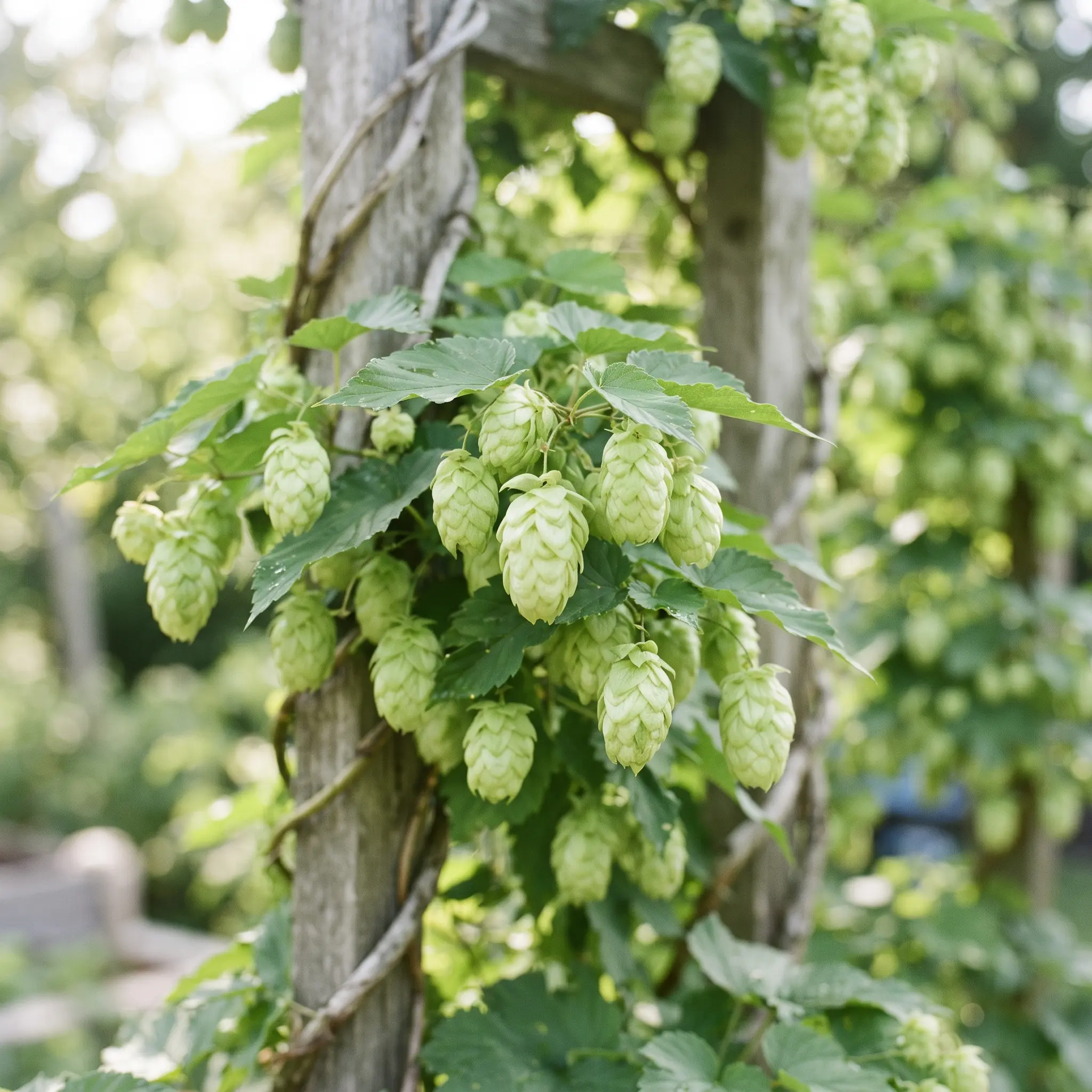
Traditionally, hops has been used primarily to support restful sleep and calm nerves, especially when dealing with occasional sleeplessness or restlessness at bedtime. It is commonly prepared as a tea, tincture, dream pillow, or capsule.
Common Name: Hops
Latin Name: Humulus lupulus
Alternate Names: Common Hop
- Parts used: strobile (flower cone)
- Primary properties: sedative, nervine, bitter
- Common preparations: tea, tincture, dream pillow, capsule
- Best known for: supporting restful sleep
What It Helps With
Health conditions this herb is commonly used to support.
Related Buying Guides
Featured Recipes
Explore and try simple ways to prepare and use this herb at home.
Active Compounds
The tiny plant chemistry doing all the heavy lifting.
Key Herbal Properties
What this herb is known for, herbally speaking.




Herbal Synergies
Other herbs that pair especially well with this one — together, their combined properties work better than either herb does alone.
Health Conditions Hops Helps With
- Sleeplessness — Hops is one of the most well-known traditional herbs for supporting restful sleep, often used at bedtime.
- Restlessness & Nervous Tension — Its sedative, nervine quality has traditionally made hops a choice for calming an overactive mind before bed.
- Mild Anxiety — Traditionally used to support a sense of calm during stressful periods, particularly in the evening.
- Digestive Discomfort — As a bitter herb, hops has traditionally been used in small amounts to support digestive function.
- Hot Flashes & Menopausal Discomfort — Traditionally associated with mild phytoestrogenic activity, hops has long been used by some to support comfort during menopause.
Compounds
- Bitter acids (including humulone and lupulone) — considered central to hops’ traditional sedative and digestive-stimulating reputation.
- Flavonoids (including xanthohumol) — thought to contribute antioxidant activity alongside hops’ other traditional benefits.
- Volatile oils — contribute to hops’ characteristic aroma and support its traditional calming, sedative use.
- Phytoestrogens — plant compounds believed to contribute to hops’ traditional use for menopausal comfort.
Properties
- Sedative — hops’ defining property, traditionally used to support calm and restful sleep.
- Nervine — traditionally used to support a relaxed, balanced nervous system.
- Bitter — stimulates digestive secretions when taken in small amounts.
- Mild anti-inflammatory — traditionally credited with supporting general comfort alongside its calming action.
Recipes Using Hops
- Hops Tea — a traditional infusion, often combined with other calming herbs, used shortly before bedtime.
- Sleep Tincture Blends — hops is commonly combined with other sedative herbs in liquid extract formulas for nighttime use.
- Dream Pillows — dried hops strobiles sewn into a small pillow or sachet, a traditional method for promoting restful sleep through scent.
Products Featuring Hops
- Dried Strobiles (Flower Cones) — used for tea, tincture-making, or filling traditional dream pillows.
- Tincture — offers a concentrated, fast-acting option often blended into nighttime formulas.
- Capsules — a convenient, taste-neutral option for those who prefer not to drink hops’ bitter tea.
Synergies
- Valerian — one of the most classic traditional pairings, combined with hops for enhanced sleep support.
- Chamomile — added for a gentler, complementary calming quality alongside hops’ sedative action.
- Passionflower — paired in traditional formulas for broader nervous system and sleep support.
- Lemon Balm — combined for its own calming reputation, softening hops’ more bitter, sedative profile.
Safety & Precautions
Hops is generally well-tolerated in typical tea and tincture amounts, but its sedative quality means it shouldn’t be combined with alcohol, sedative medications, or other central nervous system depressants without consulting a healthcare provider, due to increased drowsiness risk. It’s not recommended for use before driving or operating machinery. Because of its mild phytoestrogenic activity, those with hormone-sensitive conditions should use it cautiously and consult a healthcare provider. Pregnant and breastfeeding individuals should consult a healthcare provider before use, as safety data is limited. Hops has also been associated with worsening low mood in some individuals with a history of depression, so those with depression should use it thoughtfully and discuss it with a healthcare provider. Fresh or dried hops, and especially spent brewing hops, are toxic to dogs and can cause a serious, potentially life-threatening reaction; hops should never be given to or left accessible to pets.
Q&A
Does hops taste bitter?
Yes, hops has a distinctly bitter, slightly herbaceous flavor, which is part of why it’s the defining bittering ingredient in beer brewing. This bitterness is also thought to contribute to its traditional digestive-stimulating quality.
Because of the strong bitterness, hops is often combined with sweeter or more aromatic herbs like chamomile or lemon balm in sleep tea blends.
Can hops be used daily?
Hops is traditionally used in the evening as part of a nightly wind-down routine, and many people use it nightly for a period when working on sleep support. That said, it’s not typically taken throughout the day given its sedative quality.
If using it nightly for an extended period, it’s worth periodically reassessing with a healthcare provider, especially if underlying sleep issues persist.
Can hops be combined with valerian for sleep?
Yes, hops and valerian are one of the most traditional and common herbal pairings for sleep support, often combined in tea blends, tinctures, and capsules aimed at promoting restful sleep. Many people find the combination more effective than either herb alone.
As with any sedative combination, it’s worth starting with a lower dose to see how your body responds before relying on it regularly.
Is hops tea only used for sleep?
While sleep support is hops’ most well-known traditional use, it has also traditionally been used in small amounts to support digestion and to help ease mild anxiety or nervous tension during the day, though less commonly than its nighttime use. Its sedative quality makes daytime use less practical for most people.
Some traditional formulas use hops in smaller amounts alongside more stimulating digestive bitters for a milder overall effect.
How should dried hops strobiles be stored?
Dried hops strobiles should be stored in an airtight container in the refrigerator or freezer, since hops are particularly prone to losing their aromatic and bitter compounds at room temperature. This is different from many other dried herbs, which typically only need a cool, dark cupboard.
Properly stored in the refrigerator or freezer, dried hops can retain good potency for up to a year or more.
References
- Plants of the World Online: Humulus lupulus
- PubMed: Scientific Literature on Humulus lupulus
- National Library of Medicine: Chemical Constituents from Humulus lupulus
- Wikipedia: Humulus lupulus
- ScienceDirect Topics: Humulus lupulus Research
- North Carolina State Extension Plant Toolbox: Humulus lupulus
- National Library of Medicine: Xanthohumol and Bitter Acid Research
This information is for educational purposes only and is not intended as medical advice. Consult a qualified healthcare professional before using any herb, especially if pregnant, breastfeeding, taking medications, or managing a health condition.