

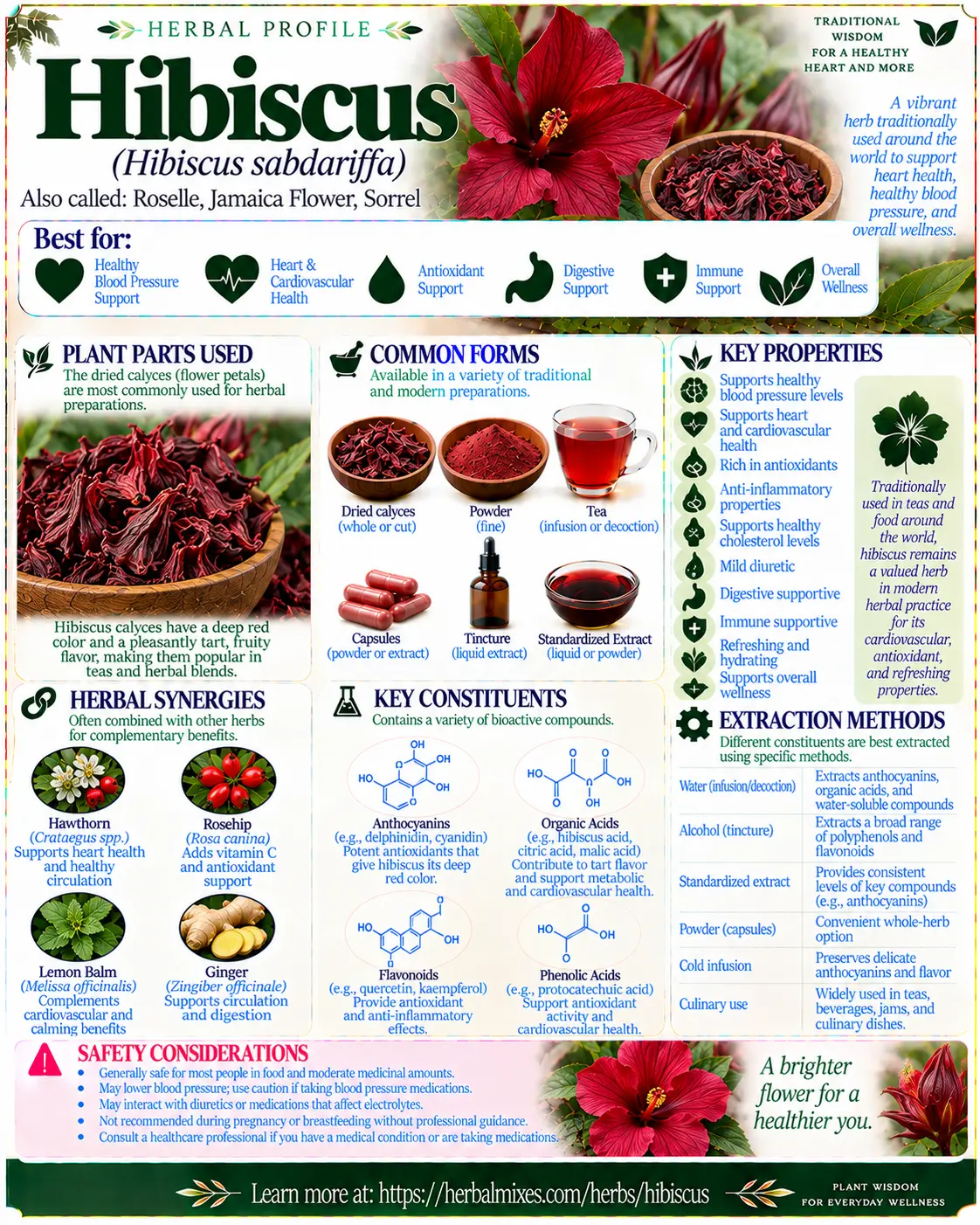
What Hibiscus Is Good For
Healthy blood pressure — Hibiscus is best known for supporting healthy blood pressure. Human trials and systematic reviews suggest regular hibiscus preparations may produce a modest reduction in blood pressure, particularly in people whose levels are already elevated. (nccih.nih.gov)
Cardiovascular support — Anthocyanins, organic acids, and other polyphenols may support vascular relaxation and antioxidant defenses. Clinical research has also investigated hibiscus for cholesterol and other cardiovascular risk markers. (pubmed.ncbi.nlm.nih.gov)
Mild fluid retention — Hibiscus tea has a traditional reputation as a mild diuretic, making it useful in formulas intended to support normal fluid balance. This action is generally much gentler than pharmaceutical diuretics. (pubmed.ncbi.nlm.nih.gov)
Metabolic wellness — Research has explored hibiscus for blood glucose, cholesterol, and triglyceride support. Results are promising in some studies but remain too inconsistent to consider hibiscus a treatment for diabetes or dyslipidemia. (pubmed.ncbi.nlm.nih.gov)
Antioxidant support — The deep red calyces are particularly rich in anthocyanins, including delphinidin-3-sambubioside and cyanidin-3-sambubioside, which contribute substantial antioxidant activity. (pubmed.ncbi.nlm.nih.gov)
Cooling digestive support — Hibiscus is tart, refreshing, and traditionally used as a cooling beverage. Its organic acids and mild demulcent qualities make it especially pleasant in digestive and summer hydration formulas.
Available Herbal Products
Buying Guides for Available Hibiscus Products
Organic Hibiscus Flowers Cut & Sifted – Dried calyces. A versatile option for making hot tea, cold infusion, agua de Jamaica, syrups, herbal blends, or homemade extracts. The product is certified organic Hibiscus sabdariffa and is currently listed in stock. Seller: Starwest Botanicals – View Starwest Botanicals Organic Hibiscus →
Organic Whole Hibiscus Flower Petals – Whole dried hibiscus. A good choice when you want larger pieces for tea blends, decorative herbal beverages, syrups, or culinary preparations. Seller: Starwest Botanicals – View Starwest Botanicals Whole Hibiscus →
Organic Hibiscus Tea – Tea bags. A convenient caffeine-free preparation combining Hibiscus sabdariffa calyces with lemongrass and blackberry leaf, designed for easy daily hot or iced tea. Seller: Traditional Medicinals – View Traditional Medicinals Hibiscus Tea →
Hibiscus Extract 200 mg – Standardized extract capsules. Contains Ellirose® hibiscus calyx extract standardized to phenolic compounds, organic acids, and sambubiosides, making it useful when a measured concentrated preparation is preferred over tea. Seller: iHerb – View Vitacost Hibiscus Extract →
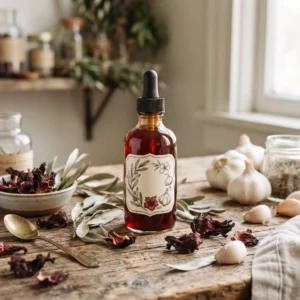
Hibiscus Flower Tincture – Liquid extract. A cold-extracted alcohol preparation made from dried Hibiscus sabdariffa material for people who prefer concentrated drops rather than tea or capsules. Seller: Hawaii Pharm – View Hawaii Pharm Hibiscus Tincture →
Herbal Synergies
Hibiscus pairs especially well with hawthorn, rosehip, ginger, cinnamon, and lemon balm depending on whether the goal is cardiovascular, antioxidant, digestive, or stress-related support.
Hibiscus + Hawthorn
Best for: Cardiovascular and circulation support
Hibiscus contributes anthocyanins and organic acids associated with vascular and blood-pressure support, while hawthorn provides flavonoids and procyanidins traditionally associated with cardiovascular tone and circulation.
The pairing is especially logical for a gentle daily cardiovascular tea rather than an acute-use formula.
Best extraction: Hot infusion or combined extract. Both herbs yield substantial polyphenols into hot water, while hydroalcoholic extraction captures a broader chemical spectrum.
Hibiscus + Rosehip
Best for: Antioxidant and vascular support
Hibiscus provides anthocyanins and tart organic acids, while rosehip adds additional polyphenols, carotenoids, and vitamin-C-related nutritional value.
The combination also produces a naturally tart, fruity tea that works particularly well iced.
Best extraction: Hot or cold infusion. Both herbs release useful organic acids and polyphenols into water.
Hibiscus + Ginger
Best for: Circulation and digestion
Hibiscus is cooling and tart, while ginger is warming, aromatic, and carminative. The contrasting energetics create a balanced formula for people who want cardiovascular support without an overly cooling digestive effect.
Best extraction: Hot infusion. Hibiscus anthocyanins and acids extract readily into water, while ginger releases aromatic and pungent constituents during steeping.
Hibiscus + Cinnamon
Best for: Cardiovascular and metabolic wellness
Hibiscus contributes anthocyanins and organic acids, while cinnamon provides aromatic polyphenols traditionally associated with glucose and circulatory support.
Because both herbs may influence blood pressure or glucose, concentrated preparations deserve extra caution in people using related medications.
Best extraction: Hot infusion or decoction. Hibiscus requires relatively little extraction time, while cinnamon benefits from somewhat longer heating.
Hibiscus + Lemon Balm
Best for: Cardiovascular wellness with mild stress
Hibiscus provides vascular and antioxidant support, while lemon balm contributes gentle calming, nervine, and digestive properties.
This pairing works particularly well as a caffeine-free evening tea.
Best extraction: Covered hot infusion. Both herbs contain water-extractable polyphenols, while covering the tea helps retain lemon balm’s volatile oils.
Key Herbal Properties
Cardiovascular supportive — Hibiscus is particularly associated with healthy blood pressure and vascular function. NCCIH notes that research suggests roselle may help lower blood pressure, although the effect is generally modest. (nccih.nih.gov)
Antioxidant — Anthocyanins, flavonoids, phenolic acids, and organic acids contribute substantial antioxidant activity. (pubmed.ncbi.nlm.nih.gov)
Mild diuretic — Hibiscus traditionally supports urine production and fluid balance. Experimental research also supports renal and diuretic activity. (pubmed.ncbi.nlm.nih.gov)
Cooling — Traditional herbal use regards hibiscus as cooling and refreshing, making it particularly suitable for warm-weather beverages and formulas.
Demulcent — Hibiscus contains polysaccharides that contribute a mild soothing quality despite its pronounced tartness.
Anti-inflammatory — Hibiscus anthocyanins and polyphenols influence inflammatory pathways experimentally, although this does not establish hibiscus as treatment for inflammatory disease.
Metabolic supportive — Research has explored hibiscus extracts for lipid and glucose metabolism, although human evidence remains less consistent than for blood-pressure support. (pubmed.ncbi.nlm.nih.gov)
Vascular supportive — Proposed mechanisms include effects on vascular relaxation, angiotensin-converting enzyme activity, calcium signaling, and endothelial function. (pubmed.ncbi.nlm.nih.gov)





Active Compounds
Hibiscus calyces are particularly rich in anthocyanins, organic acids, phenolic acids, flavonoids, and polysaccharides. The two characteristic red pigments—delphinidin-3-sambubioside and cyanidin-3-sambubioside—are especially useful markers of hibiscus quality. (pubmed.ncbi.nlm.nih.gov)
Delphinidin-3-Sambubioside
Found mainly in: Red calyces
Delphinidin-3-sambubioside is the predominant anthocyanin in many Hibiscus sabdariffa preparations and a major source of the plant’s deep crimson color.
It contributes antioxidant activity and has been investigated for vascular, inflammatory, and metabolic effects.
Best extraction: Hot or cold water infusion. Anthocyanins are polar, water-soluble pigments and extract readily into water.
Prolonged excessive heat can degrade anthocyanins, so extended boiling is unnecessary.
Cyanidin-3-Sambubioside
Found mainly in: Red calyces
Cyanidin-3-sambubioside is the second major characteristic hibiscus anthocyanin and contributes both color and antioxidant activity. (pubmed.ncbi.nlm.nih.gov)
Best extraction: Hot or cold water. Like other anthocyanin glycosides, it is highly compatible with aqueous extraction.
Hibiscus Acid
Found mainly in: Calyces
Hibiscus acid is one of the characteristic organic acids responsible for hibiscus’s strongly tart taste. It has been studied experimentally for metabolic, digestive-enzyme, and cardiovascular effects. (pubmed.ncbi.nlm.nih.gov)
Best extraction: Water infusion or hydroalcoholic extraction. Organic acids are highly polar and readily extracted into water.
Hydroxycitric Acid
Found mainly in: Calyces
Hydroxycitric acid contributes to hibiscus’s acidic phytochemical profile and has been studied for metabolic effects, though the relevance of isolated-compound research to ordinary hibiscus tea is uncertain. (pubmed.ncbi.nlm.nih.gov)
Best extraction: Water. Its high polarity makes tea an efficient extraction method.
Citric and Malic Acids
Found mainly in: Calyces
Citric acid and malic acid contribute prominently to hibiscus’s refreshing sour flavor. They also form part of the broader organic-acid profile now used for quality analysis of commercial hibiscus products. (pubmed.ncbi.nlm.nih.gov)
Best extraction: Hot or cold water. These small organic acids are extremely water soluble.
Protocatechuic Acid
Found mainly in: Calyces
Protocatechuic acid is an important phenolic acid in hibiscus and has been investigated for antioxidant and protective biological activity. (pubmed.ncbi.nlm.nih.gov)
Best extraction: Hot-water or hydroalcoholic extraction. It is sufficiently polar to extract well into tea.
Flavonoids
Found mainly in: Calyces and aerial tissues
Hibiscus contains flavonoids including quercetin-related compounds that complement its anthocyanin-rich antioxidant profile. (pubmed.ncbi.nlm.nih.gov)
Best extraction: Hot infusion or hydroalcoholic tincture. Water extracts many flavonoid glycosides, while diluted alcohol provides a broader spectrum.
Polysaccharides
Found mainly in: Calyces
Hibiscus contains pectin-like and other polysaccharides that contribute mild demulcent qualities and influence the texture of concentrated infusions.
Best extraction: Hot or cold water. Polysaccharides are best extracted with aqueous preparations rather than high-alcohol tinctures.
FAQ
What is hibiscus best used for?
Hibiscus is best known for cardiovascular and healthy blood-pressure support.
Research suggests the effect is generally modest, and NCCIH emphasizes that dietary supplements have not been shown to produce blood-pressure reductions comparable with prescription antihypertensive medications. (nccih.nih.gov)
Is hibiscus tea or extract better?
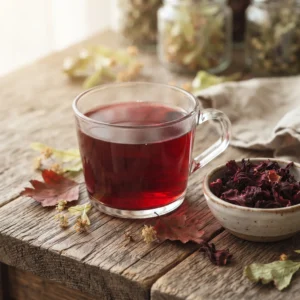
For everyday use, hibiscus tea is an excellent preparation because its major anthocyanins and organic acids are highly water soluble.
Standardized extracts provide a more concentrated and predictable amount of selected constituents but are not automatically necessary for ordinary cardiovascular wellness.
Can hibiscus tea be enjoyed every day?
Hibiscus is commonly consumed daily as a food and beverage. Traditional Medicinals, for example, formulates its hibiscus tea for daily use and recommends up to several cups per day according to its label. (traditionalmedicinals.com)
People taking blood-pressure or glucose-lowering medication should be more cautious with frequent concentrated use.
Is cold hibiscus tea as useful as hot tea?
Yes. Hibiscus’s anthocyanins, organic acids, and many phenolic compounds are water soluble and can be extracted in either hot or cold water.
A hot infusion is faster, while a longer cold infusion can produce a smooth, refreshing drink while minimizing prolonged heat exposure to anthocyanins.
What part of hibiscus is actually used medicinally?
The deep red material commonly called the “hibiscus flower” in teas is primarily the fleshy calyx of Hibiscus sabdariffa rather than the showy petals themselves.
Traditional Medicinals specifically lists the calyces as the part used in its hibiscus tea. (traditionalmedicinals.com)
Safety & Precautions
Hibiscus is generally well tolerated as a food and tea, but concentrated preparations may lower blood pressure.
People taking antihypertensive medication should use concentrated hibiscus supplements cautiously because additive blood-pressure-lowering effects are possible. NCCIH notes that hibiscus may produce a small reduction in blood pressure. (nccih.nih.gov)
Symptoms such as unusual dizziness, weakness, faintness, or lightheadedness—particularly when standing—may indicate that blood pressure has dropped too low.
Hibiscus has also been investigated for blood-glucose-lowering effects. People taking insulin or other glucose-lowering medications should monitor appropriately and discuss concentrated extracts with their healthcare professional.
Because hibiscus has mild diuretic activity, people taking prescription diuretics or managing significant kidney or electrolyte disorders should seek professional guidance before using concentrated amounts.
Safety information for medicinal doses during pregnancy and breastfeeding remains inadequate. Concentrated supplements are therefore best avoided unless specifically recommended by a qualified healthcare professional.
Hibiscus’s natural acidity may aggravate acid reflux, sensitive teeth, or stomach irritation in some people. Diluting the tea or consuming it with food may improve tolerance.
Hibiscus may occasionally cause allergic reactions. Starwest Botanicals also notes that its hibiscus may be intercropped with peanuts and could contain peanut or shell fragments, which is particularly important for people with severe peanut allergy. (starwest-botanicals.com)
Do not use hibiscus to replace prescribed treatment for hypertension, diabetes, cardiovascular disease, kidney disease, or edema.
Anyone with persistently high or unusually low blood pressure, diabetes, kidney disease, or prescription medications should discuss regular therapeutic hibiscus use with an appropriate healthcare professional.
References
- NCCIH — Hypertension and Hibiscus (Hibiscus sabdariffa)
- PubMed — Hibiscus sabdariffa L.: A Phytochemical and Pharmacological Review
- PubMed — Systematic Review and Meta-analysis of Hibiscus on Blood Pressure and Cardiometabolic Markers
- PubMed — Effect of Sour Tea (Hibiscus sabdariffa) on Arterial Hypertension
- PubMed — Organic Acids from Roselle (Hibiscus sabdariffa)
- PubMed — Determination of Anthocyanins, Organic Acids, and Phenolic Acids in Hibiscus Products
- PubMed — Hibiscus sabdariffa Calyx: From Ethnobotany to Pharmacology
- Traditional Medicinals — Organic Hibiscus Tea
- Starwest Botanicals — Organic Hibiscus Flowers
- iHerb — Vitacost Hibiscus Extract
Disclaimer
Disclaimer: This article is for educational purposes only and is not intended to diagnose, treat, cure, or prevent any disease. Herbal products can cause side effects and interact with medications. Consult a qualified healthcare professional before using herbs therapeutically, especially if you are pregnant, breastfeeding, taking prescription medications, or managing a medical condition.