


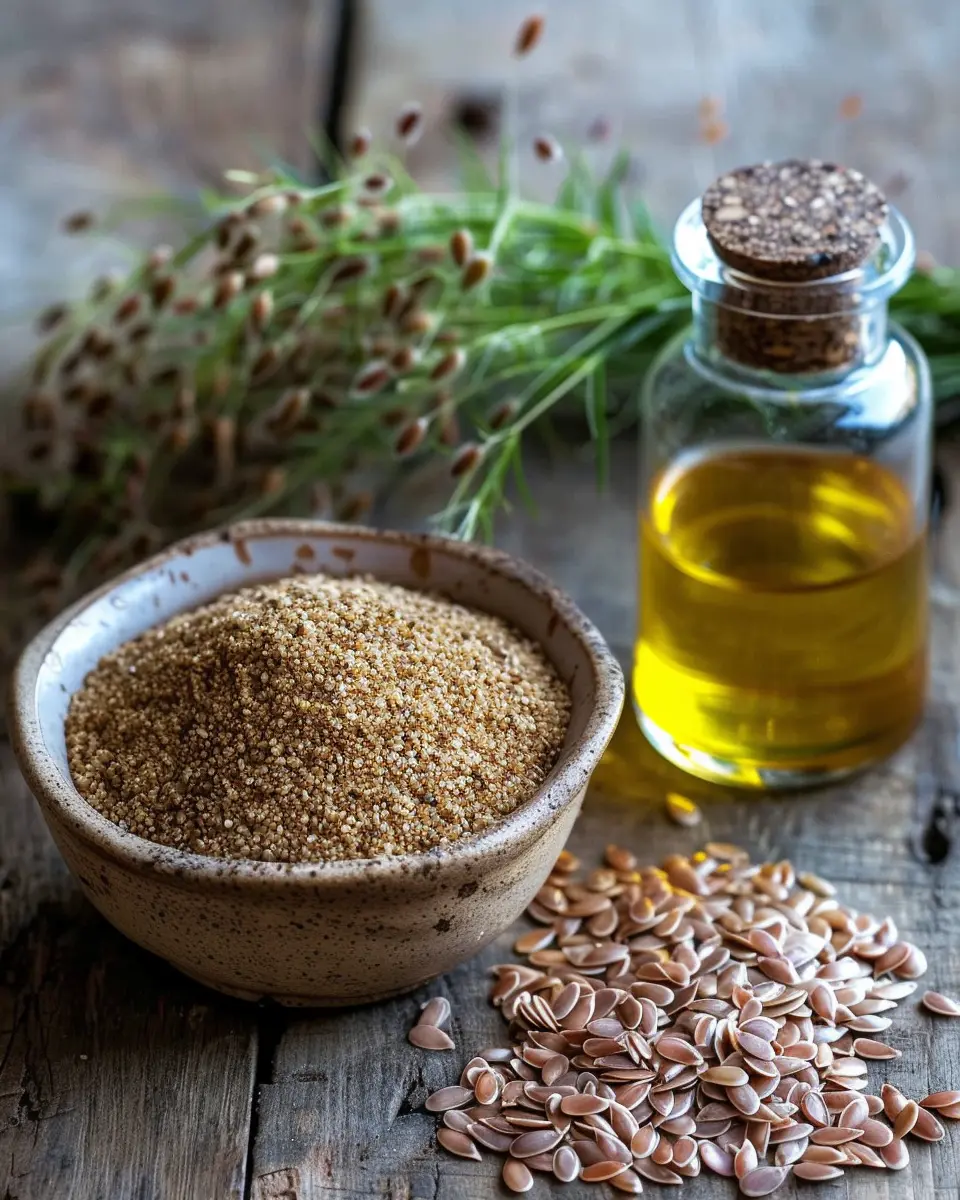
Traditionally, flaxseed has been used primarily to support digestive regularity and overall wellness, especially when dealing with occasional constipation or looking for a daily source of essential fatty acids. It is commonly prepared as ground seed, whole seed, oil, or a mucilaginous seed infusion.
Common Name: Flaxseed
Latin Name: Linum usitatissimum
Alternate Names: Linseed
- Parts used: seed
- Primary properties: demulcent, laxative, nutritive
- Common preparations: ground seed, whole seed, oil, seed tea
- Best known for: supporting digestive regularity
What It Helps With
Health conditions this herb is commonly used to support.
Related Buying Guides
Featured Recipes
Explore and try simple ways to prepare and use this herb at home.
Active Compounds
The tiny plant chemistry doing all the heavy lifting.
Key Herbal Properties
What this herb is known for, herbally speaking.



Herbal Synergies
Other herbs that pair especially well with this one — together, their combined properties work better than either herb does alone.
Health Conditions Flaxseed Helps With
- Constipation — Flaxseed’s soluble fiber and mucilage content have traditionally made it a go-to for supporting regular, comfortable bowel movements.
- Digestive Irritation — Its demulcent quality has traditionally been used to soothe an irritated digestive tract, particularly when taken as a soaked seed infusion.
- Dry Skin & Hair — Traditionally taken internally or used in topical oil form to support skin softness, thanks to its essential fatty acid content.
- Hormonal Balance — Traditionally associated with mild phytoestrogenic activity, flaxseed has long been used by some as part of broader approaches to menstrual and menopausal comfort.
- Cardiovascular Wellness — Long included in traditional dietary approaches to heart health, largely attributed to its essential fatty acid and fiber content.
Compounds
- Mucilage — a soluble fiber that gives flaxseed its soothing, demulcent quality and supports its traditional digestive use.
- Alpha-linolenic acid (ALA) — an omega-3 fatty acid considered central to flaxseed’s traditional reputation for skin and cardiovascular support.
- Lignans — plant compounds with mild phytoestrogenic activity, thought to contribute to flaxseed’s traditional use for hormonal balance.
- Fiber — both soluble and insoluble fiber support flaxseed’s traditional role in digestive regularity.
Properties
- Demulcent — soothes and coats irritated tissue, especially when flaxseed is soaked to release its mucilage.
- Laxative (bulk-forming) — supports regular bowel movements by adding bulk and moisture to stool.
- Nutritive — valued as a source of essential fatty acids, fiber, and lignans.
- Emollient — used topically in oil form to soften and support skin.
Recipes Using Flaxseed
- Ground Flaxseed in Smoothies or Oatmeal — a simple daily addition for fiber and essential fatty acid support.
- Flaxseed Gel or Tea — made by soaking or simmering whole seeds, traditionally used for its soothing, mucilaginous quality.
- Flaxseed Oil Blends — combined into salad dressings or taken directly as a daily source of ALA.
Products Featuring Flaxseed
- Ground Flaxseed (Meal) — the most bioavailable form, since whole seeds often pass through the digestive tract undigested.
- Whole Seed — chosen for longer shelf stability and for making traditional seed teas or gels.
- Flaxseed Oil — favored by those who want a concentrated source of ALA without the fiber bulk.
Synergies
- Psyllium Husk — often paired with flaxseed for a broader, complementary fiber-based approach to digestive regularity.
- Chia Seed — combined for a similar mucilaginous, fiber-rich profile in traditional digestive and nutritive blends.
- Marshmallow Root — paired for additional demulcent support when soothing digestive irritation is the main goal.
- Slippery Elm — traditionally combined with flaxseed in soothing digestive formulas for its complementary mucilage content.
Safety & Precautions
Flaxseed is generally well-tolerated, though it should always be taken with plenty of water, since its fiber and mucilage content can worsen constipation or even pose a choking risk if taken dry without adequate fluid. It should be introduced gradually, as too much too quickly can cause gas, bloating, or loose stools. Due to its mild phytoestrogenic activity, those with hormone-sensitive conditions should consult a healthcare provider before regular use. Pregnant individuals are generally advised to stick to culinary, food-level amounts and check with a healthcare provider before using concentrated flaxseed products. Flaxseed may also affect the absorption of oral medications, so it’s often recommended to take it a couple of hours apart from prescription drugs. Whole, unprocessed (green) flax plant material is not safe for pets, but small amounts of ground flaxseed are commonly found in some pet foods; check with a veterinarian before adding it directly.
Q&A
Does flaxseed taste bitter?
No, flaxseed has a mild, slightly nutty flavor, which makes it easy to mix into oatmeal, smoothies, or baked goods without significantly changing the taste. Flaxseed oil has a similarly mild flavor, though it can turn bitter or “off” if it’s gone rancid.
Whole seeds are fairly flavorless on their own since they largely pass through undigested unless ground.
Can flaxseed be used daily?
Yes, flaxseed is commonly used daily as part of a regular diet, particularly ground flaxseed stirred into food for ongoing fiber and essential fatty acid support. Traditional and common use patterns favor small, consistent daily amounts over large occasional doses.
As with any fiber-rich food, it’s important to increase water intake alongside daily flaxseed use to support comfortable digestion.
Should flaxseed be whole or ground?
Ground flaxseed (flax meal) is generally considered more beneficial than whole seed, since whole seeds have a hard outer coating that often passes through the digestive tract without breaking down. Grinding releases the fiber, oil, and lignans, making them more accessible.
Whole seeds are still useful for soaking into a gel or tea, where the outer mucilage layer softens and disperses even without grinding.
Does flaxseed go rancid?
Yes, because flaxseed is rich in polyunsaturated fats, it’s prone to oxidation and can go rancid relatively quickly, especially once ground. Whole seeds store noticeably longer than ground flax or flaxseed oil.
A rancid, overly sharp or “paint-like” smell is the main sign it’s time to replace your flaxseed, and this applies to both ground seed and oil.
How should flaxseed be stored?
Whole flaxseed can be stored in a cool, dark pantry for up to a year, but ground flaxseed and flaxseed oil are best kept refrigerated to slow oxidation and rancidity. Airtight containers help protect flaxseed from light, heat, and moisture in either form.
Grinding only what you plan to use within a few weeks, rather than large batches in advance, helps preserve freshness.
References
- Plants of the World Online: Linum usitatissimum
- PubMed: Scientific Literature on Linum usitatissimum
- National Library of Medicine: Chemical Constituents from Linum usitatissimum
- Wikipedia: Linum usitatissimum
- ScienceDirect Topics: Linum usitatissimum Research
- North Carolina State Extension Plant Toolbox: Linum usitatissimum
- Memorial Sloan Kettering Cancer Center: About Herbs — Flaxseed
- National Library of Medicine: Lignan Research
This information is for educational purposes only and is not intended as medical advice. Consult a qualified healthcare professional before using any herb, especially if pregnant, breastfeeding, taking medications, or managing a health condition.