

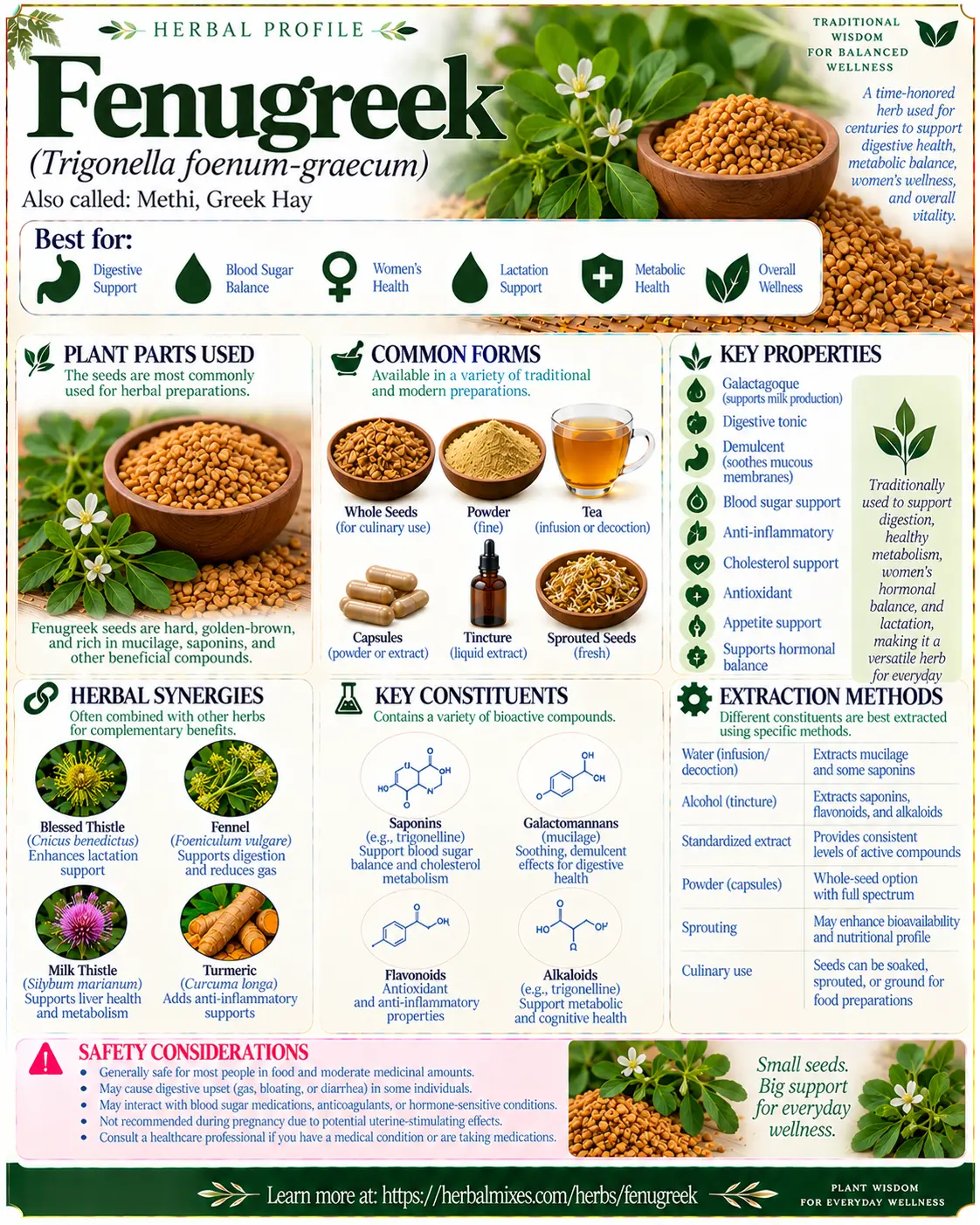
What Fenugreek Is Good For
Lactation & Galactagogue Support — Fenugreek is globally renowned as a premier galactagogue traditionally used by nursing mothers to stimulate and support healthy breast milk production.
Blood Sugar & Metabolic Support — Rich in unique amino acids and soluble fiber, it helps support normal, healthy insulin sensitivity and post-meal glycemic balance.
Digestive Mucilage & Soothing Care — Its abundant soluble mucilage coats and protects inflamed mucous membranes throughout the stomach and gastrointestinal tract.
Cholesterol & Cardiovascular Support — Helps support normal, healthy lipid profiles and cholesterol levels already within the normal range.
Topical Inflammation & Boil Soothing — Applied externally as a warm seed poultice, it helps soothe localized skin inflammation, boils, and minor swelling.
Available Herbal Products
Buying Guides for Available Fenugreek Products
Organic Whole Fenugreek Seeds – Hard golden seeds. An authentic, traditional choice for soaking, sprouting, simmering into a rich tea, or grinding fresh for culinary spice blends. Seller: Mountain Rose Herbs – View Mountain Rose Herbs Fenugreek Seed →
Fenugreek Seed Liquid Extract – Hydroalcoholic tincture. A fast-absorbing liquid format designed for convenient daily dosing to support lactation and metabolic wellness. Seller: Herb Pharm – View Herb Pharm Fenugreek Extract →
Mother’s Milk & Lactation Support Formula – Concentrated herbal capsule or tea blend combining fenugreek seed with blessed thistle, fennel, and anise. Designed to optimize milk flow. Seller: Gaia Herbs – View Gaia Herbs Lactation Formulas →
Organic Fenugreek Seed Powder – Finely ground seeds. An ideal option for compounding custom herbal capsules or preparing traditional warm drawing poultices. Seller: Starwest Botanicals – View Starwest Botanicals Fenugreek →
Herbal Synergies
Fenugreek seed pairs especially well with Blessed Thistle, Fennel Seed, and Goat’s Rue, depending on the goal of the formula.
Fenugreek Seed + Blessed Thistle – Best for: Maximizing breast milk production, supporting lactation, and nourishing nursing mothers Fenugreek supplies powerful galactagogue compounds that stimulate milk volume, while blessed thistle acts synergistically as a traditional tonic for the female reproductive and glandular systems. Together, they form the gold standard lactation support duo. Best extraction: Covered hot infusion (tea) or tincture combination. Simmering or steeping these herbs extracts their mucilage and bitter constituents.
Fenugreek Seed + Fennel Seed – Best for: Enhancing milk flow, eliminating infant gas, and soothing digestive colic Fenugreek boosts milk production, whereas fennel seed provides sweet carminative volatile oils that ease digestion and prevent gas in both mother and nursing infant. Best extraction: Warm herbal tea infusion. Blends nutritional galactagogue support with carminative comfort.
Fenugreek Seed + Gymnema Leaf – Best for: Advanced blood sugar maintenance, curbing sugar cravings, and supporting metabolic balance Fenugreek helps slow carbohydrate absorption and supports healthy insulin response, while gymnema leaf dampens sweet taste cravings and supports pancreatic function. Best extraction: Capsule blend or liquid extract. Combines soluble fiber support with targeted glycemic herbs.
Key Herbal Properties
Galactagogue — Stimulates and increases breast milk volume and flow in nursing women.
Hypoglycemic / Insulin Support — Slows gastric emptying and improves cellular glucose uptake to maintain stable blood sugar levels.
Demulcent — Soothes, protects, and moistens inflamed or irritated mucous membranes in the digestive tract.
Vulnerary (Topical) — Relieves localized inflammation, minor swelling, and skin irritation when applied as a warm poultice.
Nutritive — Rich in iron, protein, and trace minerals.




Active Compounds
4-Hydroxyisoleucine (Unique Amino Acid) Found mainly in: Seeds A specialized non-protein amino acid that stimulates glucose-dependent insulin secretion, supporting healthy blood sugar metabolism. Best extraction: Water decoction or alcohol-water extract. Dissolves efficiently in warm water and hydroalcoholic solutions.
Mucilage (Soluble Polysaccharides — up to 25-45% of seed composition) Found mainly in: Endosperm of the seeds Complex carbohydrates that absorb water to form a soothing gel that coats the gastrointestinal tract and slows sugar absorption. Best extraction: Warm water soaking or decoction. Mucilage requires water to hydrate and swell.
Saponins (including Diosgenin and Yamogenin) Found mainly in: Seeds Steroidal saponins that contribute to the plant’s hormonal, cholesterol-supporting, and galactagogue properties. Best extraction: Alcohol-water extract or decoction. Soluble in hydroalcoholic solvents.
-
FAQ
What is fenugreek best used for? Fenugreek is primarily used as a powerful galactagogue to boost breast milk production, and as a metabolic tonic to support healthy blood sugar balance.
Does fenugreek change your body odor? Yes, a distinct and harmless characteristic of consuming therapeutic doses of fenugreek is that your sweat and urine may develop a distinct, sweet aroma remarkably similar to maple syrup or burnt sugar.
How does fenugreek tea taste? Fenugreek tea has a strong, pungent, bitter, and earthy flavor profile with a distinct celery-and-maple aroma; it is often blended with fennel, peppermint, or honey to improve palatability.
Can fenugreek be taken every day? Yes, it is frequently consumed daily by nursing mothers as a galactagogue or by individuals supporting metabolic wellness, though long-term high-dose use should be monitored.
Is fenugreek safe to use during pregnancy? Therapeutic medicinal doses of fenugreek should be avoided during pregnancy because it has a traditional history of stimulating uterine contractions; culinary amounts in food are generally safe.
Safety & Precautions
Strict Pregnancy Contraindication: Avoid therapeutic medicinal doses of fenugreek during pregnancy, as it can stimulate uterine smooth muscle contractions. (Culinary food amounts are safe).
Blood Sugar Medications: Individuals taking prescription insulin or oral hypoglycemic medications should monitor their blood glucose levels closely, as additive glucose-lowering effects may occur.
Thyroid Hormone Interactors: High-dose fenugreek intake has been observed in some studies to influence thyroid hormone (T3/T4) levels; individuals with hypothyroid conditions should consult their physician.
Allergies: Individuals with known severe allergies to peanuts, chickpeas, or other plants in the Fabaceae (legume) family should exercise caution due to potential cross-reactivity.
Consult a qualified healthcare professional before using fenugreek therapeutically, especially if you manage underlying medical conditions or take prescription drugs.
References
National Center for Complementary and Integrative Health (NCCIH)
European Medicines Agency (EMA) Monograph on Trigonella foenum-graecum L., semen
World Health Organization (WHO) Monographs on Selected Medicinal Plants
Mountain Rose Herbs Fenugreek Seed Monograph
Disclaimer
Disclaimer: This article is for educational purposes only and is not intended to diagnose, treat, cure, or prevent any disease. Herbal products can cause side effects and interact with medications. Consult a qualified healthcare professional before using herbs therapeutically, especially if you are pregnant, breastfeeding, taking prescription medications, or managing a medical condition.