


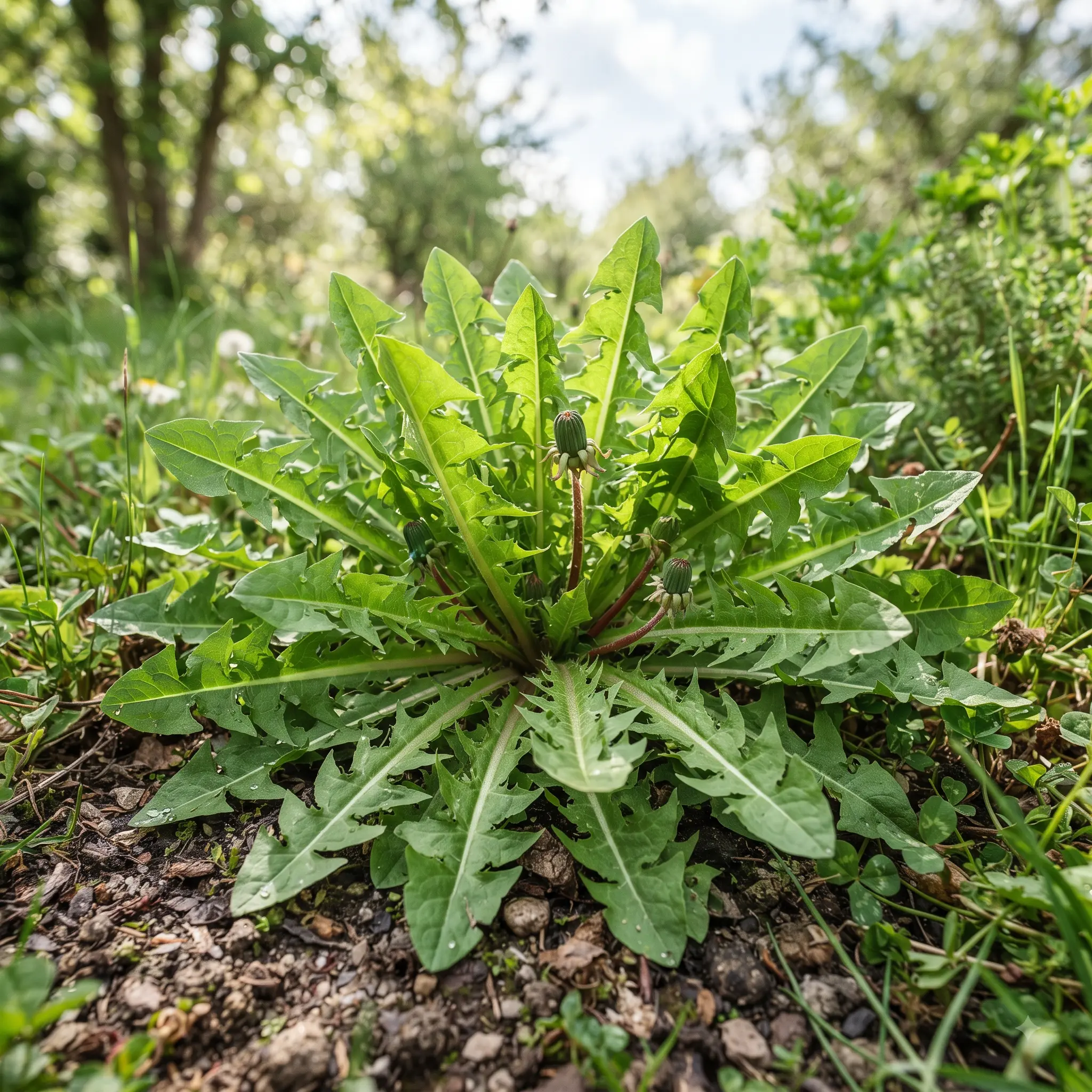
Traditionally, dandelion leaf has been used primarily as a general nourishment herb, especially when a mineral-rich, gently supportive daily green is wanted. It is commonly prepared as a fresh salad green, tea, tincture, or added to smoothies.
Common Name: Dandelion Leaf Latin Name: Taraxacum officinale Alternate Names: Lion’s Tooth
- Parts used: Leaves
- Primary properties: Nutritive
- Common preparations: Fresh salad green, tea, tincture, smoothie addition
- Best known for: Gentle daily nourishment and its notably potassium-rich profile
What It Helps With
Health conditions this herb is commonly used to support.
Related Buying Guides
Featured Recipes
Explore and try simple ways to prepare and use this herb at home.
Active Compounds
The tiny plant chemistry doing all the heavy lifting.
Key Herbal Properties
What this herb is known for, herbally speaking.




Herbal Synergies
Other herbs that pair especially well with this one — together, their combined properties work better than either herb does alone.
Health Conditions Dandelion Leaf Helps With
- General nourishment — Dandelion leaf’s central and defining traditional use, valued as a mineral-rich, nourishing green.
- Mild fluid retention — Traditionally used for its gentle diuretic-leaning reputation, notably alongside a naturally high potassium content.
- Sluggish everyday wellness — Long traditional use as a simple, food-based way to support general vitality.
Compounds
- Potassium — Present in meaningful amounts in dandelion leaf, notable because many diuretic substances deplete potassium, while dandelion leaf naturally supplies it.
- Flavonoids — Plant compounds contributing to dandelion leaf’s general antioxidant and nutritive reputation.
Properties
- Nutritive — Dandelion leaf’s defining and singular traditional property; valued as a gently nourishing daily green.
Recipes Using Dandelion Leaf
- Fresh dandelion salad — Young dandelion leaves added to salads, a traditional way to include the plant as food.
- Dandelion leaf tea — Dried leaf steeped as a simple daily tea, sometimes blended with nettle for extra mineral content.
- Green smoothie addition — Fresh dandelion leaf blended into a smoothie for an easy nutritive boost.
Products Featuring Dandelion Leaf
- Fresh leaf — Used directly in salads or juiced, most potent when young and tender.
- Dried leaf (tea) — A convenient, shelf-stable form for daily tea.
- Tincture — A concentrated liquid extract for convenient dosing.
Synergies
- Nettle — A classic nutritive pairing, both traditional mineral-rich tonic herbs often blended together.
- Dandelion Root — Shares the plant but offers a different traditional profile (see the Dandelion Root post), sometimes combined with the leaf for broader support.
- Oat Straw — Complements dandelion leaf’s nutritive properties in daily tonic blends.
Safety & Precautions
Dandelion leaf is generally very well-tolerated as food or tea by most healthy adults. Because it has a mild traditional diuretic-leaning reputation, anyone taking diuretic medication should be mindful of combining them, and anyone taking lithium should talk to a healthcare provider before regular use, since dandelion leaf may affect how the body processes lithium.
People with a known allergy to plants in the Asteraceae family (ragweed, daisies, marigolds, chrysanthemums) should approach dandelion leaf cautiously, as cross-reactivity is possible. If foraging fresh dandelion leaves, only harvest from areas you know haven’t been treated with pesticides or herbicides, since the leaves can absorb these chemicals.
There isn’t well-established traditional guidance for using concentrated dandelion leaf preparations with pets, though fresh leaf in small amounts is sometimes included in traditional animal herbalism — check with a veterinarian before offering it regularly.
Q&A
Does dandelion leaf taste bitter?
Yes, dandelion leaf has a noticeably bitter, slightly peppery flavor, especially in more mature leaves, which is part of its traditional appeal as a digestive-stimulating green. Young, tender leaves picked in spring are generally milder than older leaves.
If the bitterness is too strong for your taste, blending dandelion leaf into a smoothie with fruit, or mixing it with milder salad greens, can help balance the flavor.
Can dandelion leaf be used every day?
Yes, dandelion leaf is commonly used daily, whether as a fresh salad green, tea, or smoothie addition, and it’s considered one of the gentler nutritive greens for regular use. Many people include it as part of an everyday wellness routine.
Anyone taking lithium or diuretic medication should check with a healthcare provider before regular use.
Is dandelion leaf the same as dandelion root?
They come from the same plant, but dandelion leaf and dandelion root have different traditional property profiles — the leaf is primarily valued as a nutritive, mineral-rich green, while the root has a broader traditional reputation tied to digestion and liver support. They’re sometimes used together but aren’t interchangeable in terms of traditional use.
If a recipe or routine specifically calls for one, it’s worth using that particular part rather than substituting the other.
Is it safe to forage dandelion leaves from my yard?
It can be, as long as the area hasn’t been treated with pesticides, herbicides, or other lawn chemicals, since dandelion leaves can absorb these substances. It’s also worth harvesting away from busy roadsides where exhaust and runoff exposure is higher.
If you’re unsure about an area’s history, choosing organically grown or reputably sourced dried dandelion leaf is a safer alternative to foraging.
Does dandelion leaf act as a diuretic?
Yes, dandelion leaf has a traditional reputation as a mild diuretic, and notably, it naturally contains potassium, which is worth mentioning because many substances with a diuretic effect can deplete potassium levels, while dandelion leaf provides some alongside its traditional diuretic use. This is part of why dandelion leaf tea has such a long traditional history for supporting fluid balance.
Anyone taking diuretic medication or lithium should still check with a healthcare provider before regular use, given the potential for combined effects.
References
- Plants of the World Online: Taraxacum officinale
- PubMed: Scientific Literature on Taraxacum officinale
- National Library of Medicine: Chemical Constituents from Taraxacum officinale
- Wikipedia: Taraxacum officinale
- ScienceDirect Topics: Taraxacum officinale Research
- North Carolina Extension Gardener Plant Toolbox: Dandelion
- PubMed: Dandelion Diuretic Effect and Potassium Content
This information is for educational purposes only and is not intended as medical advice. Consult a qualified healthcare professional before using any herb, especially if pregnant, breastfeeding, taking medications, or managing a health condition.