

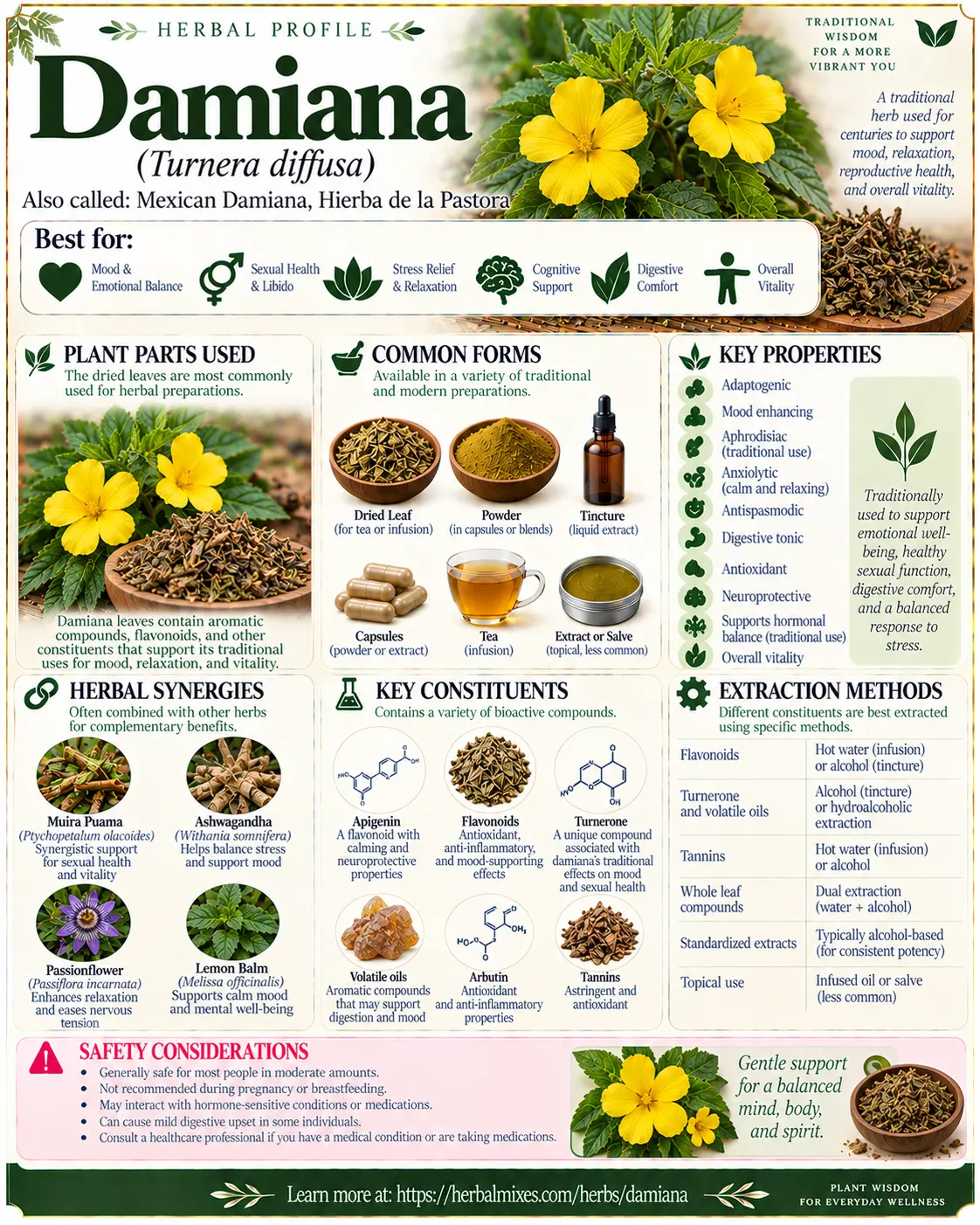
What Damiana Is Good For
Libido & Sexual Wellness Support — Damiana is globally renowned as a traditional aphrodisiac used to support healthy reproductive circulation, vitality, and sensual desire in both men and women.
Nervous Mood Uplift & Stress Relief — Acts as a gentle nervine tonic that helps lift mild situational depression, calm frayed nerves, and ease everyday anxiety.
Mild Anxiety & Nervous Exhaustion — Nourishes and relaxes an overstressed nervous system, helping soothe jittery tension without heavy sedation.
Reproductive & Pelvic Tonic — Promotes healthy blood flow and microcirculation to the pelvic basin, supporting reproductive tissue tone and hormonal well-being.
Digestive Stimulation — Its aromatic bitter compounds stimulate salivary flow and gastric secretions, gently priming the digestive tract.
Available Herbal Products
Buying Guides for Available Damiana Products
Organic Cut Damiana Leaf – Dried aromatic leaves. An authentic, traditional choice for steeping into a golden, earthy herbal tea or compounding custom botanical smoking blends. Seller: Mountain Rose Herbs – View Mountain Rose Herbs Damiana Leaf →
Damiana Liquid Extract – Hydroalcoholic tincture. A fast-absorbing liquid format designed for convenient daily dosing to support mood uplift, nervous resilience, and libido. Seller: Herb Pharm – View Herb Pharm Damiana Extract →
Women’s Sensual & Mood Tonic Formula – Concentrated liquid extract blend combining damiana leaf with shatavari and passionflower. Designed to provide comprehensive hormonal and emotional support. Seller: Wise Woman Herbals – View Wise Woman Herbals Formulas →
Organic Damiana Leaf Powder – Finely ground herb. A versatile option for crafting custom herbal capsules or blending into wellness tonics. Seller: Starwest Botanicals – View Starwest Botanicals Damiana →
Herbal Synergies
Damiana leaf pairs especially well with Catuaba Bark, Passionflower Herb, and Ashwagandha Root, depending on the goal of the formula.
Damiana Leaf + Catuaba Bark – Best for: Enhancing libido, boosting physical stamina, supporting reproductive vitality, and elevating mood Damiana supplies aromatic compounds that nourish sensual well-being and uplift emotional spirits, while catuaba bark brings invigorating nervous system energy and pelvic microcirculation. Together, they form the classic Amazonian and Central American vitality duo. Best extraction: Tincture combination or long-simmered decoction. Blending these extracts captures both delicate volatile oils and deep barks.
Damiana Leaf + Passionflower Herb – Best for: Easing nervous anxiety, calming an overactive mind, and supporting relaxed mood Damiana brings gentle nervine uplift and sensual nourishment, whereas passionflower acts as a powerful antispasmodic that stops looping anxious thoughts and promotes deep mental peace. Best extraction: Covered hot infusion (tea) or tincture blend. Both herbs yield their active flavonoids and calming compounds efficiently in warm water.
Damiana Leaf + Ashwagandha Root – Best for: Combating chronic stress-related exhaustion, restoring libido, and building endocrine resilience Damiana acts as an immediate uplifting tonic for nervous fatigue, while ashwagandha delivers deep adaptogenic support to regulate cortisol and nourish the adrenals over time. Best extraction: Capsule blend or dual-tincture. Combines immediate mood support with deep systemic restoration.
Key Herbal Properties
Aphrodisiac — Traditionally recognized for supporting reproductive circulation, hormonal balance, and sexual desire.
Nervine Tonic / Antidepressant (Mild) — Tonifies and uplifts the nervous system, easing mild melancholy, stress, and anxiety.
Vasodilator (Pelvic) — Encourages healthy microcirculation and blood flow to reproductive and pelvic organs.
Aromatic Bitters — Stimulates upper digestive secretions and primes appetite.
Diuretic (Mild) — Encourages gentle renal fluid balance and urinary tract comfort.





Active Compounds
Volatile Oils (including Cineole, Cymene, and Thujone) Found mainly in: Leaves The primary aromatic compounds responsible for damiana’s characteristic scent, pelvic circulatory stimulation, and mild nervous system activity. Best extraction: Hydroalcoholic tincture or covered hot water infusion. (Note: Always brew damiana tea with a lid to trap its delicate volatile oils).
Cyanogenic Glycosides (including Tetraphyllin B) Found mainly in: Leaf tissues Bioactive compounds present in trace amounts that contribute to the plant’s traditional tonic profile. Best extraction: Alcohol or warm water extract. Soluble in hydroalcoholic solutions.
Flavonoids and Resins (including Apigenin) Found mainly in: Leaves Antioxidant compounds that support cellular health, bind to calming nervous receptors, and provide anti-inflammatory action. Best extraction: Alcohol-water extract. Soluble in hydroalcoholic solvents.
FAQ
What is damiana best used for? Damiana is primarily used as a traditional herbal aphrodisiac to support reproductive vitality and libido, and as a nervine tonic to uplift mood and ease mild anxiety.
How does damiana tea taste? Damiana tea has a distinctly strong, earthy, bitter, and aromatic flavor profile with a slight herbal sharpness; many people prefer sweetening it lightly with honey or blending it with mint or chamomile.
Can damiana be smoked? Yes, historically, indigenous peoples of Central America smoked damiana leaves in traditional herbal blends to induce a mild, relaxed sense of euphoria and tranquility.
Can damiana be taken every day? Yes, damiana is frequently consumed daily as a tonic tea or tincture to support ongoing mood resilience and reproductive wellness.
Is damiana safe to use during pregnancy? No, internal use of damiana should be strictly avoided during pregnancy and breastfeeding due to its traditional uterine-stimulating potential and active volatile constituents like thujone.
Safety & Precautions
Pregnancy & Breastfeeding: Avoid internal use entirely during pregnancy and lactation, as damiana possesses traditional emmenagogue properties and active constituents that stimulate pelvic blood flow.
Blood Sugar Medications: Individuals taking prescription medications for diabetes should monitor blood glucose levels closely, as damiana can mildly influence blood sugar metabolism.
Nervous Overstimulation: Excessive high doses of concentrated extracts may occasionally cause mild restlessness or headache in sensitive individuals due to its volatile oil profile.
Medication Interactions: Exercise caution if you take prescription antidepressants or hormone-regulating medications.
Consult a qualified healthcare professional before using damiana therapeutically, especially if you manage underlying medical conditions or take prescription drugs.
References
National Center for Complementary and Integrative Health (NCCIH)
PubMed Central – Turnera diffusa (Damiana) Phytochemistry and Reproductive Pharmacology
National Library of Medicine – Volatile Oil Profile and Nervous System Activity of Damiana
World Health Organization (WHO) Monographs on Selected Medicinal Plants
Mountain Rose Herbs Damiana Leaf Monograph
Disclaimer
Disclaimer: This article is for educational purposes only and is not intended to diagnose, treat, cure, or prevent any disease. Herbal products can cause side effects and interact with medications. Consult a qualified healthcare professional before using herbs therapeutically, especially if you are pregnant, breastfeeding, taking prescription medications, or managing a medical condition.