

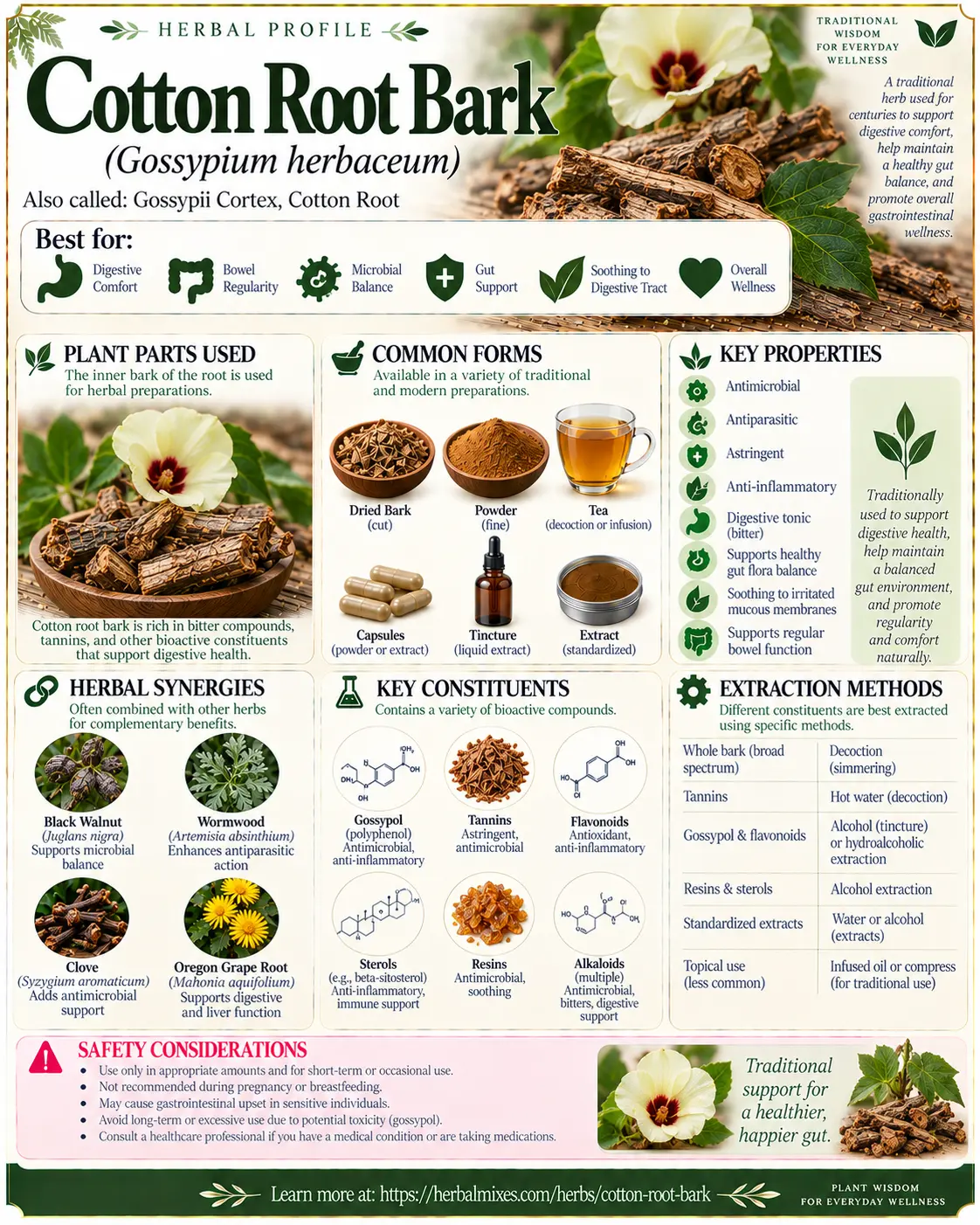
What Cotton Root Bark Is Good For
Uterine Tonic & Smooth Muscle Regulator — Cotton root bark is a premier reproductive uterine tonic traditionally used to tone, strengthen, and regulate smooth muscle contractions in the pelvic region.
Labor & Childbirth Support — Historically utilized by experienced midwives during late-stage pregnancy to gently encourage coordinated uterine contractions during childbirth (strictly under professional clinical supervision).
Pelvic Circulation & Congestion Relief — Promotes healthy blood flow and microcirculation to pelvic and reproductive organs, helping ease stagnant conditions.
Menstrual Cramp & Spasm Relief — Helps relax spasmodic uterine gripping and ease acute dysmenorrhea when used in appropriate low-dose preparations.
Traditional Emmenagogue — Historically employed to stimulate delayed menstruation and support healthy hormonal cycle release.
Available Herbal Products
Buying Guides for Available Cotton Root Bark Products
Organic Cotton Root Bark Cut – Dried fibrous bark pieces. An authentic, traditional choice for simmering into a rich, long-term decoction for reproductive support under professional herbal guidance. Seller: Mountain Rose Herbs – View Mountain Rose Herbs Cotton Root Bark →
Cotton Root Bark Liquid Extract – Hydroalcoholic tincture. A fast-absorbing liquid format designed for precise drop-by-drop dosing to support pelvic circulation and uterine tone. Seller: Herb Pharm – View Herb Pharm Cotton Root Extract →
Reproductive & Pelvic Tonic Formula – Concentrated liquid extract blend combining cotton root bark with black haw and cramp bark. Designed to provide comprehensive pelvic comfort. Seller: Wise Woman Herbals – View Wise Woman Herbals Formulas →
Organic Cotton Root Bark Powder – Finely ground bark. Used traditionally by advanced herbalists for compounding specialized custom uterine formulas. Seller: Starwest Botanicals – View Starwest Botanicals Cotton Root →
Herbal Synergies
Cotton root bark pairs especially well with Black Haw Bark, Cramp Bark, and Motherwort Herb, depending on the goal of the formula.
Cotton Root Bark + Black Haw Bark – Best for: Comprehensive uterine muscle balancing, easing severe menstrual cramping, and pelvic support Cotton root bark tones and regulates deep uterine tissue, while black haw bark supplies active coumarins and scopolin to relax smooth muscle spasms in the pelvic basin. Together, they form an exceptional reproductive comfort duo. Best extraction: Decoction or hydroalcoholic tincture combination. Both barks require simmering or alcohol extraction to release their active constituents.
Cotton Root Bark + Cramp Bark -Best for: Relieving uterine griping, calming spasmodic dysmenorrhea, and supporting reproductive tone Cotton root brings structural tone to the uterus, whereas cramp bark acts as a premier antispasmodic for acute muscular tension in the lower abdomen. Best extraction: Combined tincture blend. Yields rapid relaxant and toning action.
Cotton Root Bark + Motherwort Herb – Best for: Easing emotional tension associated with painful cycles, regulating flow, and supporting heart-uterus connection Cotton root supports pelvic blood flow and uterine tone, while motherwort offers gentle nervine relaxation for hormone-related stress and palpitations. Best extraction: Tincture combination. Blending these extracts bridges nervous system calm with reproductive support.
Key Herbal Properties
Uterine Tonic — Tones, strengthens, and normalizes the physiological function and integrity of the uterine muscle.
Oxytocic / Parturient — Stimulates uterine contractions; traditionally used to assist active labor under professional attendance.
Emmenagogue — Stimulates pelvic blood flow and encourages delayed menstrual bleeding.
Antispasmodic (Pelvic) — Relaxes smooth muscle tissue in the uterus, easing painful griping cramps.
Circulatory Stimulant (Pelvic) — Encourages robust microcirculation and fluid clearance in reproductive tissues.



Active Compounds
Gossypol (Phenolic Compound / Sesquiterpene Derivative) Found mainly in: Root bark and seeds A biologically active phenolic compound known for its strong cellular, antifertility, and smooth-muscle-stimulating properties. Best extraction: Hydroalcoholic tincture or long water decoction. Gossypol and active tannins dissolve efficiently in alcohol and simmering water.
Resins, Tannins, and Mucilage Found mainly in: Fibrous root bark Provide astringent, tissue-toning, and protective demulcent actions. Best extraction: Alcohol-water extract. Soluble in hydroalcoholic solvents.
Essential Fatty Acids and Phytosterols Found mainly in: Root tissues Contribute to the plant’s overall lipid and sterol profile supporting endocrine balance. Best extraction: High-proof alcohol extraction.
FAQ
What is cotton root bark best used for? Cotton root bark is primarily used as a specialized uterine tonic to support pelvic circulation, tone reproductive tissue, and assist during labor under professional midwifery care.
Why is cotton root bark strictly contraindicated during early pregnancy? Because cotton root bark has a powerful traditional history as an abortifacient and uterine stimulant, taking it during the first or second trimesters can induce dangerous uterine contractions and miscarriage.
How does cotton root bark taste? Cotton root bark tea has a woody, earthy, bitter, and moderately astringent flavor profile.
Can cotton root bark be used safely for menstrual cramps? Yes, under the guidance of a qualified clinical herbalist, low doses are sometimes used to tone a boggy uterus and ease specific types of stagnant menstrual cramping, though gentler herbs like cramp bark are more commonly preferred for general cramps.
Where does commercial cotton come from? Most cultivated cotton (Gossypium hirsutum) is grown globally for textile fibers, but medicinal root bark is harvested specifically from clean, unsprayed crops or specialized botanical farms.
Safety & Precautions
Strict Pregnancy Contraindication (Early/Mid Trimester): Never use cotton root bark during the first or second trimesters of pregnancy, as it is a potent uterine stimulant and historic abortifacient.
Professional Supervision Required: Due to its profound physiological impact on smooth muscle tissue and reproductive organs, cotton root bark should only be used under the direct supervision of an experienced clinical herbalist, midwife, or physician.
Hormonal Medications: Individuals taking hormone replacement therapies, oral contraceptives, or fertility treatments should avoid cotton root bark due to potential endocrine interactions.
Male Reproductive Health: High doses of active gossypol constituents have historically been researched for male contraceptive effects; men should avoid high therapeutic internal use.
Consult a qualified healthcare professional before using cotton root bark therapeutically, especially if you manage underlying medical conditions or take prescription drugs.
References
National Center for Complementary and Integrative Health (NCCIH)
PubMed Central – Gossypium herbaceum (Cotton Root Bark) Phytochemistry and Uterine Pharmacology
National Library of Medicine – Gossypol and Reproductive Toxicology Profile
World Health Organization (WHO) Monographs on Selected Medicinal Plants
Mountain Rose Herbs Cotton Root Bark Monograph
Herb Pharm Botanical Safety Guidelines
Disclaimer
Disclaimer: This article is for educational purposes only and is not intended to diagnose, treat, cure, or prevent any disease. Herbal products can cause side effects and interact with medications. Consult a qualified healthcare professional before using herbs therapeutically, especially if you are pregnant, breastfeeding, taking prescription medications, or managing a medical condition.