


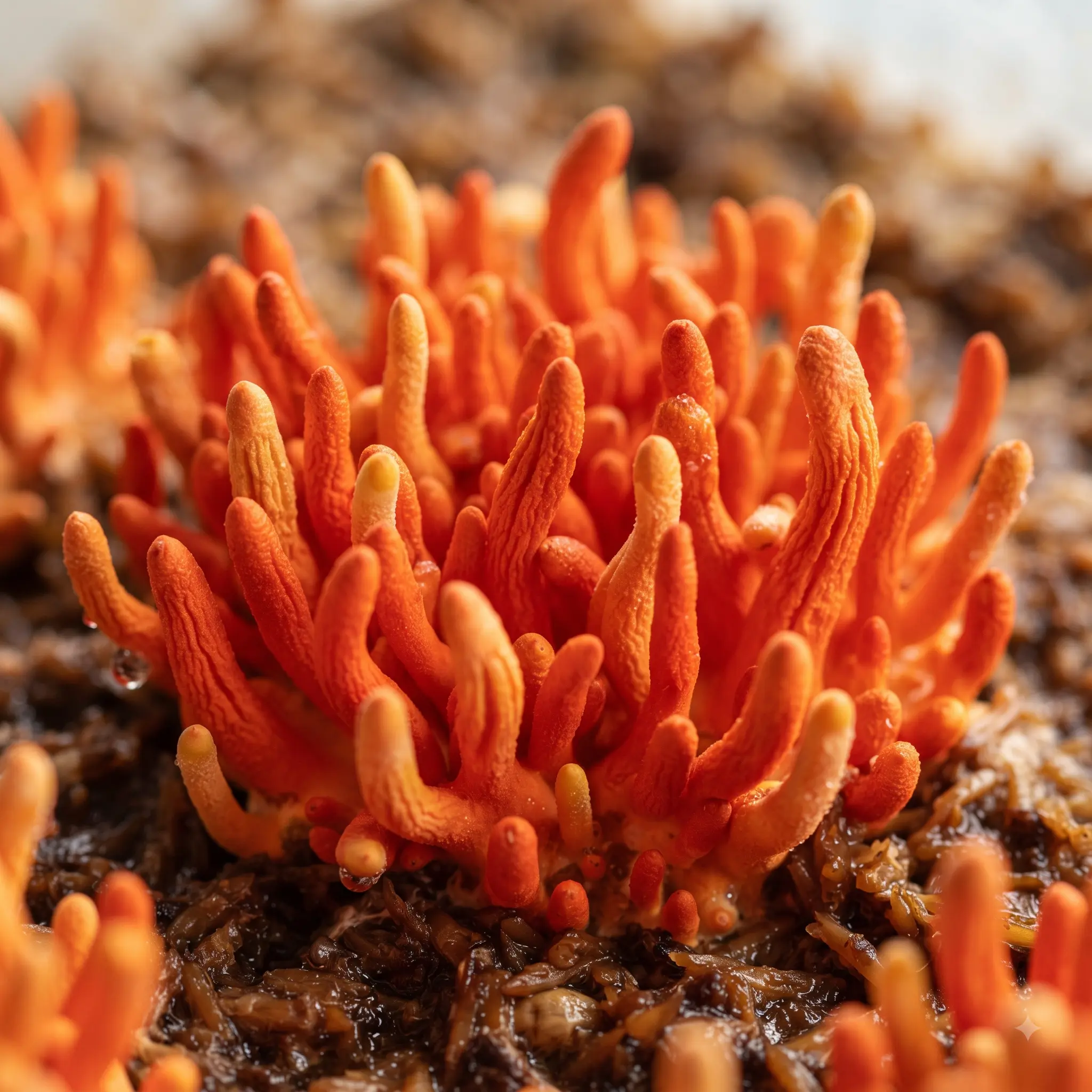
Traditionally, cordyceps has been used primarily as a vitality and immune-balancing herb, especially when low energy or a need for balanced everyday immune support are involved. It is commonly prepared as a standardized capsule, powder, or tea made from the cultivated fungus.
Common Name: Cordyceps Latin Name: Cordyceps militaris (the cultivated species most common in modern products; distinct from wild Ophiocordyceps sinensis — see note below) Alternate Names: Caterpillar Fungus
- Parts used: Fruiting body (the fungal growth used in preparations)
- Primary properties: Immunomodulant
- Common preparations: Capsules, powder, tea
- Best known for: Traditional support for balanced immune wellness and everyday vitality
What It Helps With
Health conditions this herb is commonly used to support.
Related Buying Guides
Featured Recipes
Explore and try simple ways to prepare and use this herb at home.
Active Compounds
The tiny plant chemistry doing all the heavy lifting.
Key Herbal Properties
What this herb is known for, herbally speaking.

Herbal Synergies
Other herbs that pair especially well with this one — together, their combined properties work better than either herb does alone.
Health Conditions Cordyceps Helps With
- Balanced immune wellness — Cordyceps’s central and defining traditional use, taken to support steady, well-regulated immune function.
- Low energy and fatigue — Long traditional use as a vitality-supporting herb for general stamina.
- Recovery support after physical exertion — Some traditional use includes cordyceps to support the body’s recovery process.
Compounds
- Cordycepin — A compound unique to cordyceps, traditionally credited with much of its vitality and immune-supporting reputation.
- Polysaccharides — Contribute to cordyceps’s traditional immune-balancing reputation.
Properties
- Immunomodulant — Cordyceps’s defining and singular traditional property; used to support balanced, well-regulated immune function.
Recipes Using Cordyceps
- Daily vitality tonic — Cordyceps powder stirred into coffee, tea, or a smoothie as a simple daily ritual.
- Cordyceps mushroom tea — Cordyceps simmered as a mild tea, sometimes blended with reishi or astragalus.
Products Featuring Cordyceps
- Standardized capsules — The most common and consistent-dose form for daily use.
- Powder — A versatile form that can be stirred into drinks or food.
- Tea (loose or bagged) — A gentler, traditional preparation.
Synergies
- Reishi — Frequently combined with cordyceps for broader balanced-immune traditional support.
- Astragalus — Shares an immune-supporting traditional profile, often paired with cordyceps.
- Ginseng — Sometimes combined with cordyceps in vitality-focused traditional formulas.
Safety & Precautions
Cordyceps is generally well-tolerated by most healthy adults, though some people experience mild digestive upset when first starting it. Because of its immune-modulating action, people with autoimmune conditions (such as lupus, rheumatoid arthritis, or multiple sclerosis) should use caution and check with a healthcare provider before use, and anyone taking immunosuppressant medication should also consult a provider first, since cordyceps may work against the intended effect of those medications.
Cordyceps may have a mild effect on blood clotting and blood sugar, so anyone taking blood-thinning medication or diabetes medication should talk to a healthcare provider before regular use; some providers also recommend stopping cordyceps a couple of weeks before scheduled surgery. There isn’t well-established safety data for concentrated use during pregnancy or breastfeeding, so it’s generally avoided in that context.
There isn’t well-established traditional guidance for using cordyceps with pets, so it should not be given to an animal without veterinary advice.
Q&A
Does cordyceps taste bitter?
Cordyceps has a mild, earthy, slightly savory or umami flavor rather than a bitter one, which is part of why it blends easily into coffee, tea, or smoothies. Most people find it fairly neutral and easy to incorporate into a daily routine.
Because the flavor is subtle, cordyceps powder is often chosen specifically for how easily it disappears into other drinks without changing the taste much.
Can cordyceps be used every day?
Yes, cordyceps is traditionally used daily as an ongoing vitality and immune-support supplement, often for extended periods. Many people include it as part of a steady daily wellness routine.
Anyone with an autoimmune condition, on immunosuppressant medication, or taking blood-thinning or diabetes medication should check with a healthcare provider before starting daily use.
What’s the difference between cordyceps products and traditional wild cordyceps?
Most cordyceps products today use Cordyceps militaris, a cultivated species grown under controlled conditions, rather than the wild Ophiocordyceps sinensis traditionally harvested from certain high-altitude regions, which is rare, expensive, and increasingly scarce in the wild. The cultivated species shares a similar traditional reputation and is the far more common, accessible, and sustainable option in modern products.
If a product’s price seems unusually low for “wild” cordyceps, it’s very likely the cultivated species, which is a reasonable and traditionally supported choice rather than something to be wary of.
Is cordyceps safe for people with autoimmune conditions?
This is worth genuine caution. Because cordyceps is traditionally used to support immune activity, people with autoimmune conditions like lupus, rheumatoid arthritis, or multiple sclerosis should use caution and talk to a healthcare provider before using it, since it could theoretically affect immune system activity in ways that aren’t helpful for these conditions.
If you manage an autoimmune condition, this is a conversation worth having with your provider before adding cordyceps to your routine.
Does cordyceps interact with medications?
Cordyceps may have a mild effect on blood clotting and blood sugar, so it’s relevant for anyone taking blood-thinning or diabetes medication. It may also interact with immunosuppressant medications by working against their intended effect.
If you take any prescription medication regularly, it’s worth mentioning cordyceps to your healthcare provider before adding it to your routine.
References
- Plants of the World Online: Cordyceps militaris
- PubMed: Scientific Literature on Cordyceps militaris
- National Library of Medicine: Chemical Constituents from Cordyceps militaris
- Wikipedia: Cordyceps militaris
- ScienceDirect Topics: Cordyceps Research
- Memorial Sloan Kettering Cancer Center: About Herbs — Cordyceps
- PubMed: Cordycepin Bioactivity and Safety
This information is for educational purposes only and is not intended as medical advice. Consult a qualified healthcare professional before using any herb, especially if pregnant, breastfeeding, taking medications, or managing a health condition.