

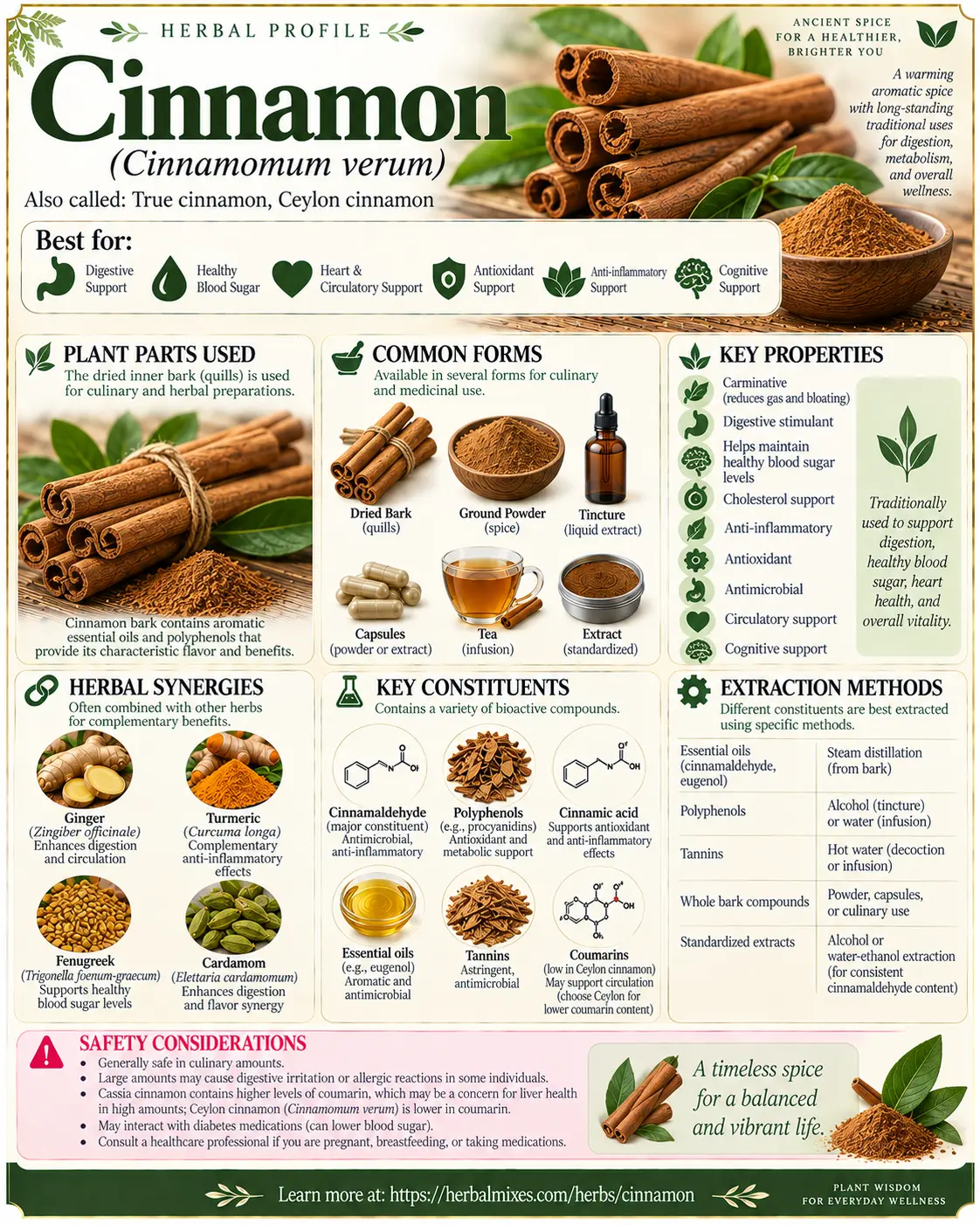
What Cinnamon Is Good For
Blood Sugar & Metabolic Support — Cinnamon is globally renowned for its ability to support normal, healthy insulin sensitivity and maintain stable post-meal blood sugar levels.
Warming Circulation — Acts as a wonderful circulatory stimulant, bringing gentle internal warmth to cold hands and feet while supporting healthy peripheral blood flow.
Digestive Comfort & Carminative Relief — Its pungent, aromatic volatile oils help dispel intestinal gas, ease post-meal bloating, and soothe sluggish digestion.
Antimicrobial & Immune Defense — Exhibits powerful antimicrobial, antifungal, and antiviral properties that help protect against seasonal microbial challenges.
Antioxidant Protection — Boasts one of the highest antioxidant concentrations of any spice, helping neutralize free radicals and protect cells from oxidative stress.
Available Herbal Products
Organic True Ceylon Cinnamon Quills (Sticks) – Delicate, multi-layered inner bark rolls from Cinnamomum verum. The superior choice for culinary use and daily therapeutic teas due to its exceptionally low coumarin content. Seller: Mountain Rose Herbs – View Mountain Rose Herbs Ceylon Cinnamon →
Ceylon Cinnamon Bark Liquid Extract – Hydroalcoholic tincture. A fast-absorbing liquid format designed for convenient daily dosing to support blood sugar balance and metabolic health. Seller: Herb Pharm – View Herb Pharm Cinnamon Extract →
Metabolic & Blood Sugar Support Capsules – Standardized capsules. Formulated with concentrated cinnamon extract to provide reliable, daily glycemic and cardiovascular support. Seller: Gaia Herbs – View Gaia Herbs Cinnamon →
Organic True Ceylon Cinnamon Powder – Finely ground aromatic inner bark. An ideal option for stirring into morning porridges, smoothies, or baking spice blends. Seller: Starwest Botanicals – View Starwest Botanicals Cinnamon →
Herbal Synergies
Cinnamon bark pairs especially well with Ginger Root, Cardamom Pods, and Gymnema Leaf, depending on the goal of the formula.
Ceylon Cinnamon Bark + Ginger Root – Best for: Warming core digestion, stimulating sluggish metabolism, and encouraging peripheral circulation Cinnamon delivers sweet, aromatic warming oils that support blood sugar balance and microcirculation, while ginger root provides pungent oleoresins that accelerate gastric emptying and ignite digestive fire. Together, they form the quintessential warming spice duo. Best extraction: Simmered tea decoction or tincture blend. Both dense barks release their active volatile oils and warming constituents efficiently into hot water or alcohol.
Ceylon Cinnamon Bark + Cardamom Pods – Best for: Comprehensive carminative digestive comfort, easing gas, and sweetening breath Cinnamon warms the gastrointestinal tract and balances blood sugar, whereas cardamom pods offer aromatic oils that soothe smooth muscle spasms and relieve upper abdominal bloating. Best extraction: Covered hot infusion (tea) or spiced chai decoction. Steeping these aromatics under a lid traps their delicate volatile oils.
Ceylon Cinnamon Bark + Gymnema Leaf – Best for: Advanced blood sugar maintenance, curbing sugar cravings, and metabolic support Cinnamon supports healthy insulin sensitivity at the cellular level, while gymnema leaf (“the sugar destroyer”) helps temporarily dull sweet taste receptors and supports healthy pancreatic function. Best extraction: Capsule blend or tincture combination. Combining these herbs provides comprehensive glycemic support.
Key Herbal Properties
Hypoglycemic / Insulin Sensitizer — Improves cellular uptake of glucose and supports normal, balanced blood sugar metabolism.
Circulatory Stimulant — Accelerates peripheral blood flow and brings gentle internal warmth to chilled tissues.
Carminative — Relieves flatulence, gas buildup, and abdominal cramping by relaxing digestive smooth muscle.
Antimicrobial / Antifungal — Inhibits the growth of bacteria, fungi, and yeasts in the digestive tract and on surfaces.
Astringent / Warming — Tones and warms mucous membranes throughout the body.





Active Compounds
Cinnamaldehyde (Volatile Essential Oil — accounts for ~75-90% of the bark oil) Found mainly in: Inner bark The primary bioactive aromatic compound responsible for cinnamon’s distinct sweet fragrance, blood-sugar-regulating activity, and powerful antimicrobial properties. Best extraction: Steam distillation or high-proof alcohol tincture. Cinnamaldehyde dissolves efficiently in alcohol and warm water solutions.
Proanthocyanidins and Polyphenols Found mainly in: Inner bark Potent antioxidant compounds that protect cellular tissues from oxidative stress and support cardiovascular health. Best extraction: Hot water infusion (tea) or alcohol-water extract. Soluble in both warm water and hydroalcoholic solvents.
Coumarin (Note: Found in high levels in Cassia cinnamon, but trace and negligible in true Ceylon cinnamon) Found mainly in: Bark A naturally occurring compound that can cause liver strain in large medicinal doses; choosing true Ceylon cinnamon eliminates coumarin toxicity concerns for daily use. Best extraction: Water or alcohol infusion.
FAQ
What is the difference between Ceylon cinnamon and Cassia cinnamon? Ceylon (Cinnamomum verum) is true cinnamon, featuring a delicate, sweet flavor and very low coumarin levels (making it safe for daily therapeutic use), whereas common Cassia cinnamon (Cinnamomum aromaticum) is harsher and contains high levels of coumarin, which can stress the liver with prolonged high-dose consumption.
What is cinnamon best used for? Cinnamon is primarily used to support healthy blood sugar balance, warm cold circulation, and aid digestion.
Can cinnamon be taken every day? Yes, true Ceylon cinnamon is widely enjoyed daily as part of a balanced diet, tea, or supplement routine to support metabolic wellness.
Does cinnamon help curb sugar cravings? Yes, by stabilizing blood sugar levels and supporting healthy insulin sensitivity, cinnamon helps prevent the sharp blood sugar crashes that often trigger intense sugar cravings.
How does cinnamon taste? True Ceylon cinnamon has a warm, sweet, delicate, and complex flavor profile with subtle citrus and floral notes, entirely distinct from the sharp, fiery bite of commercial Cassia.
Safety & Precautions
Coumarin Caution (Cassia vs. Ceylon): If using cinnamon therapeutically in large daily doses over long periods, always choose true Ceylon cinnamon (Cinnamomum verum), as standard Cassia cinnamon contains high levels of coumarin, which can cause liver toxicity.
Mucous Membrane Sensitivity: Concentrated cinnamon essential oil is intensely potent and can burn or irritate the skin and oral mucosa if applied undiluted; always dilute appropriately in carrier oils.
Blood Sugar Medications: Individuals taking prescription medications for diabetes should monitor their blood glucose levels closely when incorporating concentrated cinnamon supplements, as additive hypoglycemic effects may occur.
Pregnancy & Breastfeeding: Culinary amounts are very safe, but concentrated therapeutic essential oils or high-dose extracts should be avoided during pregnancy due to uterine-stimulating potential.
Consult a qualified healthcare professional before using cinnamon therapeutically, especially if you manage underlying medical conditions or take prescription drugs.
References
National Center for Complementary and Integrative Health (NCCIH)
PubMed Central – Cinnamomum verum (Ceylon Cinnamon) Phytochemistry and Glycemic Control Pharmacology
National Library of Medicine – Coumarin Content in Cinnamon Species and Liver Safety
World Health Organization (WHO) Monographs on Selected Medicinal Plants
Mountain Rose Herbs Ceylon Cinnamon Monograph
Disclaimer
Disclaimer: This article is for educational purposes only and is not intended to diagnose, treat, cure, or prevent any disease. Herbal products can cause side effects and interact with medications. Consult a qualified healthcare professional before using herbs therapeutically, especially if you are pregnant, breastfeeding, taking prescription medications, or managing a medical condition.