

What Chickweed Is Good For
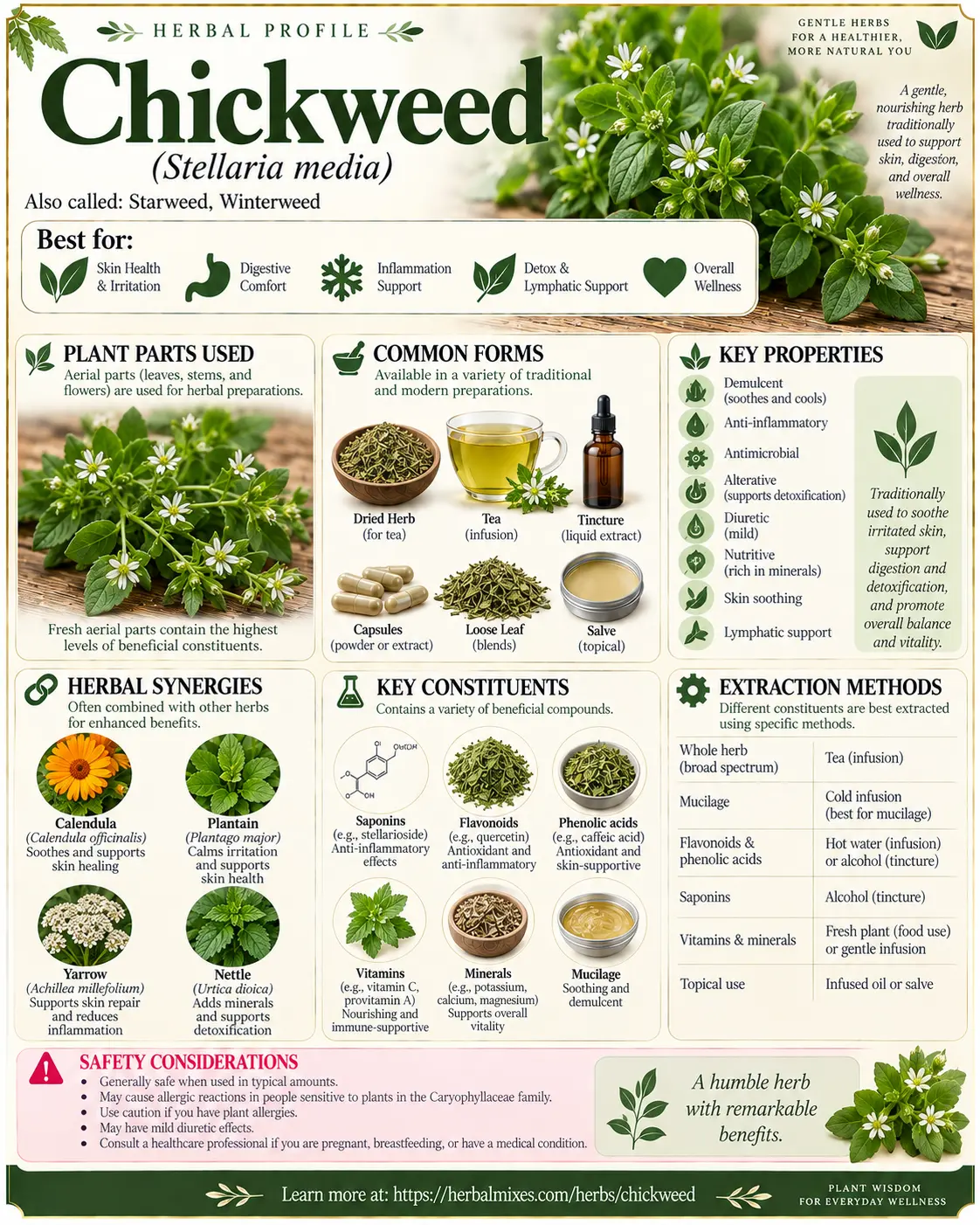
Itch & Skin Irritation Relief — Chickweed is a premier demulcent and cooling vulnerary traditionally renowned for bringing rapid relief to hot, itchy, inflamed skin conditions like eczema, bug bites, and rashes.
Cooling Inflammation & Redness — Its high moisture content and cooling energetic profile help draw out heat and soothe localized tissue irritation.
Lymphatic Drainage Support — Taken internally as a tea or tincture, it gently supports lymphatic circulation, helping clear fluid congestion and systemic sluggishness.
Nutritive Mineral Tonic — Rich in bioavailable vitamins (A, C, D) and minerals (potassium, calcium), it nourishes the body when brewed as a fresh spring green infusion.
Minor Wound & Burn Soothing — Applied as a fresh plant poultice or infused salve, it supports skin barrier repair and comforts minor abrasions.
Available Herbal Products
Buying Guides for Available Chickweed Products
Organic Dried Chickweed Aerial Parts – Dried green herb. A traditional choice for steeping into a soothing green infusion to support lymphatic flow and skin clarity. Seller: Mountain Rose Herbs – View Mountain Rose Herbs Chickweed →
Chickweed Liquid Extract – Hydroalcoholic tincture. A fast-absorbing liquid format designed for internal use to support lymphatic drainage and soothe tissue inflammation. Seller: Herb Pharm – View Herb Pharm Chickweed Extract →
Herbal Itch Relief Salve – Professional topical ointment. Formulated with fresh-extracted chickweed oil combined with plantain and calendula to soothe irritated skin. Seller: Wise Woman Herbals – View Wise Woman Herbals Salves →
Fresh Chickweed Tincture – Fresh-plant hydroalcoholic extract. Crafted from freshly harvested succulent spring chickweed to capture maximum volatile compounds and moisture. Seller: Gaia Herbs – View Gaia Herbs Chickweed →
Herbal Synergies
Chickweed pairs especially well with Plantain Leaf, Calendula Flowers, and Stinging Nettle Leaf, depending on the goal of the formula.
Chickweed Aerial Parts + Plantain Leaf -Best for: Relieving stubborn skin itching, soothing bug bites, and drawing out minor superficial heat Chickweed provides cooling, anti-inflammatory moisture to calm fiery skin, while plantain leaf offers soothing allantoin and drawing properties to clear irritants. Together, they form an exceptional first-aid skin duo. Best extraction: Fresh plant poultice or infused oil salve. Macerating fresh chickweed and plantain together captures their water-soluble mucilage and soothing compounds.
Chickweed Aerial Parts + Calendula Flowers – Best for: Comprehensive skin repair, soothing eczema, and healing minor abrasions Chickweed cools tissue heat and relieves intense itching, whereas calendula supplies triterpenoid saponins that stimulate skin cell regeneration and tissue repair. Best extraction: Infused oil salve or dual tincture. Blending these extracts creates a balanced soothing ointment for dry, irritated skin.
Chickweed Aerial Parts + Stinging Nettle Leaf -Best for: Spring cleansing, mineral nourishment, and supporting lymphatic drainage Chickweed acts as a cooling lymphatic mover and demulcent, while nettle provides deep nutritive mineralization and gentle renal support. Best extraction: Fresh spring green infusion (tea). Combining these nutrient-dense herbs yields a deeply restorative tonic.
Key Herbal Properties
Demulcent — Soothes, protects, and moistens inflamed or irritated mucous membranes and skin tissues.
Cooling / Refrigerant — Dissipates heat and brings a soothing, refreshing sensation to hot, inflamed conditions.
Lymphagogue — Encourages healthy movement and drainage of lymphatic fluid throughout the body.
Vulnerary — Promotes the recovery and healing of minor cuts, scrapes, and skin rashes.
Nutritive — Supplies bioavailable vitamins, trace minerals, and chlorophyll to support systemic vitality.


Active Compounds
Saponins (Triterpenoid Saponins) Found mainly in: Fresh aerial parts Bioactive surfactant compounds that help emulsify lipids, support cellular permeability, and contribute to the plant’s anti-inflammatory action. Best extraction: Fresh plant hydroalcoholic tincture or water infusion. Saponins dissolve efficiently in alcohol-water solutions.
Mucilage and Polysaccharides Found mainly in: Succulent stems and leaves High-molecular-weight carbohydrates that bind water to provide intensive cooling and demulcent moisture for skin and tissue. Best extraction: Cold water infusion or fresh plant poultice. Mucilage is best extracted without excessive heat to preserve its viscous integrity.
Flavonoids (including Rutin and Quercetin) Found mainly in: Green leaves Antioxidant compounds that protect cellular tissues from oxidative stress and support healthy microcirculation. Best extraction: Alcohol-water extract or warm infusion. Soluble in hydroalcoholic solvents.
FAQ
What is chickweed best used for? Chickweed is primarily used topically to instantly cool and relieve intense skin itching, rashes, and eczema, and internally to support gentle lymphatic drainage.
Why is fresh chickweed preferred over dried for skin salves? Chickweed is an exceptionally succulent plant with high water content; much of its cooling demulcent activity is best captured when the herb is processed fresh rather than fully dried.
How does chickweed taste? Chickweed tea has a fresh, mild, grassy, and slightly sweet flavor profile reminiscent of fresh corn silk or garden greens.
Can chickweed be eaten as a wild vegetable? Yes, tender young chickweed is a classic wild edible spring green enjoyed raw in salads, blended into pestos, or tossed into soups.
Is chickweed safe for sensitive skin? Yes, chickweed is exceptionally gentle and non-irritating, making it one of the safest botanical remedies for soothing delicate or inflamed skin.
Safety & Precautions
Saponin Sensitivity: Consuming excessively large internal quantities of raw chickweed at once may occasionally cause mild gastrointestinal upset due to its natural saponin content.
Allergies: Individuals with known sensitivities to plants in the Caryophyllaceae (pink/carnation) family should exercise mild caution.
Fresh Plant Quality: When foraging wild chickweed for fresh poultices, ensure harvesting occurs in clean areas free from chemical sprays or urban pollutants.
Pregnancy & Breastfeeding: Culinary amounts and mild teas are generally safe, but concentrated therapeutic extracts should be used with professional guidance.
Consult a qualified healthcare professional before using chickweed therapeutically, especially if you manage underlying medical conditions or take prescription drugs.
References
National Center for Complementary and Integrative Health (NCCIH)
PubMed Central – Stellaria media (Chickweed) Phytochemistry and Dermatological Pharmacology
European Medicines Agency (EMA) Herbal Documentation
World Health Organization (WHO) Monographs on Selected Medicinal Plants
Mountain Rose Herbs Chickweed Monograph
Disclaimer
Disclaimer: This article is for educational purposes only and is not intended to diagnose, treat, cure, or prevent any disease. Herbal products can cause side effects and interact with medications. Consult a qualified healthcare professional before using herbs therapeutically, especially if you are pregnant, breastfeeding, taking prescription medications, or managing a medical condition