

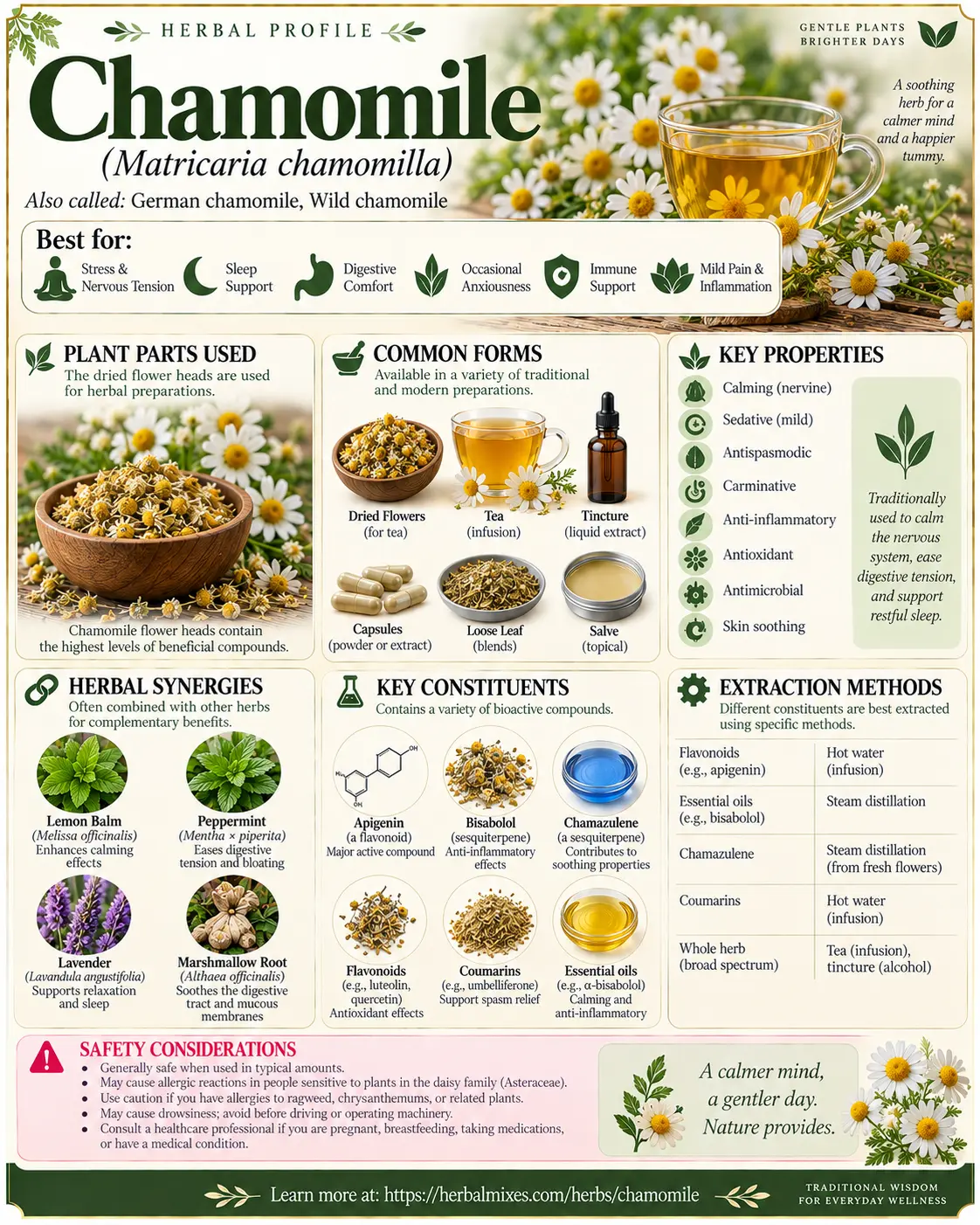
What Chamomile Is Good For
Nervous Tension & Mild Anxiety — Chamomile is a premier nervine relaxant traditionally used to soothe frayed nerves, ease everyday stress, and calm an overactive mind without heavy sedation.
Restful Sleep & Bedtime Ease — Brewed as an evening tea, its active flavonoids gently relax the nervous system and support natural sleep onset for adults and children alike.
Digestive Comfort & Spasm Relief — Its natural carminative and antispasmodic properties help dispel trapped gas, ease bloating, soothe indigestion, and calm smooth muscle cramping in the gut.
Skin Soothing & Vulnerary Care — Applied topically as a cooled infusion or salve, it provides exceptional relief for skin irritation, minor burns, rashes, and chafing.
Infant & Pediatric Soothing — Exceptionally gentle, mild chamomile tea or alcohol-free glycerites have been trusted for generations to soothe teething fussiness, colic, and restless children.
Available Herbal Products
Buying Guides for Available Chamomile Products
Organic Whole German Chamomile Flowers – Dried golden-yellow flower heads. An authentic, traditional choice for steeping into a fragrant, soothing evening tea or crafting herbal skin compresses. Seller: Mountain Rose Herbs – View Mountain Rose Herbs Chamomile Flowers →
Chamomile Liquid Extract – Hydroalcoholic tincture. A fast-absorbing liquid format that allows for convenient, adjustable dosing to calm sudden digestive upset or nervous tension. Seller: Herb Pharm – View Herb Pharm Chamomile Extract →
Organic Calming Sleep Tea Bags – Herbal tea bags combining German chamomile with lavender and lemon balm. Designed to provide comprehensive evening relaxation. Seller: Traditional Medicinals – View Traditional Medicinals Chamomile Teas →
Pure Blue Chamomile Essential Oil – Steam-distilled aromatic oil. Rich in chamazulene, making it ideal for diluting into carrier oils for soothing inflamed skin or joint massage. Seller: Eden Botanicals – View Eden Botanicals Chamomile Oil →
Herbal Synergies
Chamomile pairs especially well with Lemon Balm, Passionflower, and Peppermint Leaf, depending on the goal of the formula.
German Chamomile Flowers + Lemon Balm Leaf – Best for: Quieting an overactive mind, easing digestive stress, and lifting everyday mood Chamomile provides gentle nervine relaxation and eases digestive tension, while lemon balm supplies uplifting volatile oils that calm nervous agitation and support mental clarity. Together, they form an exceptional soothing tea. Best extraction: Covered hot infusion (tea) or tincture blend. Both herbs release their volatile oils and calming polyphenols efficiently in hot water.
German Chamomile Flowers + Passionflower Herb – Best for: Breaking cyclical insomnia, soothing deep nervous tension, and encouraging deep sleep Chamomile brings gentle antispasmodic and nervine relaxation, whereas passionflower acts as a powerful mind-calming herb that stops looping, anxious thoughts at bedtime. Best extraction: Combined evening tincture or tea. Blending these extracts bridges gentle relaxation with deep restorative sleep.
German Chamomile Flowers + Peppermint Leaf – Best for: Cooling digestive discomfort, relieving post-meal gas, and soothing an upset stomach Chamomile calms nervous spasms in the GI tract, while peppermint provides cooling menthol oils that refresh the palate and relieve upper abdominal cramping. Best extraction: Covered hot tea infusion. Steeping these herbs together creates a classic carminative digestive tea
Key Herbal Properties
Nervine Relaxant — Tones and calms the nervous system, easing stress and promoting mental tranquility.
Carminative — Relieves flatulence, gas buildup, and abdominal cramping by relaxing gastrointestinal smooth muscle.
Anti-inflammatory — Modulates inflammatory pathways, helping soothe irritated tissues in the gut and on the skin.
Antispasmodic — Relaxes smooth muscle tissue, easing menstrual cramps, colic, and digestive spasms.
Vulnerary (Topical) — Promotes the healing and soothing of minor skin irritations, burns, and wounds.





Active Compounds
Flavonoids (including Apigenin, Quercetin, and Luteolin) Found mainly in: Flower heads The primary bioactive antioxidant compounds responsible for chamomile’s binding to GABA receptors in the brain, inducing relaxation, and reducing inflammation. Best extraction: Hot water infusion (tea) or hydroalcoholic tincture. Apigenin dissolves efficiently in hot water and alcohol-water solutions.
Volatile Oils (including Chamazulene and Alpha-Bisabolol) Found mainly in: Bright yellow flower centers (giving the oil its striking deep blue color) Potent aromatic compounds that provide powerful anti-inflammatory, antimicrobial, and skin-soothing properties. Best extraction: Steam distillation or covered tea infusion. (Note: Always brew chamomile tea with a lid to prevent these valuable volatile oils from escaping in the steam).
Mucilage and Polysaccharides Found mainly in: Petal and disc tissues High-molecular-weight carbohydrates that provide soothing, demulcent action for mucous membranes. Best extraction: Aqueous warm infusion. Dissolves readily in warm water.
FAQ
What is chamomile best used for? Chamomile is primarily used as a calming nervine tea to ease everyday anxiety and promote sleep, and as a digestive carminative to soothe an upset stomach.
Why must chamomile tea be brewed covered? Because chamomile’s active anti-inflammatory and relaxing compounds (chamazulene and bisabolol) are volatile essential oils, brewing the tea in an uncovered cup allows them to evaporate into the air; a lid keeps them trapped in your cup.
Can chamomile help with skin irritations? Yes, cooled chamomile tea infusions applied via a clean cloth compress provide wonderful, soothing relief for sunburns, minor skin rashes, and puffy eyes.
Does chamomile interact with medications? Chamomile can occasionally interact with certain blood thinners, sedatives, or medications metabolized by liver enzymes due to its apigenin content; consult a pharmacist if you take daily prescriptions.
Is chamomile safe for babies? Yes, weak chamomile tea or alcohol-free glycerites have been safely used for generations to soothe teething infants and colic under professional guidance.
Safety & Precautions
Asteraceae Allergy: Individuals with known severe allergies to plants in the Asteraceae (daisy/ragweed) family—such as ragweed, marigolds, or daisies—should exercise caution and patch-test topical products.
Drowsiness: Because chamomile promotes relaxation, large servings of strong tea may cause mild drowsiness; avoid driving if heavily sedated.
Pregnancy & Breastfeeding: Culinary tea amounts are exceptionally safe, but concentrated therapeutic extracts should be used with professional guidance during pregnancy.
Eye Washes: When using chamomile as an eye compress, ensure the infusion is thoroughly strained through a fine, sterile filter to prevent micro-particles from irritating the eye.
Consult a qualified healthcare professional before using chamomile therapeutically, especially if you manage underlying medical conditions or take prescription drugs.
References
National Center for Complementary and Integrative Health (NCCIH)
PubMed Central – Matricaria recutita (Chamomile) Apigenin and Anti-inflammatory Pharmacology
European Medicines Agency (EMA) Monograph on Matricaria recutita L., flos
World Health Organization (WHO) Monographs on Selected Medicinal Plants
Mountain Rose Herbs Chamomile Flowers Monograph
Disclaimer
Disclaimer: This article is for educational purposes only and is not intended to diagnose, treat, cure, or prevent any disease. Herbal products can cause side effects and interact with medications. Consult a qualified healthcare professional before using herbs therapeutically, especially if you are pregnant, breastfeeding, taking prescription medications, or managing a medical condition.