


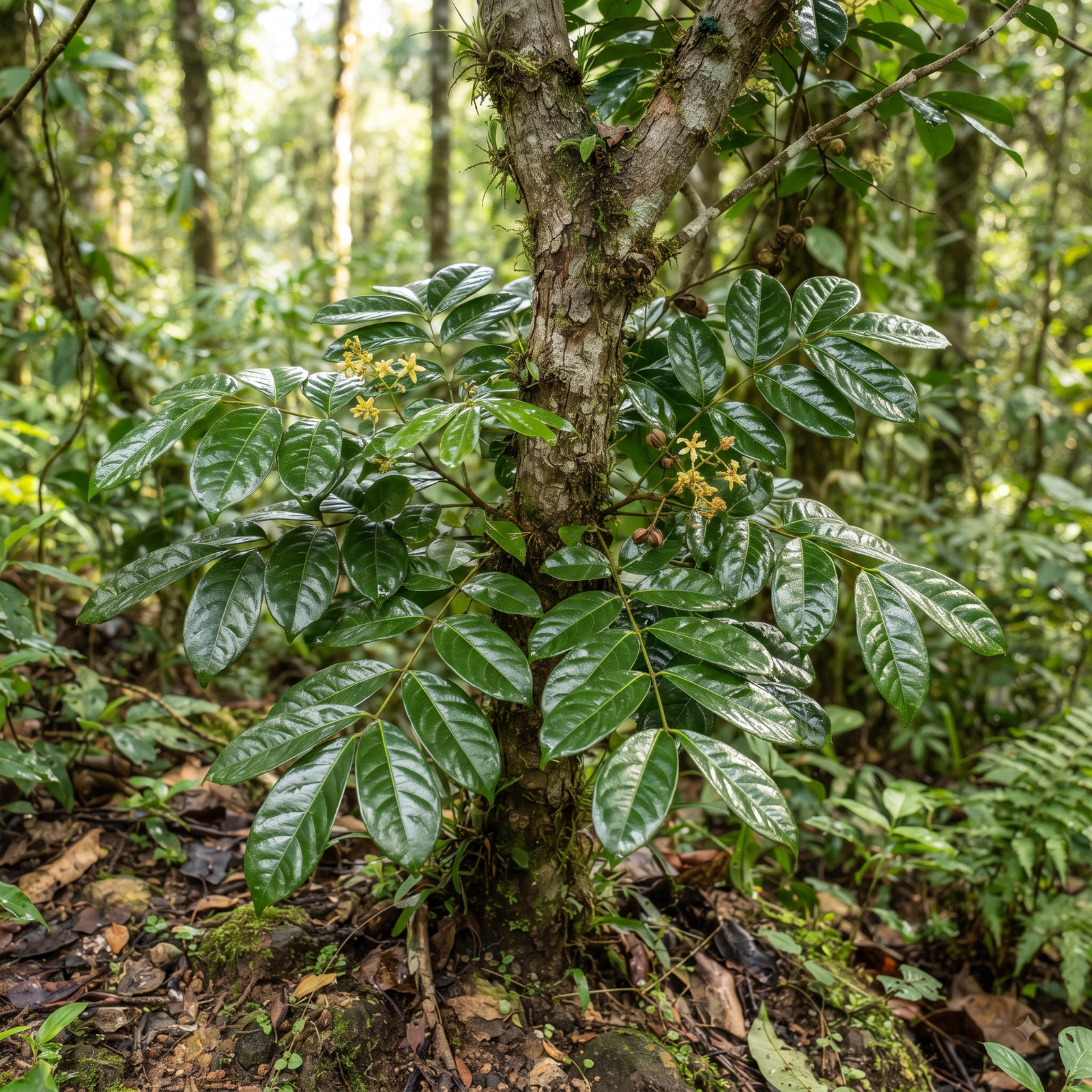
Traditionally, catuaba has been used primarily as a vitality and desire-supporting herb, especially when low energy or reduced interest in intimacy are involved. It is commonly prepared as a tea, tincture, or standardized capsule made from the bark.
Common Name: Catuaba Latin Name: Trichilia catigua (see note below — “catuaba” is a trade name applied to more than one plant) Alternate Names: Catuaba Bark
- Parts used: Bark
- Primary properties: Aphrodisiac
- Common preparations: Tea, tincture, capsules
- Best known for: Traditional support for vitality and desire
What It Helps With
Health conditions this herb is commonly used to support.
Related Buying Guides
Featured Recipes
Explore and try simple ways to prepare and use this herb at home.
Active Compounds
The tiny plant chemistry doing all the heavy lifting.
Key Herbal Properties
What this herb is known for, herbally speaking.

Herbal Synergies
Other herbs that pair especially well with this one — together, their combined properties work better than either herb does alone.
Health Conditions Catuaba Helps With
- Low vitality or reduced desire — Catuaba’s central and defining traditional use, taken to support energy and interest in intimacy.
- General low energy — Some traditional use includes catuaba as part of a broader vitality-supporting routine.
Compounds
- Alkaloids — Contribute to catuaba’s traditional stimulating and vitality-supporting reputation.
- Tannins — Present in the bark, contributing to its traditional astringent character alongside its primary aphrodisiac use.
Properties
- Aphrodisiac — Catuaba’s defining and singular traditional property; used to support vitality and desire.
Recipes Using Catuaba
- Vitality tea blend — Catuaba bark combined with damiana in a traditional vitality-support tea.
- Evening tonic tincture — Catuaba bark tincture taken alone or blended into a broader vitality-focused formula.
Products Featuring Catuaba
- Dried bark (cut and sifted) — The traditional form used for tea and decoctions.
- Tincture — A concentrated liquid extract for convenient dosing.
- Standardized capsules — A consistent-dose option for those who prefer not to prepare tea.
Synergies
- Damiana — A classic pairing for vitality and desire support, frequently combined with catuaba.
- Muira Puama — Shares a traditional aphrodisiac profile, often paired with catuaba in vitality-focused formulas.
- Maca — Sometimes combined with catuaba for broader traditional vitality support.
Safety & Precautions
Catuaba has a more limited body of safety information compared to many other herbs, partly because “catuaba” is a trade name historically applied to more than one botanical species in South American commerce — meaning products sold under this name aren’t always the same plant. This makes it especially important to buy from a reputable supplier and, where possible, check which specific plant a “catuaba” product actually contains.
There isn’t well-established safety data for concentrated use during pregnancy or breastfeeding, so catuaba should be avoided in that context. Because of its traditional stimulating reputation, anyone sensitive to stimulants, or taking medications that affect the nervous system, should use catuaba cautiously and consider starting with a smaller amount to see how they respond. Given the more limited research overall, anyone with an existing health condition or taking regular medication should check with a healthcare provider before using catuaba.
There isn’t well-established traditional guidance for using catuaba with pets, so it should not be given to an animal without veterinary advice.
Q&A
Does catuaba taste bitter?
Catuaba bark has a mild, somewhat astringent, woody taste rather than an intensely bitter one, thanks in part to its tannin content. Most people find it reasonably easy to take as tea, though tincture or capsules are also popular for convenience.
Because the bark is fibrous, tea preparation typically involves a longer simmer rather than a quick steep.
Can catuaba be used every day?
Catuaba is traditionally used regularly as part of an ongoing vitality-support routine, though given the more limited research on long-term daily use, some people prefer to use it for defined stretches with occasional breaks rather than continuously indefinitely.
Starting with a smaller amount and paying attention to how you respond is a reasonable approach, especially given the more limited safety data available for this particular herb.
Why does “catuaba” sometimes refer to different plants?
This is one of the more important things to know about catuaba: the name has historically been used in South American herbal trade for more than one botanical species, meaning a product labeled “catuaba” doesn’t always contain the exact same plant from one brand to the next. This isn’t unique to catuaba, but it’s a more pronounced issue for this herb than for many others on this site.
If you want to know exactly what you’re getting, look for a product that specifies its botanical (Latin) name clearly on the label, and buy from a supplier that can speak to their sourcing.
Is catuaba the same as damiana or muira puama?
No — catuaba, damiana, and muira puama are three different plants that share a similar traditional reputation for supporting vitality and desire, which is why they’re so often combined together in blends. Each has its own distinct traditional background and compound profile, even though they’re used for a similar general purpose.
If a product combines all three, that’s an intentional traditional pairing rather than one ingredient substituting for another.
Is catuaba safe to combine with other stimulating herbs?
Because catuaba has a traditional stimulating reputation, combining it with other stimulating herbs or substances (like caffeine) could add up to a stronger effect than expected, so it’s worth being mindful of total intake if you’re combining several stimulating herbs at once. Starting with lower amounts of each when combining is a cautious approach.
If you notice jitteriness, a racing heart, or difficulty sleeping, it’s worth reducing how much you’re using or spacing it further from other stimulants.
References
This information is for educational purposes only and is not intended as medical advice. Consult a qualified healthcare professional before using any herb, especially if pregnant, breastfeeding, taking medications, or managing a health condition.