


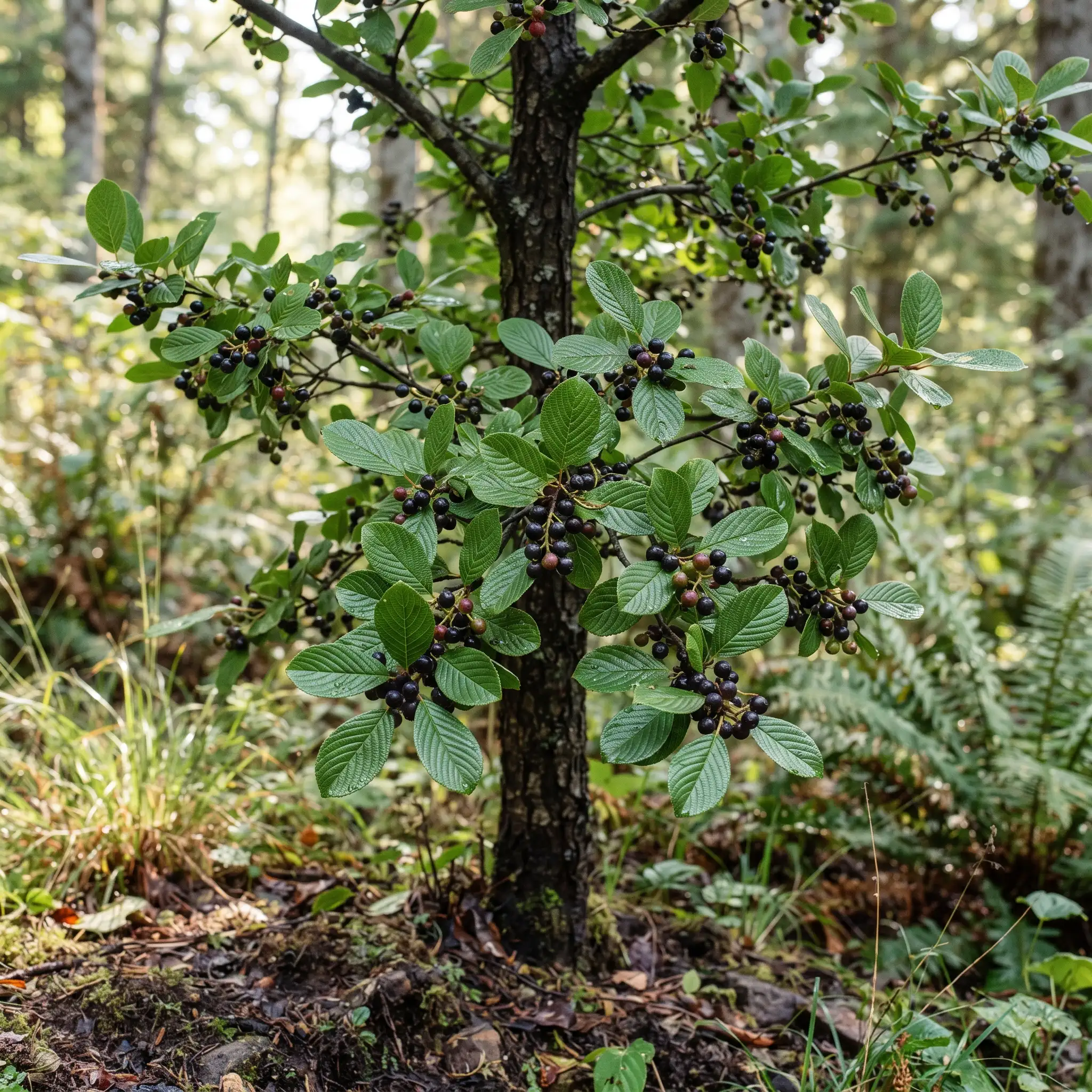
Traditionally, cascara sagrada has been used primarily as a short-term stimulant laxative, especially when occasional constipation hasn’t responded to gentler options. It is commonly prepared as a standardized capsule or tincture made from aged, dried bark, since fresh bark is considered too harsh for use.
Common Name: Cascara Sagrada Latin Name: Rhamnus purshiana Alternate Names: Sacred Bark, Cascara Buckthorn
- Parts used: Bark (aged and dried, never fresh)
- Primary properties: Laxative, purgative
- Common preparations: Standardized capsules, tincture (from aged bark only)
- Best known for: Traditional short-term relief for occasional constipation
What It Helps With
Health conditions this herb is commonly used to support.
Related Buying Guides
Featured Recipes
Explore and try simple ways to prepare and use this herb at home.
Active Compounds
The tiny plant chemistry doing all the heavy lifting.
Key Herbal Properties
What this herb is known for, herbally speaking.


Herbal Synergies
Other herbs that pair especially well with this one — together, their combined properties work better than either herb does alone.
Health Conditions Cascara Sagrada Helps With
- Occasional constipation — Cascara sagrada’s central traditional use, taken short-term when milder approaches haven’t been effective.
Compounds
- Anthraquinones (cascarosides) — The compounds responsible for cascara sagrada’s laxative action; they stimulate bowel contractions, and their concentration and irritant potential are the reason fresh bark isn’t used directly.
Properties
- Laxative — Cascara sagrada’s defining property; it encourages bowel movement.
- Purgative — Traditionally used for a stronger, more thorough bowel-clearing effect than milder laxative herbs.
Recipes Using Cascara Sagrada
Cascara sagrada isn’t a DIY tea or tincture herb the way many other plants on this site are. Fresh bark is considered too harsh and irritating for safe use, so traditional and modern preparations rely on bark that has been properly aged (typically for at least a year) or otherwise processed before use. For this reason, a standardized, professionally prepared product is the appropriate way to use this herb rather than a homemade preparation from fresh or unaged bark.
Products Featuring Cascara Sagrada
- Standardized capsules — The safest and most common form, made from properly aged bark with consistent, controlled dosing.
- Tincture — Made from aged bark, offering a liquid alternative with flexible but still controlled dosing.
Synergies
- Ginger — Sometimes paired with cascara sagrada to help ease the cramping that can accompany stimulant laxative action.
- Fennel — Traditionally combined with cascara sagrada in some formulas to help offset gripping discomfort.
Safety & Precautions
Cascara sagrada must be properly aged or processed before use — fresh, unaged bark is considered too harsh and can cause severe cramping and intense purging. Only products made from bark aged at least a year, or otherwise processed to reduce its harshness, should be used, and even then it’s intended for short-term, occasional use only. Overuse or prolonged use can lead to cramping, diarrhea, and electrolyte imbalance, and long-term regular use of any stimulant laxative like cascara sagrada can lead to the bowel becoming dependent on stimulation for normal function.
Cascara sagrada should be avoided during pregnancy and breastfeeding, as it may stimulate uterine activity and its compounds can pass into breast milk. It’s not appropriate for children, and adults with intestinal obstruction, appendicitis, inflammatory bowel disease (such as Crohn’s disease or ulcerative colitis), or hemorrhoids should avoid it entirely. Anyone taking medications like diuretics, heart medications, or other laxatives should check with a healthcare provider first, since electrolyte shifts from cascara sagrada can affect how those medications work.
Cascara sagrada bark and berries should never be given to a pet, as they can be significantly more harmful to animals than to humans.
Q&A
Why can’t fresh cascara sagrada bark be used directly?
Fresh cascara sagrada bark contains anthraquinone compounds in a form that’s considered too harsh and irritating for safe use, often causing severe cramping if used before it’s properly aged. Traditional practice involves aging the bark for at least a year, or processing it with heat, to make it gentler and more appropriate for use.
This is why cascara sagrada products are typically sold as standardized, professionally prepared capsules or tinctures rather than something people harvest and prepare fresh at home.
Can cascara sagrada be used every day?
No — cascara sagrada is meant for short-term, occasional use only, not daily use. Regular use of strong stimulant laxatives like cascara sagrada can lead to cramping, fluid and electrolyte loss, and the bowel becoming reliant on stimulation to function normally over time.
If constipation is a frequent or ongoing issue, it’s worth addressing the underlying cause with a healthcare provider rather than relying on cascara sagrada repeatedly.
How is cascara sagrada different from buckthorn bark?
Cascara sagrada and buckthorn bark are related but different plants that share a similar traditional use as anthraquinone-containing stimulant laxatives, both requiring aging before use for the same safety reasons. They’re not identical, though they’re often discussed together given their similar traditional preparation and caution profile.
If a product specifies one or the other, it’s worth treating them as related but distinct herbs rather than interchangeable substitutes.
What are the signs of taking too much cascara sagrada?
Signs of overuse can include strong cramping, watery diarrhea, and symptoms of electrolyte imbalance such as weakness or dizziness. These effects are more likely with doses higher than what’s recommended on a standardized product label, or with use of improperly aged bark.
If symptoms are severe or don’t resolve, it’s important to contact a healthcare provider rather than waiting it out.
Is cascara sagrada safe during pregnancy?
No — cascara sagrada is generally avoided during pregnancy because it may stimulate uterine activity. It’s also not recommended while breastfeeding, since its compounds can pass into breast milk.
Anyone who is pregnant or breastfeeding and dealing with constipation should talk to a healthcare provider about safer alternatives.
References
This information is for educational purposes only and is not intended as medical advice. Consult a qualified healthcare professional before using any herb, especially if pregnant, breastfeeding, taking medications, or managing a health condition.