

What California Poppy Is Good For
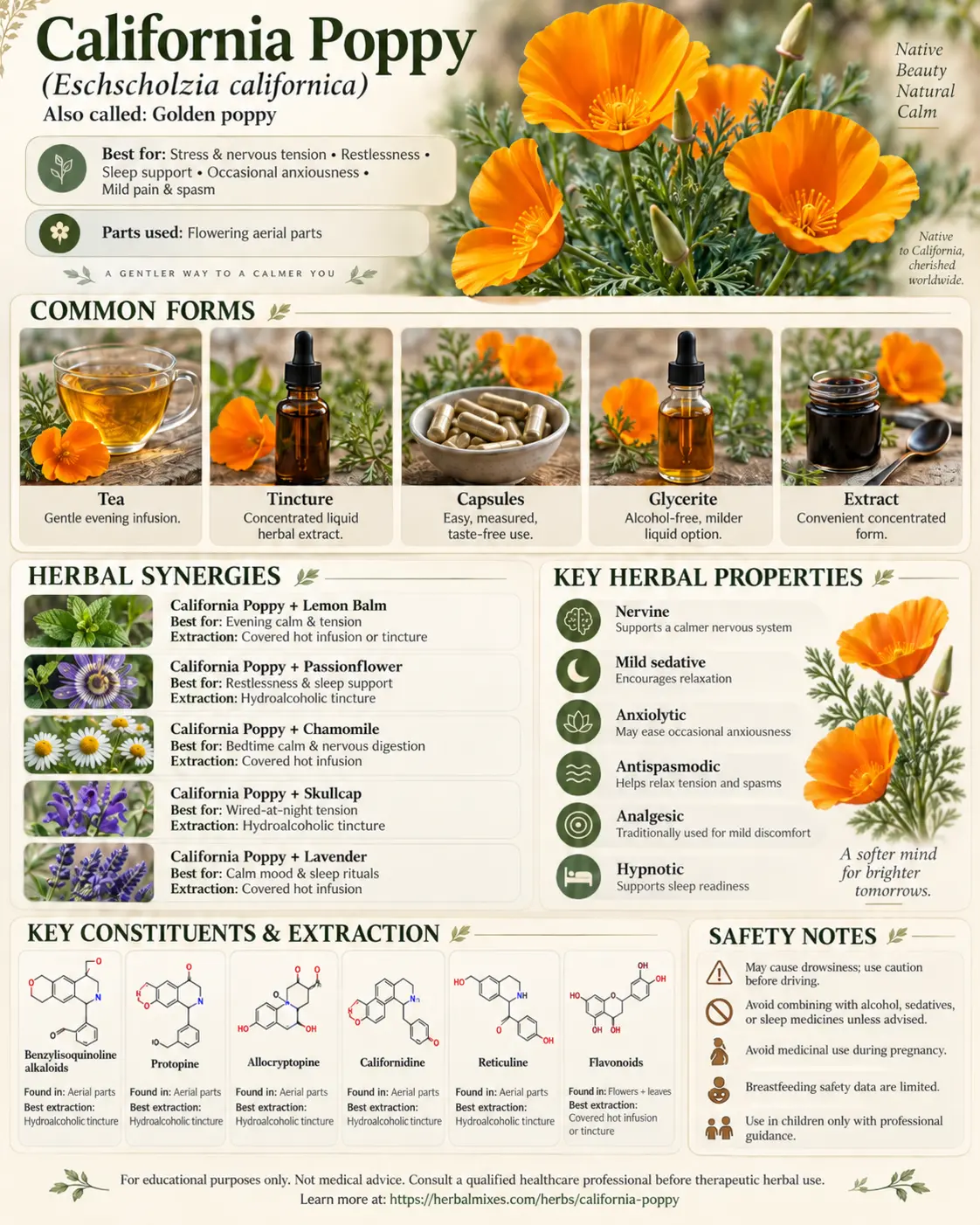
Restful Sleep & Insomnia Support — California poppy is a gentle yet effective sedative and hypnotic that helps ease the mind into sleep, particularly when racing thoughts or mild restlessness keep you awake.
Nervous Tension & Anxiety — Acts as a calming nervine that helps soothe overstimulated nervous systems, reducing jittery nerves and everyday stress without heavy sedation.
Pain Relief & Minor Aches — Traditionally valued as an anodyne to help manage minor aches, tension headaches, and sharp, throbbing discomfort.
Spasm & Cramp Relaxation — Its natural antispasmodic properties help ease smooth muscle cramping, including menstrual cramps and digestive tension.
Gentle Pediatric Rest — Historically utilized in mild, diluted doses (such as alcohol-free glycerites) to help settle restless or overtired children at bedtime.
Available Herbal Products
Buying Guides for Available California Poppy Products
California Poppy Liquid Extract – Hydroalcoholic tincture. A fast-absorbing liquid format that allows for precise, drop-by-drop dosing to encourage gentle evening wind-down and sleep onset. Seller: Herb Pharm – View Herb Pharm California Poppy Extract →
LearningHerbs
Alcohol-Free California Poppy Glycerite – Sweet, glycerin-based liquid extract. An ideal choice for children or individuals avoiding alcohol who seek gentle nervous system and sleep support. Seller: Wise Woman Herbals – View Wise Woman Herbals Glycerites →
LearningHerbs
Organic California Poppy Aerial Parts – Dried whole herb. An authentic choice for steeping a calming evening herbal infusion to encourage relaxation before bed. Seller: Mountain Rose Herbs – [View Mountain Rose Herbs California Poppy →](https://mountainroseherbs.com/california-poppy]
Deep Sleep & Relaxation Formula – Advanced herbal capsules combining California poppy with passionflower, valerian root, and lemon balm. Designed for comprehensive nighttime nervous system support. Seller: Gaia Herbs – View Gaia Herbs Sleep Formulas →
Herbal Synergies
California poppy pairs especially well with Passionflower, Milky Oat Seed, and Chamomile, depending on the goal of the formula.
California Poppy + Passionflower Herb – Best for: Quieting an overactive mind, breaking cyclical insomnia, and deep nervous relaxation California poppy brings tension-relieving, gentle sedative action, while passionflower acts as a premier “mind-spinning” calmer that stops looping, anxious thoughts. Together, they form an exceptional sleep blend. Best extraction: Combined liquid tincture or sleep tea. Both herbs yield their active calming alkaloids and flavonoids efficiently into hydroalcoholic solvents or hot water.
California Poppy + Milky Oat Seed – Best for: Nourishing a burned-out nervous system, easing chronic stress, and restoring resilience California poppy provides immediate relief from acute nervous tension and restlessness, whereas milky oat seed deeply feeds and repairs depleted nervous tissue over time. Best extraction: Tincture blend. Combining these extracts bridges immediate relaxation with long-term nervous system restoration.
California Poppy + German Chamomile – Best for: Soothing digestive tension, calming restless children, and promoting peaceful sleep California poppy relaxes deep-seated physical tension, while chamomile offers gentle carminative and nervine comfort for an upset stomach or frayed nerves. Best extraction: Glycerite or mild tea infusion. Chamomile’s soothing essential oils blend smoothly with California poppy’s bitter relaxant properties.
Key Herbal Properties
Sedative / Hypnotic — Promotes relaxation, eases nervous restlessness, and encourages natural sleep onset without the heavy side effects of pharmaceutical sleep aids.
LearningHerbs
Anodyne / Analgesic — Helps reduce the perception of physical pain, headaches, and nerve discomfort.
Antispasmodic — Relaxes smooth and skeletal muscle tension, easing cramps and spasms.
Nervine Relaxant — Tones and calms the nervous system, shifting the body away from a stress state.
Bitter Tonic — Mild bitter principles stimulate digestive secretions and support overall physiological receptivity.






Active Compounds
Isoquinoline Alkaloids (including Protopine, Californidine, and Eschscholtzine) Found mainly in: Aerial parts and roots The primary bioactive compounds responsible for California poppy’s calming, pain-relieving, and sleep-supporting properties. (Note: Unlike its cousin the opium poppy, it contains no narcotic opiates, morphine, or codeine). Best extraction: Standardized hydroalcoholic extract or alcohol tincture. These alkaloids dissolve efficiently in alcohol-water solutions.
Golden Poppy Herbal Apothecary
Flavonoids Found mainly in: Bright golden petals and leaves Antioxidant compounds that support healthy inflammatory balance and enhance the plant’s overall relaxing synergy. Best extraction: Hot water infusion or alcohol-water extract. Soluble in both warm water and hydroalcoholic solvents.
Carotenoids and Volatile Oils Found mainly in: Fresh flowers and foliage Contribute to the plant’s vibrant coloration and mild aromatic properties. Best extraction: Fresh plant tincture or oil maceration. Captures the lively energetic signature of the fresh wildflower.
FAQ
Does California poppy contain opium or cause addiction? No, while it belongs to the same plant family (Papaveraceae), California poppy does not contain morphine, codeine, or addictive narcotic compounds, and is considered non-habit-forming.
Golden Poppy Herbal Apothecary
What is California poppy best used for? It is primarily used to calm nervous anxiety, ease difficulty falling asleep, and relieve mild muscular or menstrual tension.
Golden Poppy Herbal Apothecary
Can California poppy be taken every day? Yes, it is commonly used as a short-term or nightly adjunct during stressful periods or sleep disruptions, though consult a professional for long-term daily integration.
Does California poppy taste bitter? Yes, the plant possesses a distinct bitter and earthy flavor profile, which is why many individuals prefer taking it in liquid tincture or capsule form rather than a plain tea.
LearningHerbs
Is California poppy safe for children? Traditionally, it has been used in very small, carefully measured doses (such as alcohol-free glycerites) for children experiencing night restlessness, but professional pediatric guidance is recommended.
Safety & Precautions
Drowsiness & Alertness: Because California poppy promotes deep relaxation and sleep, avoid driving or operating heavy machinery after consumption.
WebMD
Pregnancy & Breastfeeding: Avoid internal use during pregnancy and lactation due to its traditional smooth muscle and uterine-stimulating actions.
Medication Interactions: Exercise caution if you take prescription sedatives, anti-anxiety medications, or blood pressure drugs, as additive relaxing effects may occur.
Surgery: Discontinue use at least two weeks prior to scheduled surgeries due to its mild sedative and central nervous system effects.
Consult a qualified healthcare professional before using California poppy therapeutically, especially if you manage underlying medical conditions or take prescription drugs.
References
National Center for Complementary and Integrative Health (NCCIH)
PubMed Central – Eschscholzia californica (California Poppy) Sedative and Anxiolytic Evaluation
European Medicines Agency (EMA) Monograph on Eschscholzia californica Cham., herba
World Health Organization (WHO) Monographs on Selected Medicinal Plants
Mountain Rose Herbs California Poppy Monograph
Herb Pharm California Poppy Profile
Disclaimer
Disclaimer: This article is for educational purposes only and is not intended to diagnose, treat, cure, or prevent any disease. Herbal products can cause side effects and interact with medications. Consult a qualified healthcare professional before using herbs therapeutically, especially if you are pregnant, breastfeeding, taking prescription medications, or managing a medical condition.