

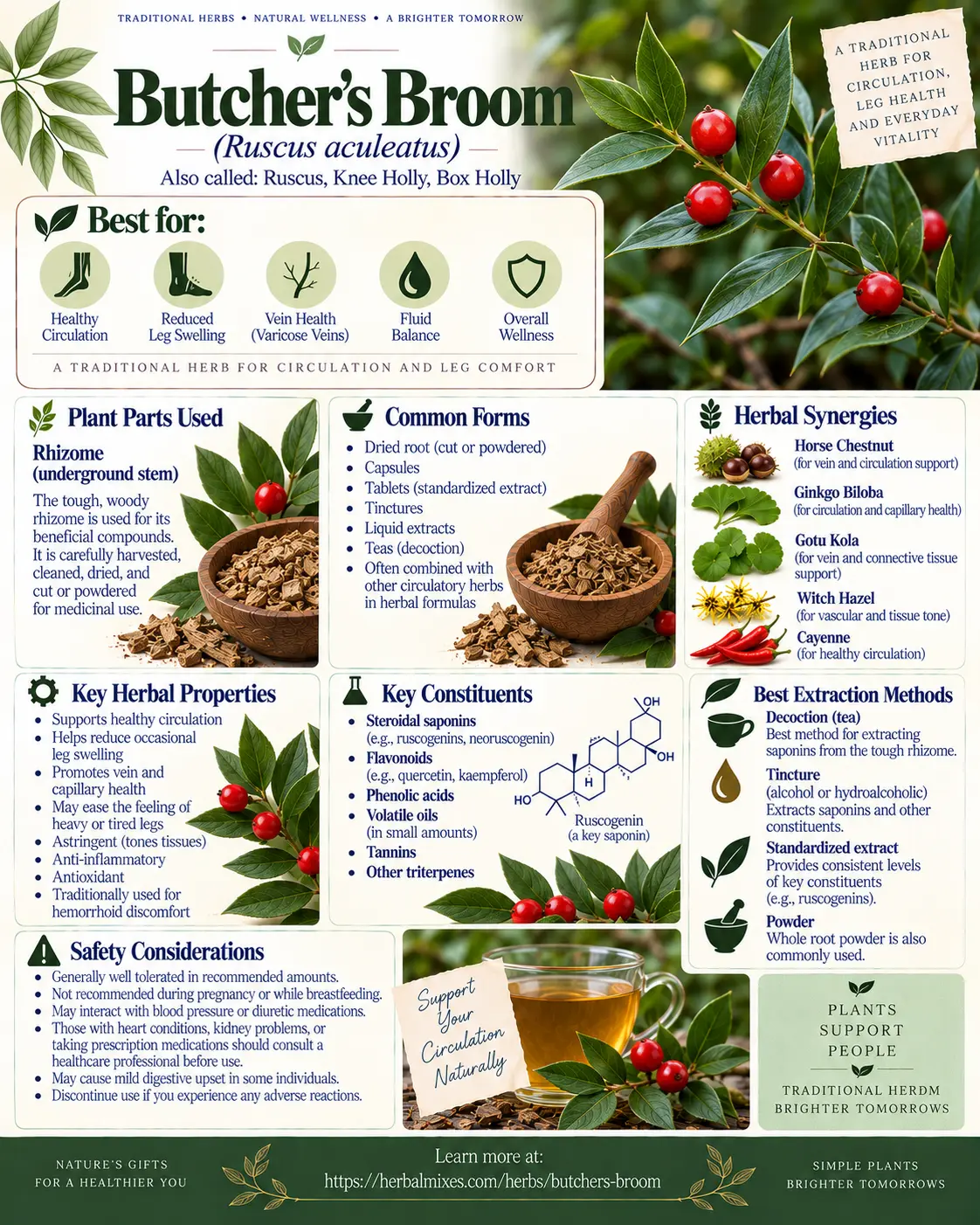
What Butcher’s Broom Is Good For
Vein Tone & Vascular Support — Butcher’s broom is a premier venotonic traditionally used to strengthen vein walls, improve vascular elasticity, and support healthy blood flow returning from the lower extremities.
Leg Comfort & Heavy Leg Relief — Widely utilized to help ease occasional feelings of leg heaviness, fatigue, tiredness, and nighttime cramping associated with sluggish peripheral circulation.
Hemorrhoidal & Microvascular Comfort — Commonly employed in oral and topical preparations to support microvascular integrity and provide relief for occasional hemorrhoidal discomfort.
Lymphatic Drainage Support — Helps encourage normal lymphatic circulation, supporting fluid balance and reducing occasional minor swelling in the lower limbs.
Vasoconstrictor Tonic Action — Active ruscogenins gently tone smooth muscle tissue within blood vessel walls, encouraging efficient venous return.
Available Herbal Products
Herbal Synergies
Butcher’s broom pairs especially well with Horse Chestnut Seed, Gotu Kola, and Witch Hazel, depending on the goal of the formula.
Butcher’s Broom Root + Horse Chestnut Seed – Best for: Comprehensive vein tone, relieving heavy legs, and supporting lower extremity circulation Butcher’s broom supplies active ruscogenins that tone vascular smooth muscle, while horse chestnut seed delivers escin to strengthen capillary walls and reduce fluid leakage into tissues. Together, they form the gold standard botanical team for vein health. Best extraction: Standardized extract capsules. Both active seed extracts and root constituents combine seamlessly into concentrated capsule supplements.
Butcher’s Broom Root + Gotu Kola Leaf – Best for: Enhancing microcirculation, strengthening connective tissue, and supporting vein elasticity Butcher’s broom targets venous tone and contraction, whereas gotu kola stimulates collagen synthesis in blood vessel walls and improves overall microvascular integrity. Best extraction: Standardized extract or tincture blend. Combining these extracts ensures efficient delivery of both triterpene saponins and ruscogenins.
Butcher’s Broom Root + Witch Hazel Bark – Best for: Hemorrhoidal comfort, soothing microvessels, and topical tissue toning Butcher’s broom supports internal venous tone and circulation, while witch hazel provides strong astringent tannins that tighten tissues and soothe surface irritation. Best extraction: Combined oral capsules and topical salve. Pairs internal vascular tonics with soothing external applications.
Key Herbal Properties



Active Compounds
FAQ
What is butcher’s broom best used for? Butcher’s broom is primarily used to support vein tone, relieve feelings of leg heaviness and fatigue, and provide comfort for varicose veins and hemorrhoids.
How does butcher’s broom work on veins? Active ruscogenins help stimulate alpha-adrenergic receptors on vein walls, causing mild smooth muscle contraction that tightens the veins and helps push blood back up toward the heart against gravity.
Can butcher’s broom be taken every day? Yes, butcher’s broom is traditionally taken daily as a continuous supplement to maintain vascular tone, leg comfort, and microcirculation over time.
How long does it take for butcher’s broom to work? Because it gradually tones and strengthens vascular tissue, most individuals notice optimal improvements in leg comfort and reduced swelling after 3 to 4 weeks of consistent daily supplementation.
Why is it called butcher’s broom? Historically, European butchers bundled the stiff, prickly branches of the plant together to sweep their cutting blocks and protect meat from flies, giving rise to the common name.
Safety & Precautions
Gastrointestinal Tolerance: High therapeutic doses or taking the extract on an empty stomach may occasionally cause mild stomach upset or nausea in sensitive individuals.
Pregnancy & Breastfeeding: Due to insufficient safety data regarding its vascular and smooth muscle-stimulating effects during pregnancy and nursing, professional guidance is strongly recommended.
Blood Pressure Considerations: Because butcher’s broom exerts mild alpha-adrenergic vascular toning, individuals with severe hypertension should monitor their blood pressure when using concentrated extracts.
Medication Interactions: Exercise caution if you take alpha-adrenergic blockers, blood pressure medications, or anticoagulants, as additive effects may theoretically occur.
Consult a qualified healthcare professional before using butcher’s broom therapeutically, especially if you manage underlying medical conditions or take prescription drugs.
References
National Center for Complementary and Integrative Health (NCCIH)
PubMed Central – Ruscus aculeatus (Butcher’s Broom) in Chronic Venous Insufficiency: A Review
European Medicines Agency (EMA) Monograph on Ruscus aculeatus L., rhizoma
World Health Organization (WHO) Monographs on Selected Medicinal Plants
Mountain Rose Herbs Butcher’s Broom Root Monograph
Herb Pharm Butcher’s Broom Profile
Disclaimer
Disclaimer: This article is for educational purposes only and is not intended to diagnose, treat, cure, or prevent any disease. Herbal products can cause side effects and interact with medications. Consult a qualified healthcare professional before using herbs therapeutically, especially if you are pregnant, breastfeeding, taking prescription medications, or managing a medical condition.