


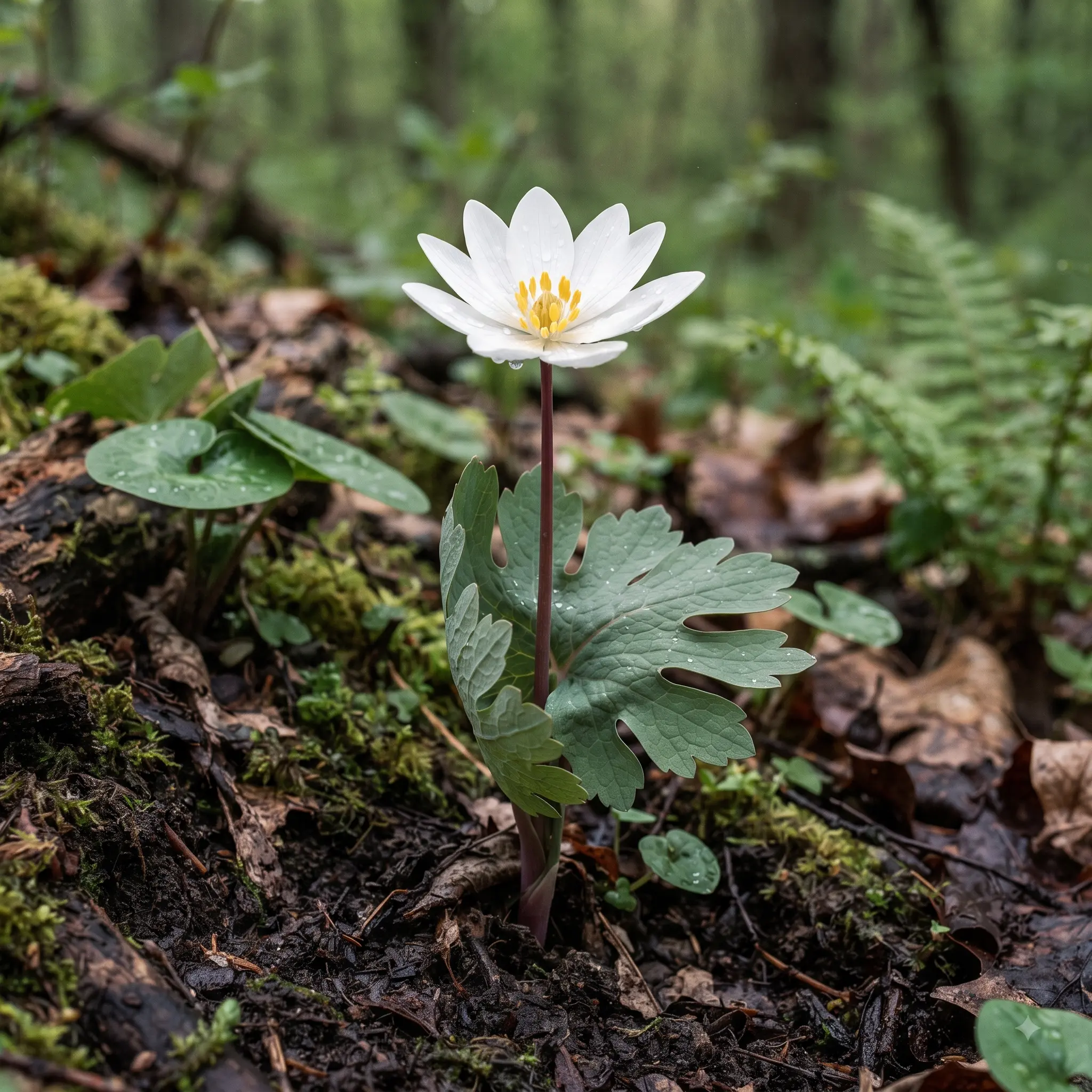
Traditionally, bloodroot has been referenced in historical and folk herbalism primarily as an emetic and topical agent, though it is not a plant recommended for home use today. This post is provided for educational and historical context only, not as a usage guide.
Common Name: Bloodroot Latin Name: Sanguinaria canadensis Alternate Names: Red Puccoon
- Parts used: Root (historically)
- Primary properties: Emetic
- Common preparations: Historically used as a tincture or topical paste; not recommended today in any home preparation
- Best known for: Its historical and educational significance rather than any currently recommended use
What It Helps With
Health conditions this herb is commonly used to support.
Related Buying Guides
Featured Recipes
Explore and try simple ways to prepare and use this herb at home.
Active Compounds
The tiny plant chemistry doing all the heavy lifting.
Key Herbal Properties
What this herb is known for, herbally speaking.

Herbal Synergies
Other herbs that pair especially well with this one — together, their combined properties work better than either herb does alone.
Health Conditions Bloodroot Has Been Historically Associated With
- Historical emetic use — Bloodroot was historically used in small, tightly controlled doses to induce vomiting, though this use is outdated and not recommended today given safer, better-understood alternatives.
- Historical topical folk use — Bloodroot has a history of folk use as a topical “escharotic” paste intended to remove skin lesions, but this use is now strongly discouraged (see Safety & Precautions) due to serious, well-documented harm.
This post exists for historical and educational awareness rather than to recommend either use.
Compounds
- Sanguinarine (an alkaloid) — The primary compound in bloodroot, responsible for both its historical bioactivity and its significant toxicity; it is caustic to tissue and unsafe in unregulated preparations.
Properties
- Emetic — Bloodroot’s defining historical property, referring to its traditional use to induce vomiting; this is not a use recommended today.
Recipes Using Bloodroot
Bloodroot does not have a safe home-preparation recipe to offer. Historical topical pastes made from bloodroot (sometimes called “black salve”) have caused severe, disfiguring skin damage and are the subject of active consumer safety warnings. There is no dosage or preparation method for bloodroot that this site considers appropriate for home use.
Products Featuring Bloodroot
Products containing bloodroot, including topical “black salve” preparations, are not recommended. Regulatory agencies including the FDA have issued warnings about these products due to reports of severe skin and tissue damage. If you encounter a bloodroot-based product marketed for skin lesions, moles, or similar use, we strongly recommend avoiding it and consulting a healthcare provider instead.
Synergies
Bloodroot is not a plant this site recommends combining with other herbs for home use, given its toxicity and the lack of a safe traditional preparation to build a synergy around.
Safety & Precautions
Bloodroot is not safe for general home use. Its primary compound, sanguinarine, is caustic and toxic, and both ingestion and topical use carry serious risks. Ingesting bloodroot can cause vomiting, and in larger or uncontrolled amounts, more severe toxicity. Topical bloodroot preparations, especially so-called “black salve,” have been documented to cause severe, disfiguring chemical burns and permanent tissue damage, and regulatory agencies including the FDA have issued public warnings about these products, some of which have been marketed misleadingly as natural cancer treatments.
Bloodroot should never be used on skin lesions, moles, or any suspected skin condition without a licensed medical provider’s direct involvement — self-treating a skin concern with bloodroot instead of seeking proper diagnosis and care carries real risk, both from the caustic preparation itself and from delaying appropriate medical evaluation. Bloodroot should not be used by anyone who is pregnant or breastfeeding, and it is not appropriate for children. There is no established safe home dose for oral use.
Bloodroot is toxic to pets and should never be given to or left accessible to an animal.
Q&A
Is bloodroot safe to use at home?
No. Bloodroot’s primary compound, sanguinarine, is caustic and toxic, and there is no home preparation of bloodroot — oral or topical — that is considered safe. Historical folk use existed, but modern understanding of its toxicity means it isn’t something to prepare or use without professional medical supervision, and even then, it’s rarely used today given safer alternatives.
If you’re looking for herbal support for a skin or digestive concern, there are many other herbs on this site with much better-established safety profiles.
What is “black salve” and why is it dangerous?
Black salve is a topical paste, often containing bloodroot, that has historically been marketed as a natural remedy for removing skin lesions, moles, or even cancers. It works by chemically burning through skin tissue, and it has caused documented cases of severe, disfiguring damage, sometimes to healthy skin misidentified as a lesion.
Regulatory agencies including the FDA have issued specific warnings about black salve products. Any skin concern, especially a changing mole or suspicious lesion, should be evaluated by a licensed healthcare provider rather than treated with a caustic paste at home.
Why is bloodroot included on this site if it isn’t recommended for use?
Bloodroot is included for historical and educational awareness, since it’s a plant people may encounter references to in older herbal texts or folk remedies. Understanding why it’s considered unsafe today is valuable information in itself, even without a “how to use it” component.
Our goal is to give accurate, honest information, and for bloodroot, that means clearly explaining the risks rather than providing usage instructions.
What should I do if I think I’ve been exposed to bloodroot topically or orally?
If you’ve ingested bloodroot or applied a bloodroot-containing product like black salve and are experiencing symptoms such as vomiting, skin burning, or tissue damage, contact a healthcare provider or poison control promptly. Do not wait to see if symptoms resolve on their own, especially with topical exposure, since damage can progress.
Bringing the product packaging or any information about what was used can help a provider respond appropriately.
Are there safer herbs that offer similar traditional benefits to bloodroot?
If you’re interested in traditional emetic use, that’s a category of herbal action that’s rarely appropriate for home use with any herb and should generally involve medical guidance. If you’re drawn to bloodroot for skin support, herbs like calendula or plantain leaf offer well-established, much gentler traditional topical support for minor skin concerns.
For any skin lesion or change you’re concerned about, a licensed healthcare provider is the appropriate first step rather than any herbal self-treatment.
References
- Plants of the World Online: Sanguinaria canadensis
- PubMed: Scientific Literature on Sanguinaria canadensis
- National Library of Medicine: Chemical Constituents from Sanguinaria canadensis
- Wikipedia: Sanguinaria canadensis
- U.S. Food and Drug Administration: Black Salve Warning
- PubMed: Sanguinarine Toxicity
This information is for educational purposes only and is not intended as medical advice. Consult a qualified healthcare professional before using any herb, especially if pregnant, breastfeeding, taking medications, or managing a health condition.