

Anthelmintic
Curious about traditional digestive cleansing? Anthelmintic herbs have a long history supporting the gut's natural, unwelcoming response to parasites.

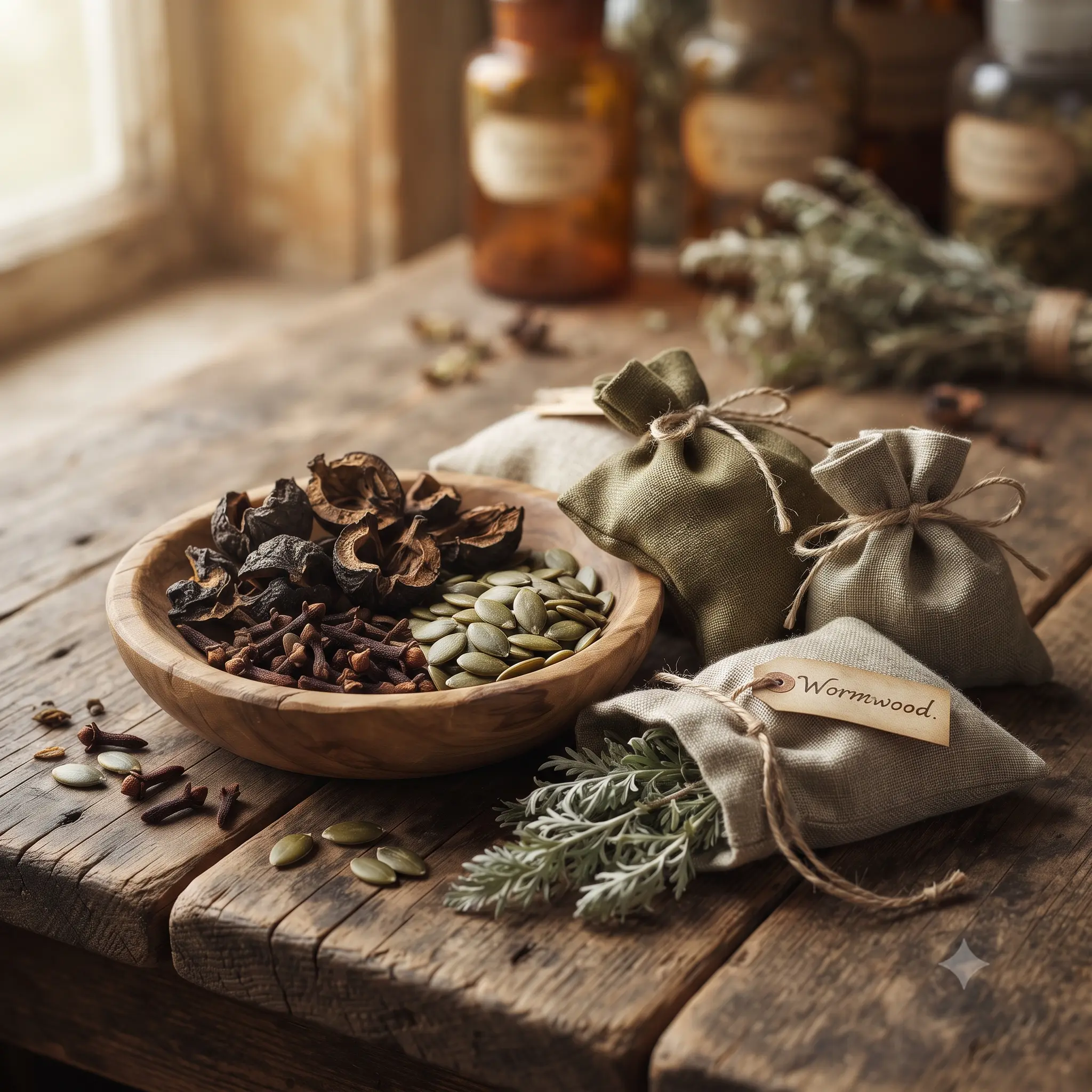
Anthelmintic simply describes an herb traditionally used to support the body in discouraging internal parasites, like intestinal worms. In herbal medicine, anthelmintic refers to a plant’s ability to create an environment in the digestive tract that’s unfavorable to these organisms, often through naturally bitter or pungent plant compounds that many parasites tend to find unwelcoming. This is a more old-fashioned, traditional-use category compared to some other herbal properties, and it’s worth knowing that modern anthelmintic medications are generally far more targeted and effective for actual infections.
In the body, anthelmintic herbs primarily engage the digestive system, where these organisms would typically be found. The compounds involved — often bitter constituents or volatile oils — are thought to work by making the digestive environment less hospitable, which may help the body naturally clear out these unwanted visitors over time as part of its normal digestive process. It’s the tiny plant chemistry doing all the heavy lifting here, drawing on a long history of traditional use even though the mechanism isn’t as precisely understood as some other herbal properties.
People typically look into anthelmintic herbs in fairly specific situations — after travel to an area where exposure risk feels higher, general curiosity about traditional whole-body wellness routines, or as part of a seasonal reset alongside other supportive herbs. This isn’t a category most people reach for casually or often; it tends to come up around a specific concern or curiosity.
One honest safety note: if you suspect you actually have an intestinal parasite (based on symptoms like persistent digestive upset, unexplained weight changes, or fatigue), this calls for proper diagnosis and treatment from a healthcare provider rather than relying on herbs alone, since a real infection needs a confirmed, targeted approach. Anthelmintic herbs are best understood as traditional, general-wellness support, not a treatment for a diagnosed condition, and some aren’t appropriate during pregnancy.
Suggested herbs: Wormwood, Black Walnut, Clove, Garlic, Pumpkin Seed, Thyme, Oregano, Papaya Seed
Herbs With This Effect
Explore herbs commonly valued for this property.
Featured Recipes
Recipes that put this property to use.
Available Herbal Products
Explore and shop ready-made products offering this benefit.
References
- NIH National Center for Complementary and Integrative Health
- Mount Sinai Health Library — Herbal Medicine
- Cleveland Clinic
- Mayo Clinic
Frequently Asked Questions
Q: How do I know if I actually need an anthelmintic herb?
A: If you suspect a real intestinal parasite based on symptoms like ongoing digestive upset or unexplained fatigue, see a healthcare provider for proper diagnosis first — herbs aren't a substitute for confirming what's actually going on.
Q: Can anthelmintic herbs be used as a preventive measure?
A: Some people use them occasionally as part of a traditional seasonal wellness routine, particularly after travel, though there's no guarantee of prevention, and they're best viewed as general support rather than protection.
Q: Are anthelmintic herbs safe for children?
A: Many anthelmintic herbs are quite strong and not appropriate for children without professional guidance, so it's best to check with a pediatrician before considering any herb in this category for a child.
Q: How long do people typically use anthelmintic herbs?
A: Traditional use is usually short-term and situational rather than ongoing, often used for a specific window of time as part of a seasonal reset rather than daily, long-term use.
This information is for educational purposes only and is not intended as medical advice. Consult a qualified healthcare professional before using any herb, especially if pregnant, breastfeeding, taking medications, or managing a health condition.